Sunderland has always been a club whose identity carries weight beyond the pitch. A club with six league titles, two FA Cups and one of English football’s most loyal fanbases, but its modern story has been shaped as much by hardship as by history.
A club with as rich a history as Sunderland has, however, had a recent past of much contrast. Years of relegations, financial uncertainty and a bruising spell in League One tested the club and its supporters.
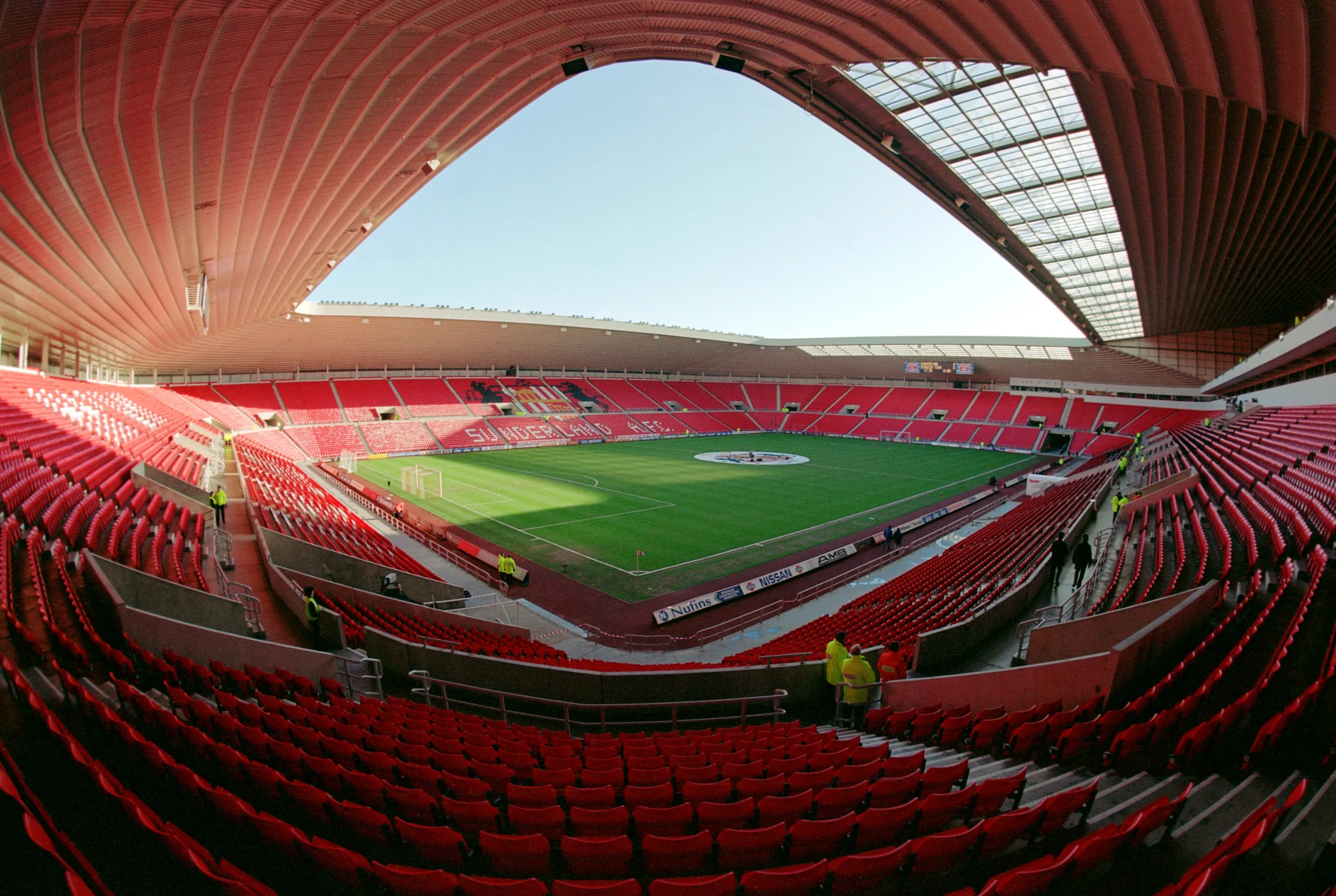
Now in the Premier League, the Stadium of Light remained a symbol of scale and belonging through those brutal years before. The 49,000-seater was a reminder that Sunderland have always felt bigger than the division they were in.
The 147-year-old club has been known as ‘The Black Cats’ for the majority of their history. The club adopted the nickname officially following a fan vote in 2000.
Reports suggest that the club has been carrying the nickname long before they officially adopted it. Some reports reveal that the nickname took inspiration from the Black Cat Gun Battery, a local landmark that stood at the east end of Sunderland in the 18th and 19th centuries.
While some legends say 12-year-old supporter Billy Morris snuck in a black cat to Wembley for good luck in the 1937 FA Cup Final. The match resulted in a 3-1 win over Preston North End, sealing the association with good fortune.
It is also believed that during the 1960s, a stray black cat lived at the club’s old ground, Roker Park, and was adopted by the players.
The Black Cat represents much more than an animal. It stands for the club itself: its folklore, its luck, its identity and its connection with generations of fans.
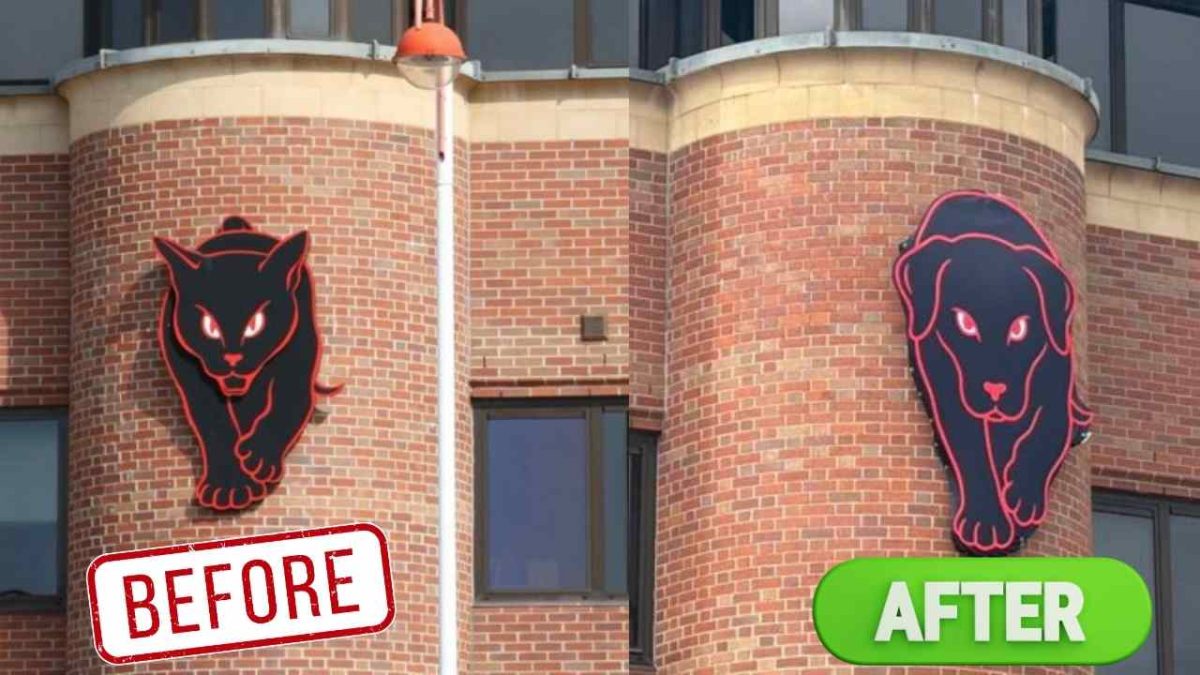
The Black Cat display sits outside the Stadium of Light, on the north-east side of the stadium, near Black Cat House and the main public approach to the ground, where supporters pass on matchdays and where the club’s identity is immediately visible before people enter the stadium.
It is not hidden away inside the ground, but positioned as part of the public-facing stadium exterior, making it a natural photo spot and talking point for fans arriving at Sunderland’s home. It is a bold, dark statue/sign-like feature, instantly recognisable because of its link to the club’s badge, branding and history
But recently, it was changed, putting up a black dog.
Anyone know why they’ve replaced the cat with a dog on the side of Black Cat House? 🤔 pic.twitter.com/vCs8a2rv0i
— A LOVE SUPREME (@ALS_Fanzine) May 5, 2026
This meant more than just a simple mascot change, as Sunderland revealed on their social media.
The change was striking because it took something supporters know so well and made it look slightly unfamiliar. The dog kept the same dark, simple visual impact, but the meaning shifted.
Ahead of Mental Health Awareness Week, our Black Cats have become Black Dogs 🖤
— Sunderland AFC (@SunderlandAFC) May 7, 2026
A symbol of the battles that so many people face every single day – often silently.
Football is family. And family looks out for each other. No matter who you are, or what you’re going through, you… pic.twitter.com/BsUWMWctbE
Sunderland temporarily changed the black cats to black dogs, referring to the famous metaphor, as part of Mental Health Awareness Week.
The ‘Black Dog’, famously used by Winston Churchill, is a universal metaphor used for depression and low mood. It represents how depression does not take a break, following and lingering around like a shadow, ‘as loyal as a canine’ (BetterHelp Editorial Team, 2025).
This change is significant, as it speaks the language of football, which many are so familiar with. Spreading awareness about mental health is becoming increasingly important, especially in football, where just a single poor performance can lead to fans trolling the players online, sometimes even leading to racial abuse and threats.
Sunderland is a working-class city with a proud identity, but like every community, it contains people who struggle in silence. A black dog outside their beloved stadium, ‘The Stadium of Light’, is a reminder that mental health is not abstract. It is present in dressing rooms, stands, workplaces, homes and pubs.
Although football has become more open about mental health in recent years, these glaring issues extend beyond the pitch. Many people suffer from depression and melancholy. In this day and age, surrounded by social media and unrealistic lifestyles, people feel inadequate in their own lives.
Each person carries their own stress and problems, whatever they may be.
That is why Sunderland’s gesture matters. It is not a rebrand or a gimmick. It is a small, visible act done to make people stop, ask a question and maybe start a conversation they have been avoiding.
Football has always been something that brings people together from all around the globe, from different backgrounds and cultures; Sunderland hopes to spread awareness through the sport that many consider to be ‘The Beautiful Game’.
REFERENCES:
BetterHelp Editorial Team. (2025, February 27). Understanding Metaphorical Black Dog Depression & Mental Health. https://www.betterhelp.com/advice/depression/understanding-the-metaphorical-black-dog-depression-and-how-it-works/
Football, R. (2018, March 22). The story of the Stadium of Light: Pt3 – The birth of a Sunderland landmark and how it was named. Roker Report. https://rokerreport.sbnation.com/2018/3/22/17142720/the-story-of-the-stadium-of-light-pt3-the-birth-of-a-sunderland-landmark-and-how-it-was-named
LatiNation. (2026, May 6). Real Madrid Mbappé incident leaves the club closely watching a staff episode. LatiNation. https://latination.com/mbappe-real-madrid-tension/
Ross, I., & Sills, A. (2017, February 20). Sunderland find new identity as The Black Cats. The Guardian. https://www.theguardian.com/football/2000/feb/22/newsstory.sport4
The Curious Case of The Black Cats — Football Heritage. (n.d.). Football Heritage. https://www.footballheritage.co.uk/the-curious-case-of-the-black-cats
Wikipedia contributors. (2026a, May 5). Sunderland A.F.C. Wikipedia. https://en.wikipedia.org/wiki/Sunderland_A.F.C.
Wikipedia contributors. (2026b, May 8). Stadium of Light. Wikipedia. https://en.wikipedia.org/wiki/Stadium_of_Light