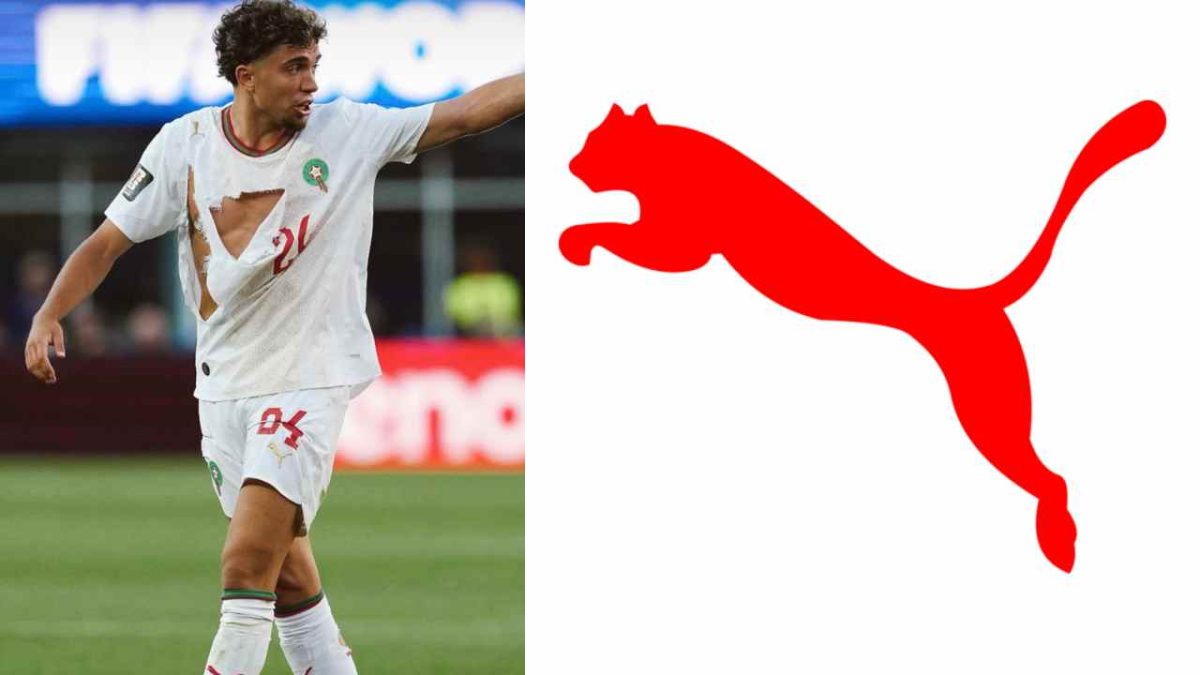
The biggest World Cup is underway in the Mexico, Canada and USA and one of the biggest sports manufacturers in the world, Puma, have again grabbed the headlines for all the wrong, yet not so new reasons.
Puma is the third highest kit supplier in this World Cup with 11 teams including big names such as Portugal, Senegal, Switzerland all sporting their jerseys.
However, it is facing severe criticism from fans and experts alike for their jerseys getting easily ripped during matches.
The Puma 2026 World Cup kits incorporate the latest version of PUMA’s ULTRAWEAVE “Thermoadapt” technology.
With the help of their own trademark technology, Puma kits at the World Cup weigh as little as 72 grams.
However, it was not for these features but for the kit malfunctions that occurred during the World Cup, that PUMA came to the spotlight.
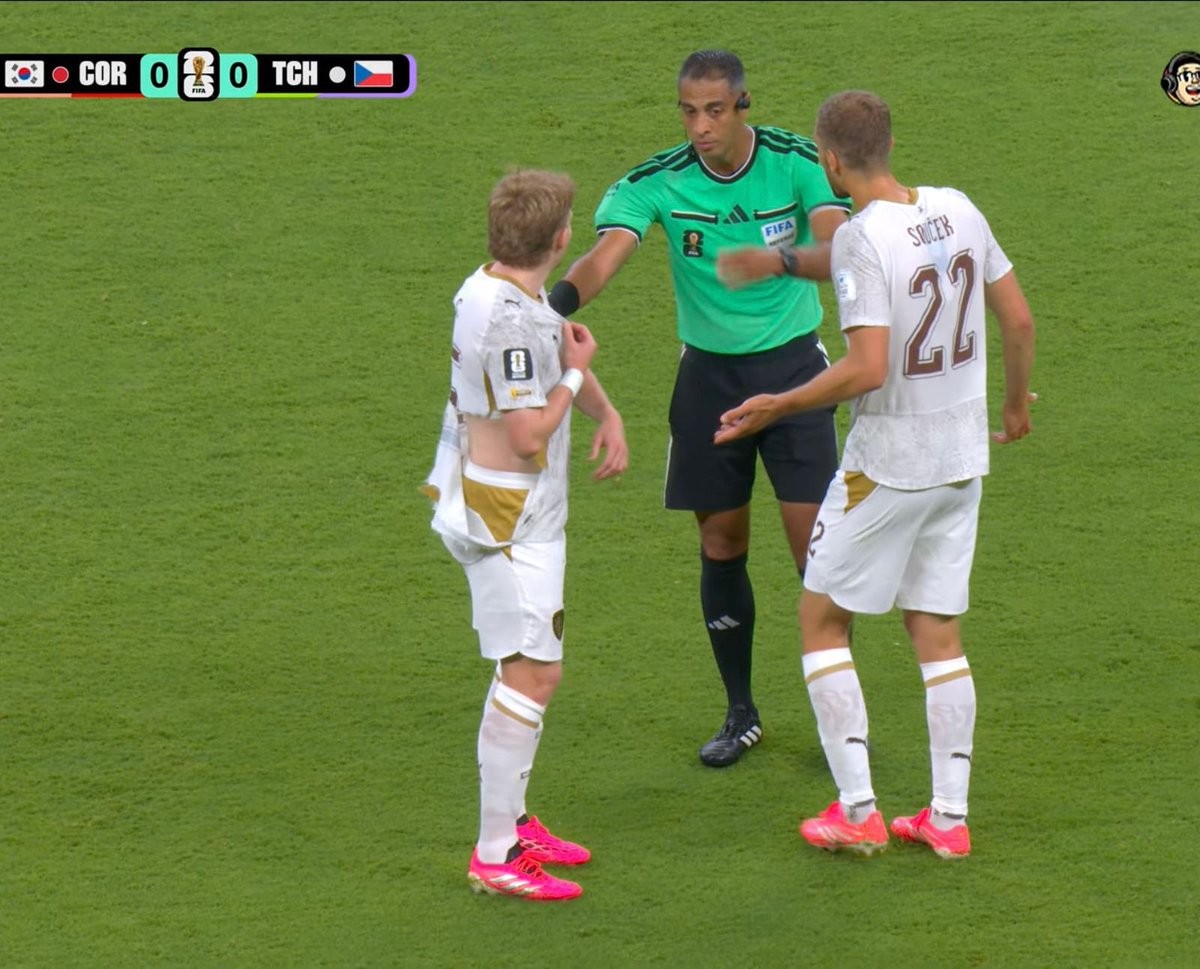
The first mishap with shirts happened during Czechia vs. South Korea match with Pavel Sulc’s shirt getting completely ripped in half by Lee Han-beom as the South Korean defender grabbed a fistful of the midfielder during a challenge in the 25th minute of the match.
The referee halted the play and forced Sulc to leave the pitch temporarily to change his jersey before he could continue the match.
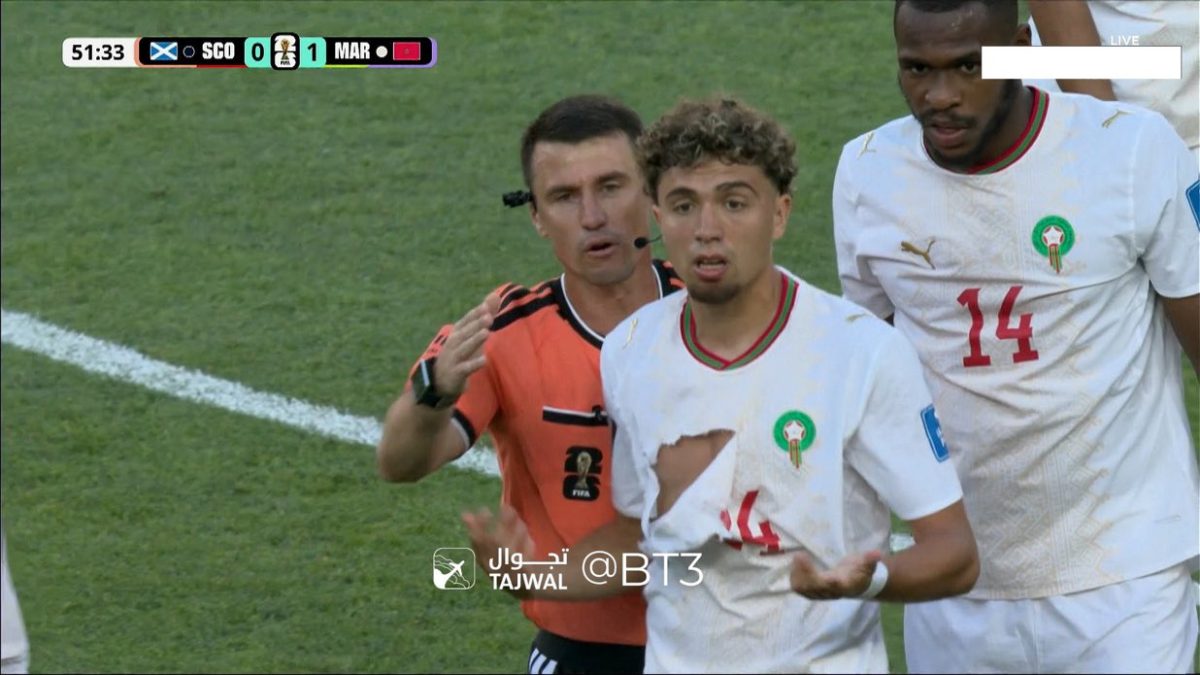
Morocco midfielder Neil El Aynaoui faced a similar sort of situation as his jersey was completely ripped apart around the shoulder and chest area during a corner kick scramble in the Scotland match.
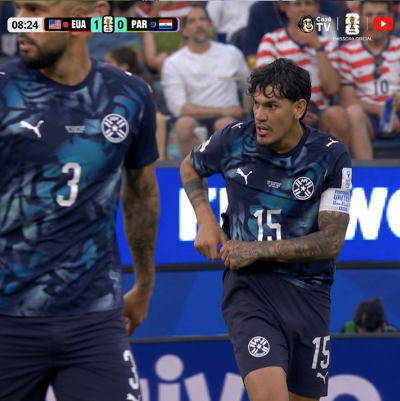
Paraguay’s Gustavo Gomez had the side of his shirt ripped off as early as the ninth minute of the USA match with all the grappling happening during defending, a common sight in football.
During the Group G match between Belgium and Egypt, Ziko was repeatedly involved in physical battles with Belgian defenders. Late in the match, Belgian full-back Maxim De Cuyper was booked after wrestling Ziko by the shirt and ultimately his jersey was also torn.
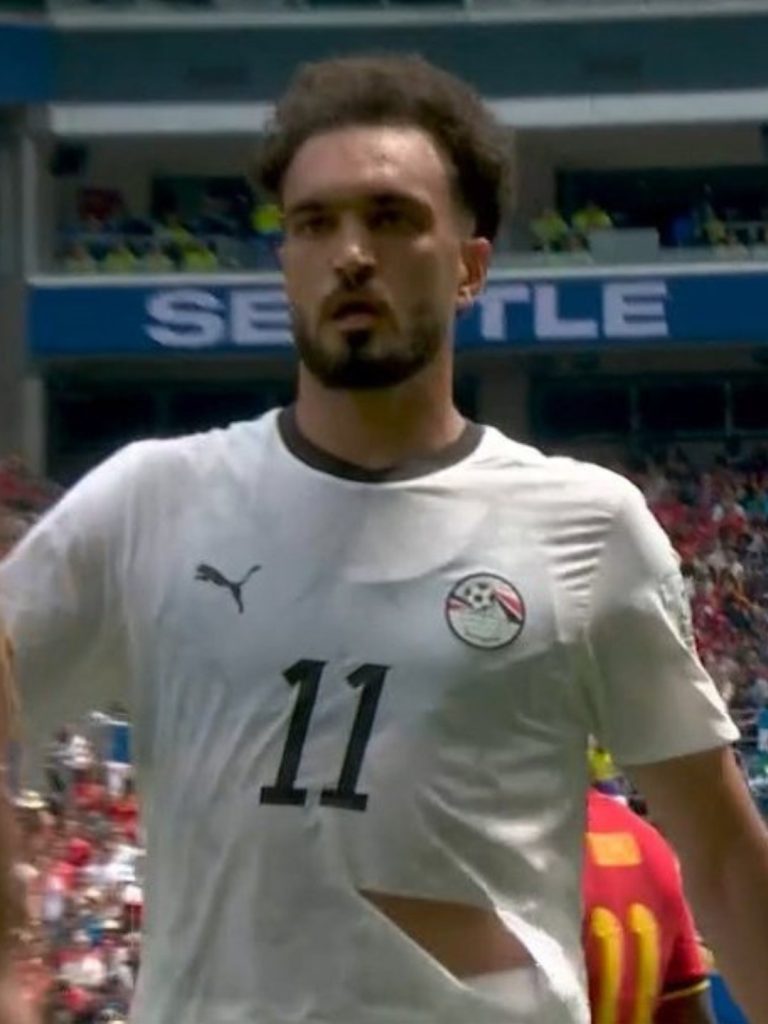
If that was not enough, Ziko was once again at the center of kit malfunction controversy.
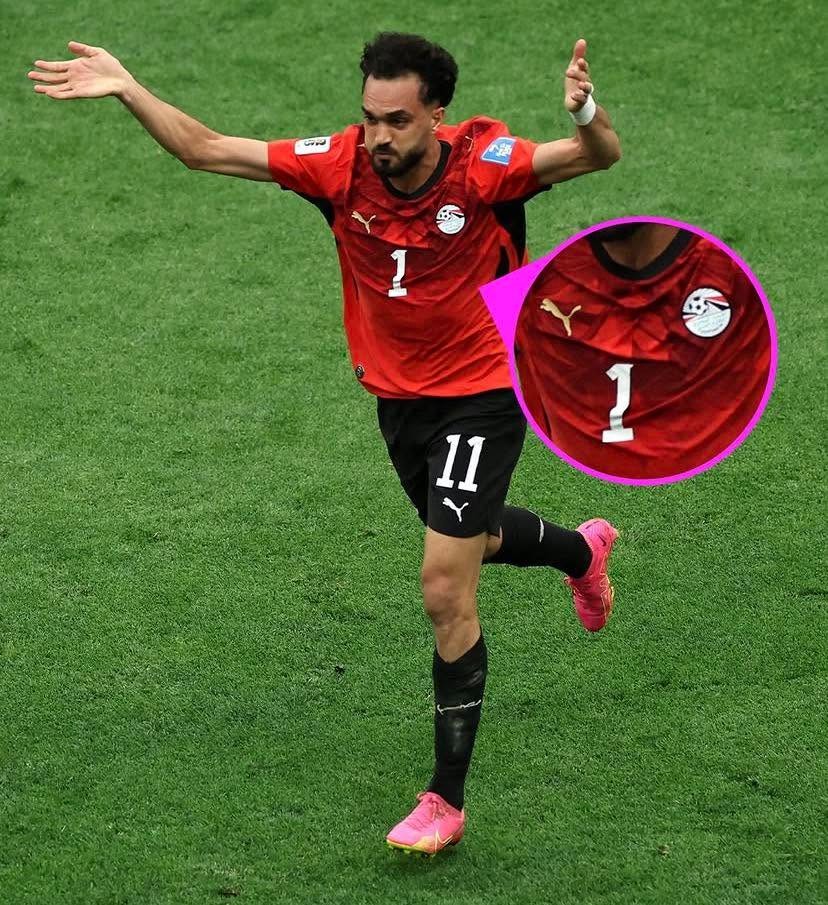
During During Egypt’s World Cup match against New Zealand, Ziko’s jersey number was seen ‘damaged’ as one of the digits on the front came off. The incident occurred as Ziko celebrated his goal.
The Egypt Striker’s jersey number is 11, as can be seen in the earlier picture, however, he was seen having 1 on it as the other digit fell off.
In this scenario, the number appears to have been poorly heat-applied to the jersey and as a result, it gradually peeled off due to sweat during the game, adding another layer to the kit malfunction controversy.
All of these incidents have one thing in common, Morocco, Egypt, Paraguay, Czechia, all of these four nations are donning jerseys that are made by Puma in this mega tournament.
Some kit enthusiasts point out the fact that the thin woven material in the PUMA shirts is for sure lighter but woven fabrics may be less forgiving under sudden pulling forces than heavier knitted constructions making PUMA paper-like lightweight jerseys being torn apart with paper-like ease.
The reduced panel counts and fewer seams did make the jerseys ultra light but football is never only about speed or sweat or running, it consists of grabbing, pulling and stretching to reach that extra inch to convert the ball into the back of the net or from stopping it going in and it is one area PUMA did not seem have given enough emphasis.
It appears the company may have pushed the balance too far toward minimal weight and maximum freedom of movement, making the shirts more vulnerable.
These incidents have again prompted viral resurgence of Xherdan Shaqiri’s infamous quote from Euro 2016, where he joked that he hopes Puma does not produce condoms.
A decade back where multiple Switzerland team’s shirts were torn, PUMA attributed the issue to a defective production batch rather than the design itself, it will be interesting to see what they come up with this time.