Marcos Llorente, the Atletico Madrid star, has long been touted as a physical specimen and one of the most versatile players in Spanish football.
Llorente’s career has been built on physical output, so the routines around his body have naturally become central to his story. For him, fitness does not begin and end at training; it stretches into diet, sleep, recovery, sunlight and the wider control of his environment.
His lifestyle has been linked with paleo-style eating, grounding, red-light habits, strong views on sun exposure and a wider suspicion of artificial light. These ideas place him in a wider world of wellness, where discipline and ‘conspiracy-adjacent’ ideas sit closer together.
Reports and online discussions suggest that Llorente has shown belief in chemtrails, a conspiracy theory, claiming aircraft trails are not simply condensation, but evidence of chemicals being released into the sky. The sun-exposure debate has added another layer.
Llorente has spoken about long periods of unprotected sunbathing as part of his health routine, drawing concern from health experts over skin cancer risks.
How to stop Marcos Llorente? It's a question being asked by Arsenal's coaching staff… and also by the Spanish Ministry of Health. The Atletico Madrid star is football's most controversial biohacking conspiracy theorist. He insists: "I'm not a weirdo".https://t.co/d0dXsfYLUb
— Sam Dean (@SamJDean) April 29, 2026
🚨🇪🇸 JUST IN – Marcos Llorente responds to The Telegraph calling him a threat to public health:
— Atletico Universe (@atletiuniverse) April 30, 2026
"The more a message with meaning and substance is criticized, the further it spreads.
I can only thank them for amplifying it.
Not everyone is at the same point when it comes to… pic.twitter.com/bZMrfonBJO
This creates a wellness image that feels less like routine and more like conviction. What began as recovery now carries a deeper suspicion of the modern environment.
Llorente embraces natural light, but treats artificial light as a threat. His concern is the effects of blue light. Blue light tells the brain it is still daytime, which can delay melatonin release, disturbing the body’s sleep rhythm and making proper recovery harder.
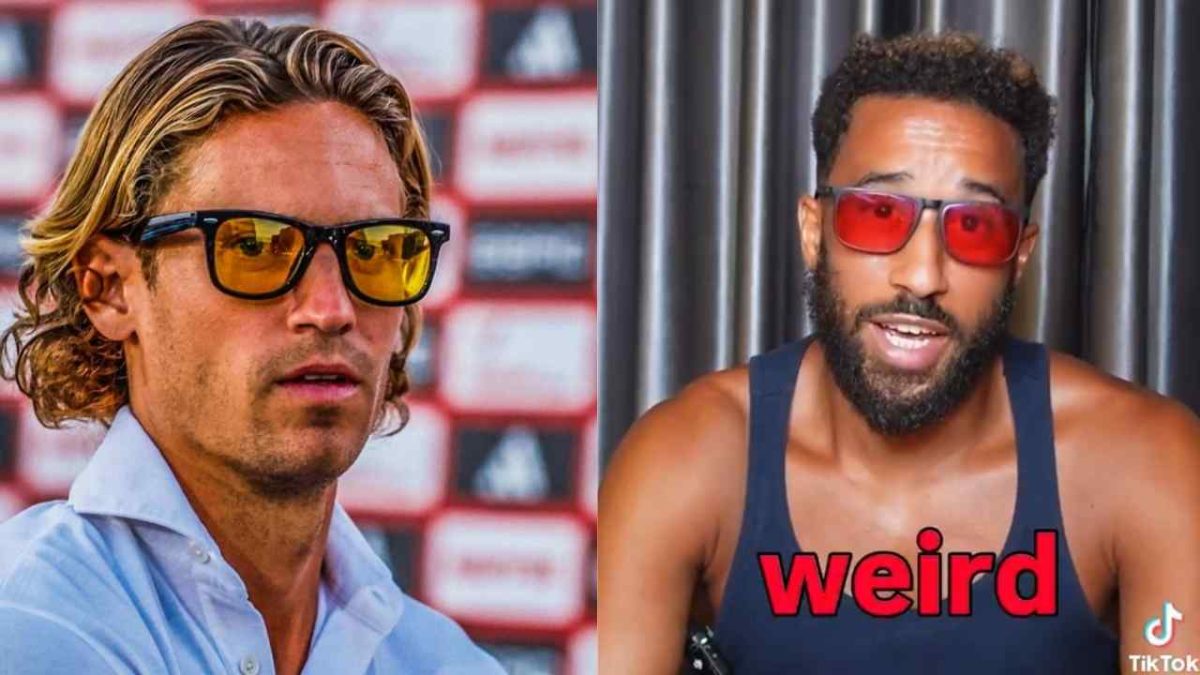
Llorente believes special glasses are the answer to that problem, claiming they help him ‘protect his biology’.
🇪🇸🗣️ Marcos Llorente explains why he is wearing special glasses recently… 👓
— EuroFoot (@eurofootcom) October 17, 2025
"I use yellow special glasses during the day when I'm indoors. And at night, if I go out or am exposed to fireworks, I wear glasses with red glass. Why? Because I protect my biology."
"Because blue… pic.twitter.com/fKgLztEziq
For all the controversy around Llorente’s wider beliefs, this part is harder to dismiss. Unlike some of his more questionable ideas, blue light’s effect on sleep has scientific backing: late exposure can delay melatonin release and make it harder for the body to switch off.
Proper sleep and recovery are necessary for any elite athlete, especially in the current footballing environment. With an increasing number of games every season and a higher physical tax demanded by coaches, players are struggling with injuries and recovery more than ever.
In a game defined by such fine margins, footballers are naturally looking for ways to gain an upper hand. That search has led more players toward recovery habits once seen as strange or excessive, including the growing fascination with red glasses.
One such name is Andros Townsend, the former Tottenham Hotspur and Crystal Palace winger. Once known for his quick, direct attacks along with his left-footed strikes in the Premier League, he suffered a long-term injury at Everton and an inconsistent spell at Luton Town.
After a long career in English Football, the 34-year-old moved to Kanchanaburi Power, a Thai League 1 club.
At this stage of his career, every recovery idea becomes appealing.
His interest in red glasses fits the same wider shift seen with Llorente, footballers looking beyond training, nutrition and standard recovery work for anything that might help them keep the body ready.
Townsend recently released a TikTok, which confirmed his beliefs in a similar ideology to Llorente.
In the video, Townsend questioned the decision of wearing sunglasses to “protect our eyes from light that came from God”, but not wearing glasses under artificial light.
He also mentioned that people who do are labelled as weird, possibly referring to the bad press around Llorente.
The reaction to Townsend’s red-glasses turn captured the absurdity of it all. One fan wrote on X: “What is it with ex pros going absolutely mental?”.
What is it with ex pros going absolutely mental pic.twitter.com/1Ln8a013dk
— Jacob (@Jsize18) May 5, 2026
That response shows how these routines are often received from the outside. They are not viewed as performance optimisation, but as signs that players have gone too deep into the wellness rabbit hole.
Townsend is no stranger to unusual recovery methods. He has spoken about methods ranging from red-light therapy to mouth taping and even dietary experiments such as eating chicken feet for collagen. These claims look outrageous to the public, but there may be a method to the madness.
The instinct behind them is easy to understand. Footballers are chasing control over the body that decides whether they can still compete.
In a world where footballers are expected to perform like machines, even a strange-looking promise of one per cent improvement can be hard to ignore.