The FIFA World Cup 2026 Round of 32 produced an all-time classic in Toronto on Thursday. Portugal edged past Croatia 2-1 in a riveting end-to-end contest, courtesy of an injury time winner from Goncalo Ramos. The Croats threatened an even later twist with an equalizer in the dying moments of the game. However, a controversial decision by the Virtual Assistant Referee disallowed the goal to eliminate them from the tournament.
The incident in question occurred in the 103rd minute. With essentially the entire Portuguese team boxed into their own penalty area to protect the slender lead, Ivan Perisic picked up the ball on the left wing. The veteran looked up and put in a teasing delivery into a dangerous area for the men in blue.
Chaos ensued as the Trionda deflected off an unwitting Mario Pasalic and hurled across the face of goal. Josko Gvardiol was the quickest to react as he tapped it into an empty net, provoking wild scenes of celebration at the BMO Field.
However, the joy was brought to an abrupt halt when the referee made his way to the screen to check for a potential offside. The confusion began when it emanated that Gvardiol was clearly on the right side of the line, as was Pasalic when Persisic put the cross in.
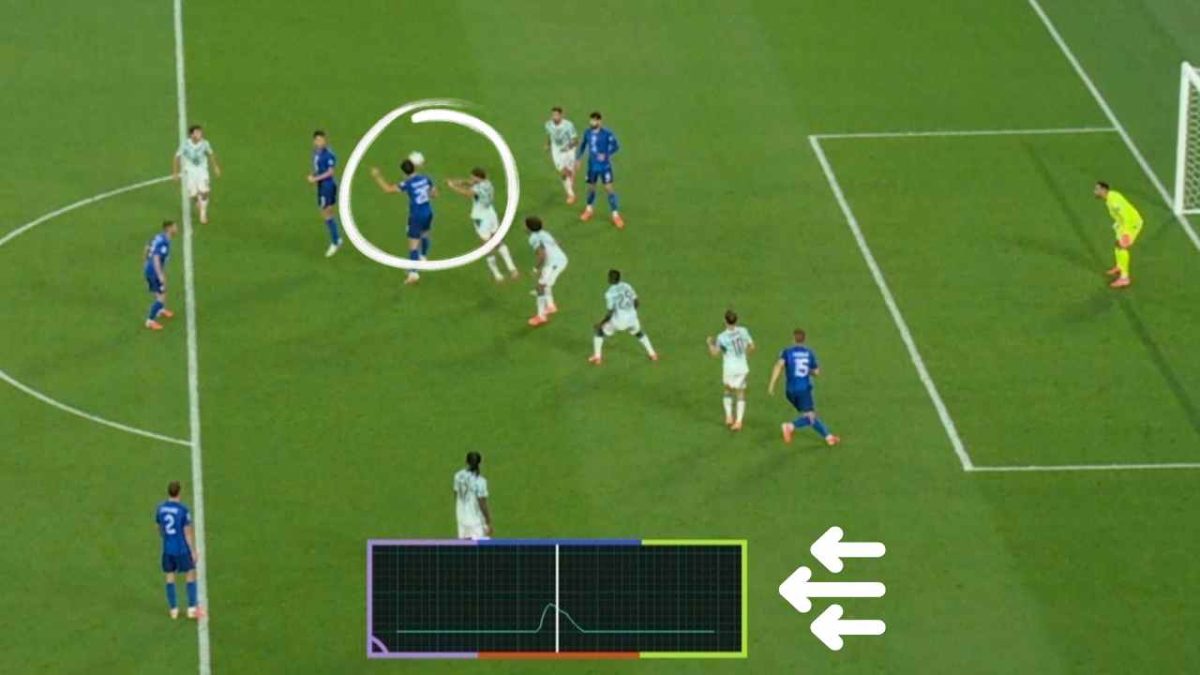
The contention was instead focused around Ivor Matanovic. The SC Freiburg striker had leapt for the ball before it reached Pasalic and potentially got a touch on it, which would rule the latter clearly offside.
Albeit the ball had passed right by Matanovic’s head, it was impossible to tell whether he had made any contact with it. Similarly, the slow motion replays showed the ball had certainly undergone no perceivable deflection.
To clear up the confusion, the VAR system used its latest weapon, the ‘snicko’. The audio-visual technology essentially produces high-frequency wave graphs correlating with any sound produced, using a chip in the ball as the sensor. Snicko thus revealed the slightest of spikes and the goal was deemed invalid.
According to the data provided by Connected Ball Technology housed within the @adidasfootball Trionda, the official match ball of the @FIFAWorldCup, it was proven that contact was made by Croatia's #20 Igor Matanović in the build up to the goal against Portugal, allowing the… pic.twitter.com/AyBz11N3wV
— FIFA Media (@fifamedia) July 3, 2026
When the referee relayed the decision, Croatia skipper Luka Modric immediately turned around laughing flailing his hands, baffled by the decision. His supporters back home reacted no differently, despite being shown the workings of the technology on their broadcasts.
Their argument was that the soundwave shown by snicko did not correspond with the frame in which Pasalic was next to the ball. On the same note, some fans argued that the snicko graph only showed one small wave, despite the ball hitting Pasalic and Gvardiol too shortly after.
Shouldn’t it spike again almost immediately since Veiga touched it? https://t.co/qrmWDj7Uqd
— S🕊️🇸🇪 (@8bdrssss) July 3, 2026
“The way it was presented makes no sense and looks corrupt to the core,” one wrote on X after offering a lengthy explanation.
This was not the first time snicko has been used in the ongoing World Cup to make an offside decision. In the group stage game between Sweden and Tunisia, the Europeans had been disallowed a goal after scorer Mattias Svanberg was ruled offside.
However, snicko showed a slight spike, indicating a touch from Alexander Isak in the buildup. The goal therefore stood but the incident barely courted any attention, given the game ended 5-1.
Unfortunately, football is not the first sport to be a victim of discrepancies in the snicko technology. Cricket has used the tool in their VAR-equivalent Decision Review System (DRS) for well over a decade now to determine whether the ball made any contact with the bat.
Much like Thursday’s controversy, there have been several notable incidents over the years when the spikes on snicko did not line up with the visuals frame by frame. The most notable arrived in the 2025/26 Ashes when Australia’s Alex Carey was deemed not out in a caught behind call enroute to a century, after the soundwaves and visuals did not correspond.
At the end of the day, the batter confirmed he had indeed edged the ball. His teammate Mitchell Starc stated in the aftermath, “Snicko needs to be sacked, it’s the worst technology ever.”
Despite such shortcomings, snicko remains an integral part of cricket and seems to be assured of sticking around in football too. Football fans can only hope it is not required for any decision for the rest of the tournament, particularly a high stakes one that alters the course of a team’s fate.