Sports is somewhere where results speak for themselves and football is no exception either.
While beautiful, eye catching football, individual brilliance or an astute tactical change can be remembered for long, at the end of the what matters most is the scorecard and that it is exactly where there seems to be some confusion during the ongoing 2026 FIFA World Cup.
In the scorecard graphics of every football match, there are logos and flags of the teams followed by abbreviation of it.
While many teams like England, Scotland, Brazil, Portugal use their first three letters of the name as abbreviation, there are tons of countries in this world cup whose abbreviation in the scorecard do not match their English names.
For example during the Spain vs Saudi Arabia, the official abbreviations were ESP and KSA or for that matter for Curacao, the abbreviation used is CUW, which caused a bit of a confusion for some fans, as many wonder why it differs from their English names.
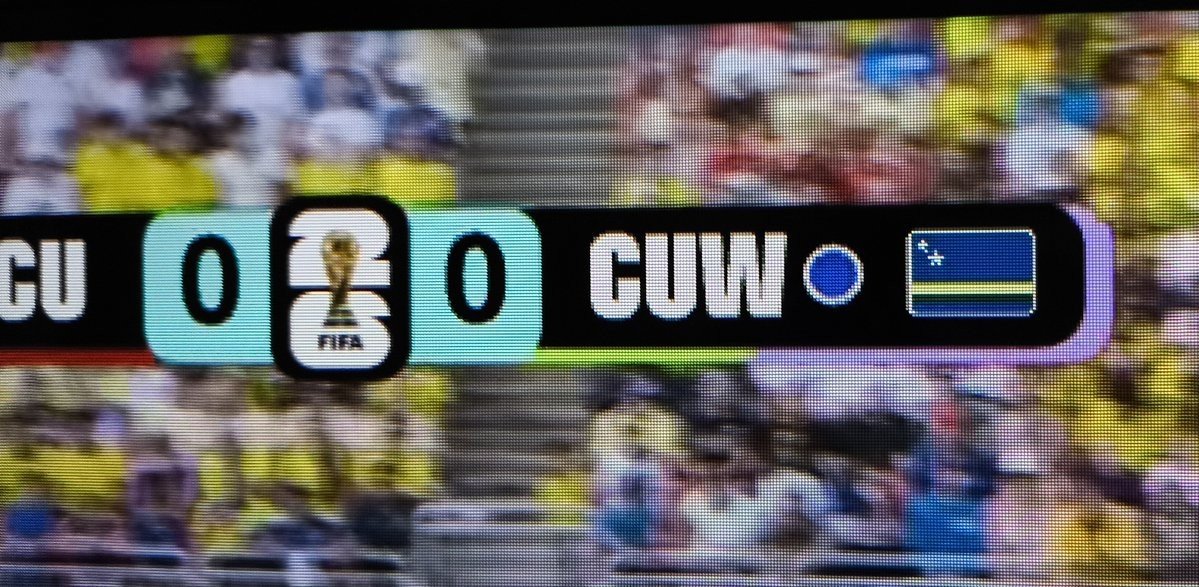
For the unversed, FIFA’s abbreviations are largely derived from the country’s nation code as seen in the ISO but it is not limited to that only, as there are other factors that come into consideration while making one nation’s abbreviation distinct and unique.
For Iraq, Japan or Iran, the trigram shown in the scorecard graphics are simply their ISO codes given to FIFA but for countries such as South Africa and Saudi Arabia, their abbreviations come from the countries official names, which for South Africa is Republic of South Africa and for Saudi Arabia is Kingdom of Saudi Arabia and hence the RSA and KSA are used for them respectively.
why Saudi Arabia not SAU and KSA @grok pic.twitter.com/aw7Ou2pZdu
— World Cup 2026 (@ofootball__) June 21, 2026
FIFA also takes into consideration the official and native languages of that country and what they are called in that language and it is why Switzerland’s trigram is SUI as derived from their French name ‘Suisse’ or Morocco is shown as MAR thanks to their French name ‘Maroc’, which remains widely used due to Morocco’s historical and linguistic ties to France.
@ITVSport can you explain why your score caption has abbreviated Morocco as ‘MAR’? There is no ‘A’ in Morocco, surely it should be ‘MOR’? pic.twitter.com/T2QUbg3Irb
— Up the Owls (@logieowls) June 19, 2026
Such is the case for Netherlands (Ned) and Spain (ESP) as well, which are spelled as Nederlands, España in their native languages.
But as stated earlier there are no exact rules to set the trigram for one particular nation as it can be seen with Germany or Croatia, who do not fall in any of these categories and instead they simply use ‘GER’ and ‘CRO’ simply derived from the first three letters of the English names of the country.
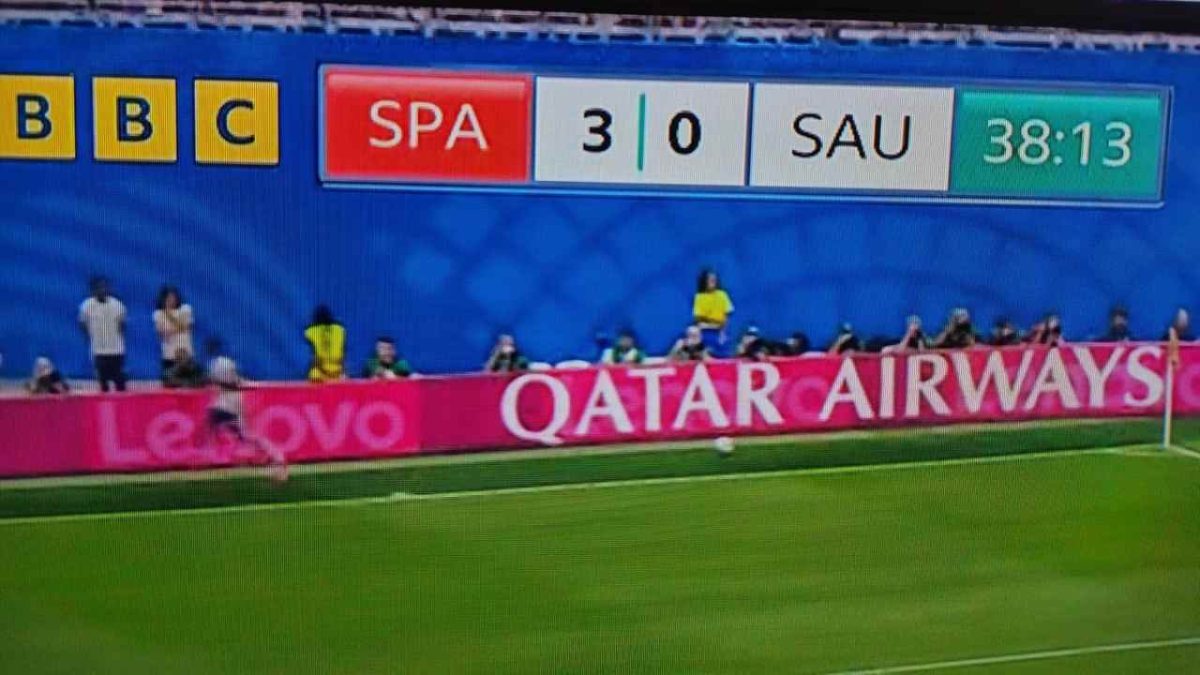
Even different broadcasters can have different abbreviations for teams as fans watching the game between Spain and Saudi Arabia on BBC were left slightly baffled with the scoreboard graphic when it read SPA and SAU instead of ESP and KSA.
How have I just noticed that the BBC aren't using the right abbreviations? It should be ESP for Spain & KSA for Saudi Arabia…#FIFAWorldCup #Spain #SaudiArabia pic.twitter.com/cUE9JFwZTg
— Shahan Miah (@shahanshahan) June 21, 2026
In the case of Austria, the explanation is simple, their ‘AUT’ makes them stand out and avoid being confused with Australia which has similar first three letters to that of Austria and already assigned the ‘AUS’ trigram.
The sole reason behind these abbreviations is to provide a fixed, unmistakable label for every member association during tournaments and ease of broadcast, so to avoid confusion the fourth letter of Austria is taken into consideration.
All in all, FIFA takes into account a mixture of historic convention, linguistic compromise and much more to fix a trigram for a country and it remains constant across all official graphics to maintain visual and data integrity for fans globally.
So, while it can be confusing at times, there is a method and process behind all of these abbreviations or trigrams, as one may call it.