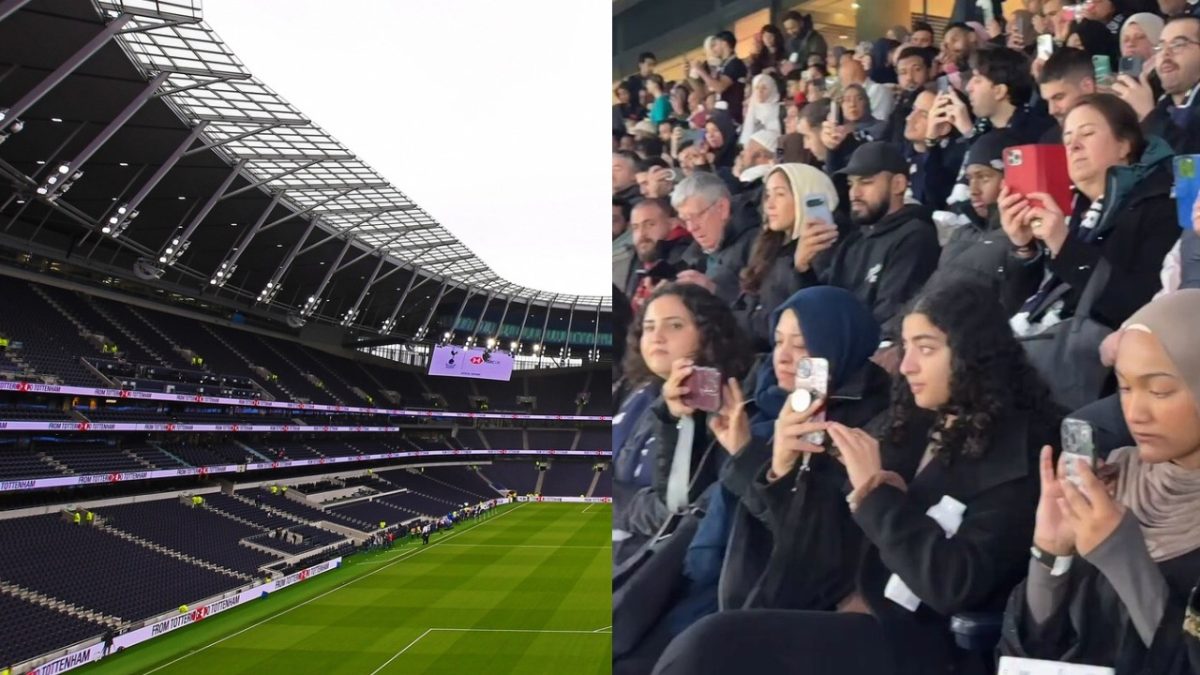
On the evening of Friday, 6th March, the Tottenham Hotspur Stadium turned into an unlikely sanctuary. As the club stumbled through one of their darkest seasons in years, the ground hosted an event that had nothing to do with the scoreline: its first-ever Open Iftar.
The Ramadan Tent Project, a big-name British charity that Omar Salha and some friends from SOAS University of London started back in 2013, teamed up with the club to run the event. The group originally just pitched a literal tent so Muslim students could break their fasts together, but they quickly started inviting everyone else, too. Choosing a Premier League stadium over a mosque is a big part of what they do. Salha puts it simply: “We are, by nature, social creatures. We need to feel that we have a connection to our shared humanity. When you do so, you realise you see yourself in others.”
As it turns out, though, not everyone in the English stands has been so welcoming. With Ramadan 2026 running from 17th February to 19th March, sunset in the UK often hits right during those Saturday and Sunday afternoon games. Because of that, the Premier League brought back those quick mid-game breaks to let Muslim players grab a drink or a snack. The league first rolled out these pauses in 2021. Players take them at the first logical stop, like a goal-kick or a throw-in, after the captains and refs chat about the timing before the whistle blows. It isn’t some tactical timeout; it only takes a minute or two.
For the last few seasons, the policy mostly went under the radar. But things got heated on 28th February. A quick break stopped Manchester City’s 1–0 win at Elland Road in the 13th minute so Omar Marmoush, Rayan Aït-Nouri, and Rayan Cherki could hydrate after the sun went down. Even though the big screens explained exactly what was happening, boos echoed around the stadium. City boss Pep Guardiola didn’t hold back afterwards. “It’s the modern world, isn’t it? We have to respect religion, respect diversity. That’s the main thing,” he said. The group Kick It Out called the pause an “agreed protocol for several years now” and said the crowd’s reaction was “massively disappointing.”
Leeds United’s own response felt a bit awkward. They called the fans’ reaction disappointing and unexpected, but admitted the ground saw this kind of break for the first time and that the club hadn’t done enough to tell fans what to expect. Manager Daniel Farke tried to give the supporters the benefit of the doubt: “My gut feeling is supporters did not even know what was happening,” he said, suggesting they were just confused. Leeds also mentioned that some fans were still annoyed about a tactical timeout the Etihad used back in November 2025. That move had annoyed supporters who felt the team was just using it to waste time, and that lingering suspicion seems to have soured the mood for the Ramadan pause.
The drama even pulled in people from outside the sport. A Christian minister, Rikki Doolan, wrote to the Premier League and the FA claiming “unfair discrimination.” He argued that stopping a game for religion was a double standard, especially since the league had warned Christian players about showing their faith on the pitch. He was talking about Crystal Palace’s Marc Guehi, who the FA gave a talking-to after he wrote “I love Jesus” on his captain’s armband. Anti-discrimination groups shot back immediately. They pointed out that this protocol has been around for years and is a pre-arranged agreement for everyone, not just one person making a statement.
Under FA Rule E20, clubs have to make sure their fans don’t act in a discriminatory way. Because of this, the FA might force Leeds to set up an official action plan, which would mean running education campaigns and working more closely with Kick It Out. Regardless of what the FA does, Leeds already confirmed that striker Joël Piroe will be breaking his fast during their next home game. They’ve asked fans to show the very best of Leeds United, and that everyone is welcome at Elland Road.”
Down in North London, the Ramadan Tent Project’s night at Spurs showed exactly why these accommodations matter in the first place. It is something that got lost in all the noise of the week. Over 80% of Open Iftar guests say there aren’t enough places for people of different faiths to actually hang out, and more than half said the event was their first real chance to talk to a Muslim person. Sally Mbewe, the EDI Manager for the Spurs Foundation, summed it up: “The stadium is a space for everyone, and this event reflects our ongoing commitment to celebrating the diversity of our community.”
The event sparked a fierce reaction on social media, so we need to tell the difference between fair questions and simple hate. People online are rightly asking about the money: the UK Government’s Culture Recovery Fund previously gave £130,000 to the Ramadan Tent Project through Arts Council England. This is the same group that hosted the Westminster Hall Iftar, and critics argue that taxpayer-funded religious events need to be open and honest about where the money goes. We should have that discussion.
However, a lot of the online anger came from a much darker place; users on X asked why a club with Jewish roots would host a Muslim event. Currently, Israel are locked in a full-fledged war with Iran, and this event is rightly not taken in the right frame of mind by the fans.
Since it started, Open Iftar has reached over a million people worldwide, popping up at places like Windsor Castle, the Royal Albert Hall, and Wembley. Moving into a Premier League ground felt like the next logical step. Now, the real question is whether the league is ready to follow that lead and explain clearly, without being defensive, why a 90-second break is worth the time.