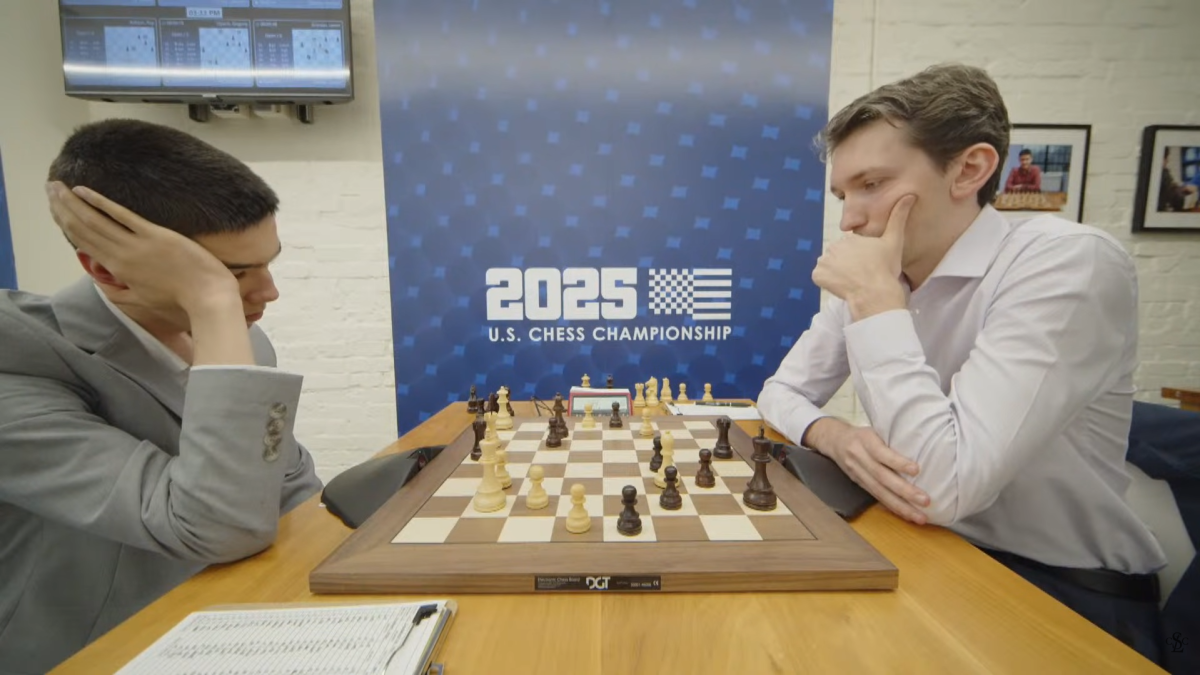
In a serious match against GM Andy Woodward, GM Grigoriy Oparin achieved a decisive victory in the St. Louis US Open Chess Championship, concluding the game after a sustained period of dominance in Round 3. From a spectator’s perspective, the match could have gone either way, but what came next left everyone speechless.
In a tense Grandmaster clash, the balance of power between Andy Woodward (White) and Grigoriy Oparin (Black) was abruptly shattered by a single, positional miscalculation. The game was poised on a knife-edge, a strategic deadlock demanding perfect defence, but Woodward’s 32nd move created a crisis that proved fatal.
For much of the middlegame, the two grandmasters were engaged in a complex, equal manoeuvring contest. Woodward had constructed a crucial four-pawn formation that anchored his entire queenside. This “rockwall” provided his position with defensive stability, preventing Oparin from executing his plans and keeping the game firmly in the realm of equality.
However, on move 32, Woodward made a choice that defied the demands of the position. He opted to bring his Queen back one square to b1 (32. Qb1).
The intention behind this Queen retreat may have been to reposition the piece for a later attack or defence, but the move immediately proved disastrous. By withdrawing the Queen, Woodward fatally neglected the defence of the pawn on the c4 square. Oparin, demonstrating the ruthless precision expected at the elite level, instantly seized the opportunity.
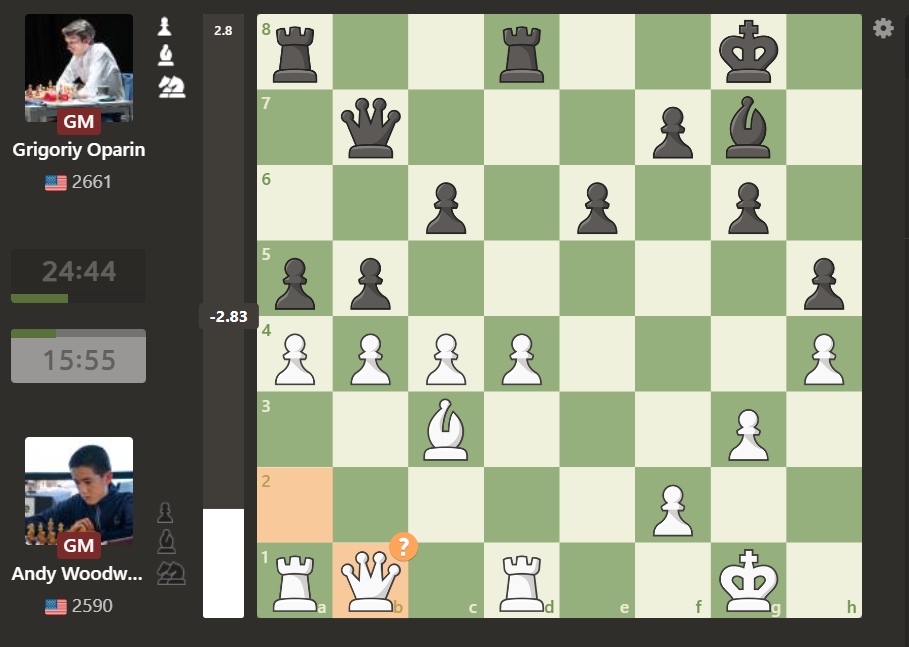
Oparin launched his attack by capturing the now hanging pawn on c4. This capture was the hammer blow that ripped open the queenside. By seizing the material, Oparin secured not just a pawn advantage but also the complete collapse of White’s defensive structure. The strategic stability of the position was decimated, and the contest transformed instantly into an overwhelming advantage for Black.
The fracture of the pawn formation exposed immediate weaknesses and provided Oparin’s pieces with new, crucial lines of attack. Where Woodward had enjoyed structural integrity, he now faced a cascade of positional problems.
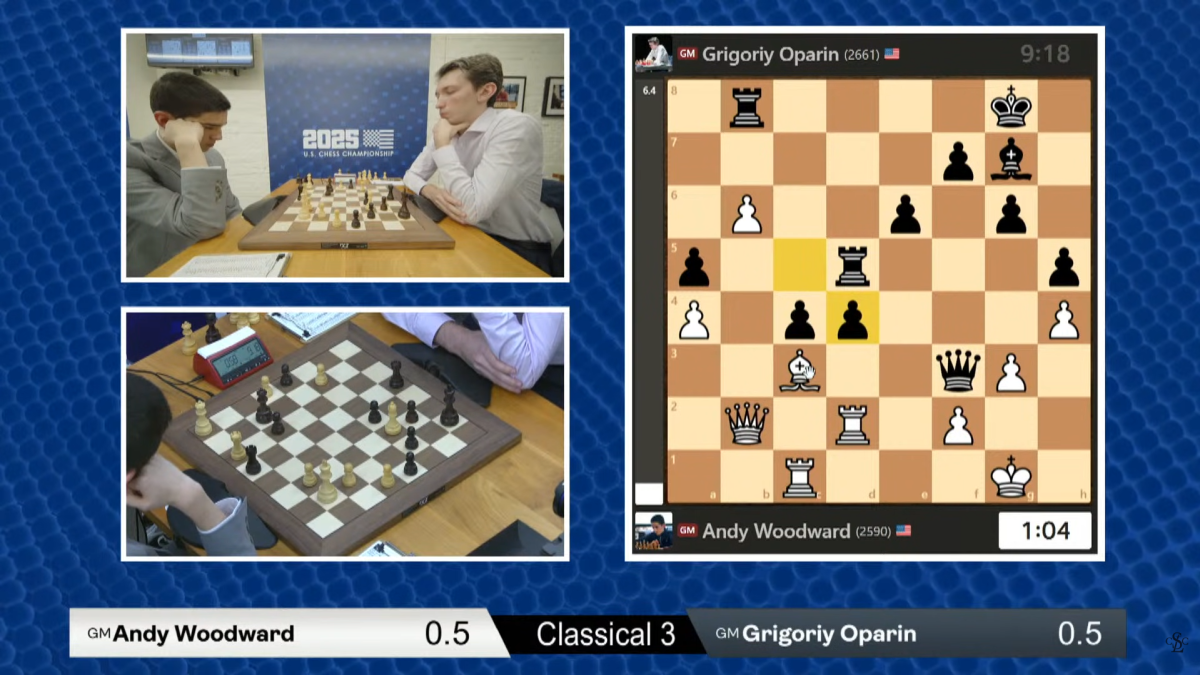
The loss of the pawn and the subsequent breakup of the central barrier gave Oparin the necessary tools to convert his advantage without complication. The remainder of the game was a matter of technical execution, as Oparin expertly used his superior resources to force Woodward’s resignation on move 48.
Ultimately, Oparin won with a queen and a rook over Woodward’s queen and bishop, while also having an extra pawn.
The contest was a masterclass of pressure from Oparin, who established an overwhelming advantage over his opponent. This edge was built steadily throughout the middlegame, leaving Woodward struggling to defend the position.