St James’ Park has always been more than a football ground.
Sitting on the hill above Newcastle city centre, it has been home to Newcastle United since 1892 and has been used for football even before that.
Its position is part of its power: the stadium dominates the skyline, pulls supporters into the heart of the city and gives Newcastle one of English football’s most recognisable homes.
It is also one of the most difficult stadiums in England for visiting teams to play at.
On matchdays, the noise, intensity and closeness of the crowd can make St James’ Park feel overwhelming.
More than 50,000 supporters packed into a steep, city-centre ground create a wall of sound that can lift Newcastle and unsettle opponents.
That atmosphere is a huge part of what makes the stadium special.
But the same setting that gives St James’ Park its character also creates its biggest problem.
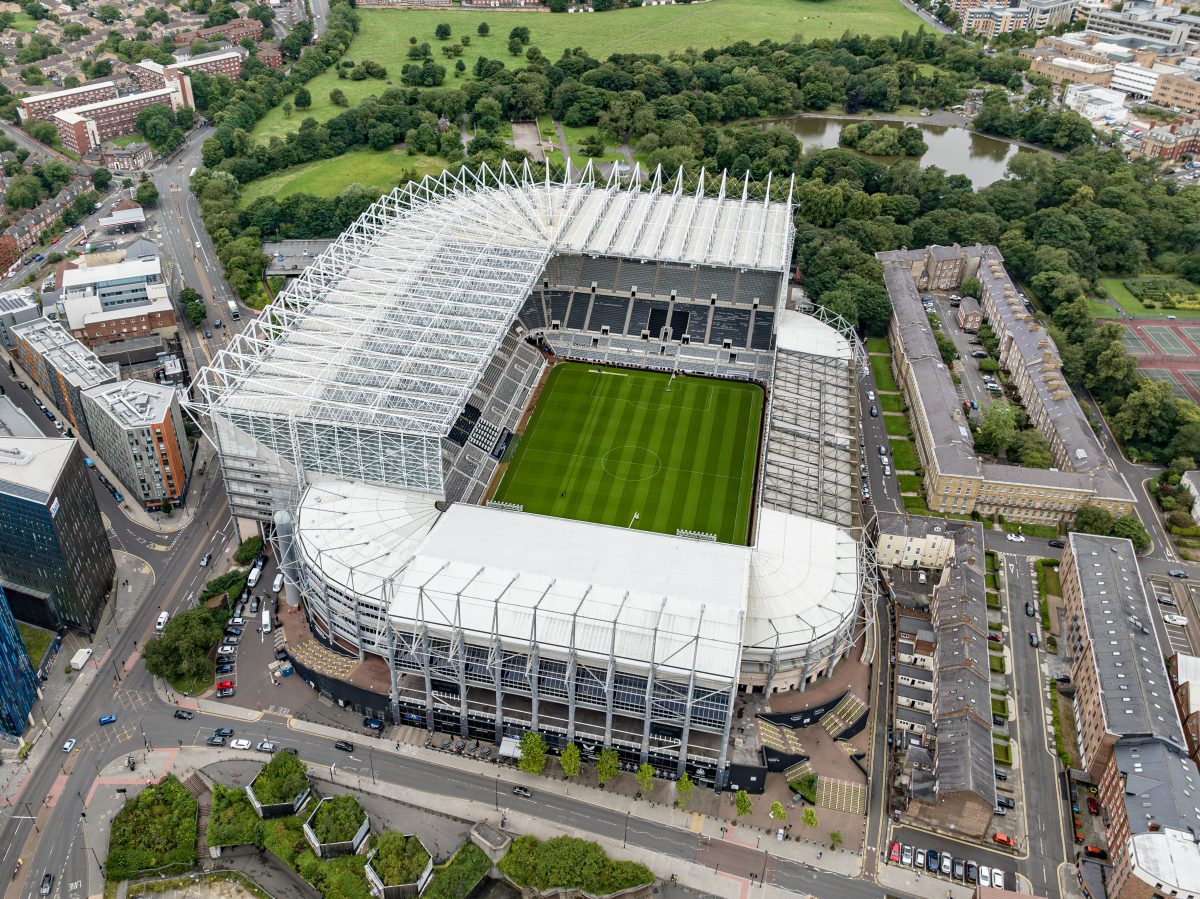
Unlike clubs with space to expand around their grounds, Newcastle are boxed in by the city, surrounding roads, protected land and historic buildings.
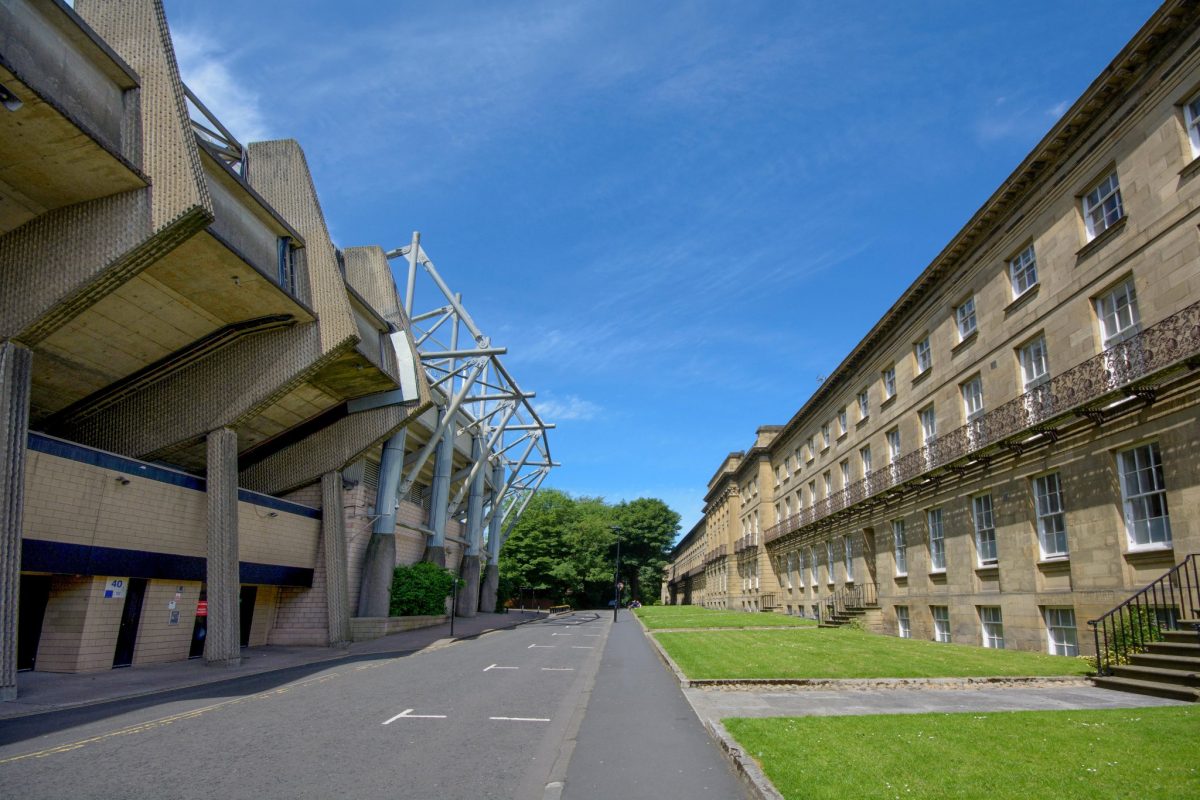
The biggest issue has long been on the East Stand side, where Leazes Terrace sits immediately behind the stadium.
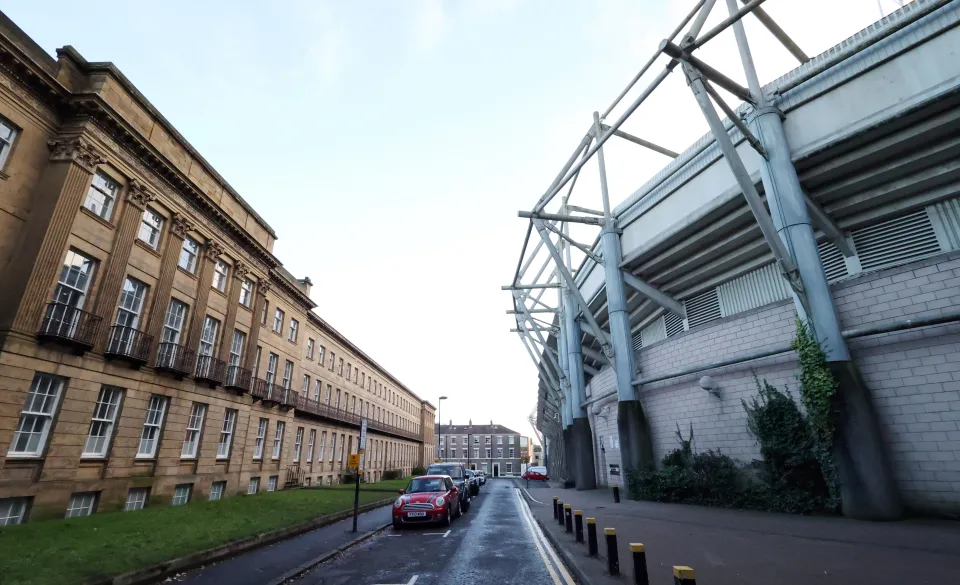
The Milburn Stand and Leazes End were redeveloped in the late 1990s and early 2000s, giving St James’ Park its current imposing shape.
However, the East Stand could not be expanded in the same way, leaving the historic stadium an uneven shape.
For years, Leazes Terrace has limited what Newcastle could realistically do.
Any major redevelopment on that side would raise issues around light, access, views, heritage rules and the impact on the surrounding conservation area.
That is why discussions about St James’ Park have often split into two difficult options: somehow expand the historic home, or build a new stadium nearby.
Leaving St James’ Park would be hugely controversial because the stadium is so tied to the club, the city and the supporters.
But staying and expanding has always looked complicated because of the buildings and protections around it.
However, recently, Newcastle United confirmed the purchase of a significant portion of Leazes Terrace, including the northern, southern and western elevations facing St James’ Park.
We have completed the purchase of a significant portion of the historic Leazes Terrace building next to St. James' Park 🤝⤵️
— Newcastle United (@NUFC) May 19, 2026
The club says the purchase is part of its long-term planning while it assesses “all credible and feasible options” for the future of its home stadium, calling the purchase a ‘strategic purchase’.
The club also mentions that the investment does not impact its football trading position.
The building is expected to remain in use as student accommodation for now, but the deal gives the club far more control over a site that has shaped stadium planning for decades.
That means Newcastle gains control of a key site beside the stadium while still retaining an income-generating asset.
But this is not a simple case of Newcastle buying a building and knocking it down.
Leazes Terrace is Grade I listed, which is the highest level of protection for a historic building in England.
Built between 1829 and 1834, it is considered a building of exceptional architectural and historic importance.
That means any demolition, major alteration or work that affects its special character would require listed building consent (Listed Building Consent – Consent Types – Planning Portal, n.d.).
In practical terms, Newcastle are extremely unlikely to be allowed to simply demolish or radically reshape Leazes Terrace to make room for a larger stand.
There is also the issue of “right to light” law.
In the UK, the law protects the amount of natural light reaching windows in a neighbouring building.
If a new stand significantly reduces light to Leazes Terrace, it could create legal problems even if the club had planning permission.
Owning the building gives the club control, but it does not remove the legal and heritage protections around it.
So what can actually be done?
The most realistic options are conservation-led.
Newcastle can maintain, restore and manage the building.
They may be able to adapt some internal areas, improve facilities, make careful changes to less sensitive parts, or include the terrace in a wider stadium and public-realm masterplan.
Some fans have also pointed to a possible financial route through the planning process.
In English property law, issues such as right to light can sometimes be resolved through agreements, compensation or negotiated settlements.
Listing also does not make a building completely untouchable.
A 1992 Independent report found that 90 listed buildings had been demolished in a single year, warning that planning controls could sometimes be worked around.
It also mentioned that 2400 Grade I or Grade II listed buildings were in a ‘poor’ or ‘very bad’ state of repair.
Researcher Jeremy Eckstein warned that “listing is not a strong enough sanction to enable historic buildings to withstand the pressures of 20th-century development.” He added that “there are ways round planning controls” and that owners could “still get permission to knock them down or, more usually, to use them for other purposes which really destroys the point” (Lister, 1992).
Eckstein said, “terraces of Nash houses which have the original architecture on the outside but are office blocks” as an example of how historic buildings can be preserved externally while losing much of their original purpose.
He also noted that “there simply isn’t the money available for the upkeep of these buildings in their original form.”
However, that does not mean Newcastle can simply pay to ignore heritage rules.
In England, demolition or major alteration of a listed building requires listed building consent, and for Grade I buildings, total loss is treated as a wholly exceptional outcome.
There are examples of Grade I buildings being devastated by fire or neglect, like Clandon Park and Uppark House, but that is very different from a developer being allowed to demolish one for convenience.
Ownership could also help the club manage rights, access, construction logistics, sightlines and planning, giving the club more room to manage legal and practical obstacles around the East Stand.
The purchase is therefore important, but not a magic solution.
The purchase also does not necessarily mean Newcastle have chosen to expand St James’ Park.
It could be part of a wider strategy while the club weighs up whether to redevelop its historic home or build a new 65,000-capacity stadium nearby.
But building new would not be straightforward either.
A stadium near Leazes Park would also likely face serious questions over public green space, heritage, wildlife, access and local opposition.
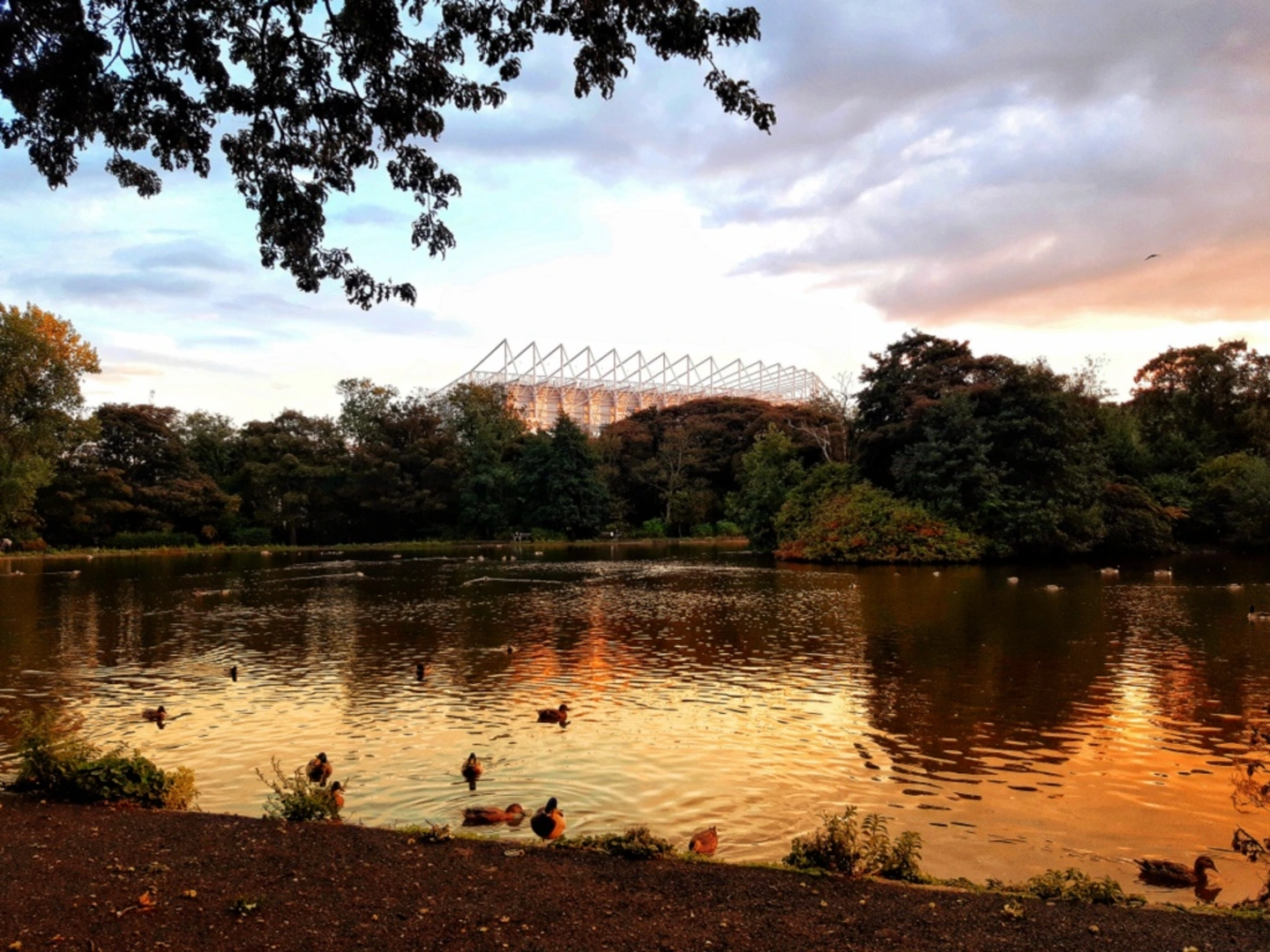
Newcastle now owns one of the biggest constraints around St James’ Park, which gives them more flexibility than before.
But the listed status of Leazes Terrace means any future plans will still face strict limits.
The club are still considering all options for the stadium’s future, whether that means expanding St James’ Park, building a new ground nearby, or finding another long-term solution.
It is yet to be decided.
While St James’ Park’s power comes from its history, its location and its atmosphere.
Those same things also make it incredibly difficult to redevelop.
Leazes Terrace is now in Newcastle’s hands, but because of its Grade I status, the club will have to find a way to work with history, not simply build over it.
REFERENCES:
Cunningham, J. (2026, May 19). Premier League club complete purchase in major boost to stadium plans. talkSPORT. https://talksport.com/football/4270445/newcastle-united-land-purchase-st-james-park-new-stadium/?utm_source=chatgpt.com
Historic England. (n.d.-a). Listed Building Consent | Historic England. https://historicengland.org.uk/advice/planning/consents/lbc/?utm_source=chatgpt.com
Historic England. (n.d.-b). Numbers 1-59 Including Lake House, Garnett House, Hodgkin House, Gurney House and Embleton House, Non Civil Parish – 1335857 | Historic England. https://historicengland.org.uk/listing/the-list/list-entry/1335857?utm_source=chatgpt.com
Newcastle United acquires historic Leazes Terrace. (2026, May 19). NUFC. https://www.newcastleunited.com/en/news/newcastle-united-acquires-historic-leazes-terrace?utm_source=chatgpt.com
Roberts, A. (2026, January 15). Can Changes be made to a Grade 1 Listed Building? | JLE Studio. JLE Studio. https://www.jlestudio.co.uk/blog/can-changes-be-made-to-a-grade-1-listed-building
Rogers, J. (2023, December 19). Mega-rich Premier League club ‘wants to make us homeless’ to build huge stadium – we won’t be swayed by their millions. The US Sun. https://www.the-sun.com/sport/9883160/newcastle-united-leazes-terrace-concerned-homeless-stadium-expansion/
Wikipedia contributors. (2026, April 26). St James’ Park. Wikipedia. https://en.wikipedia.org/wiki/St_James%27_Park
Lister, D. (1992, December 10). Ninety listed buildings demolished | The Independent. The Independent. https://www.independent.co.uk/news/uk/politics/ninety-listed-buildings-demolished-1562702.html