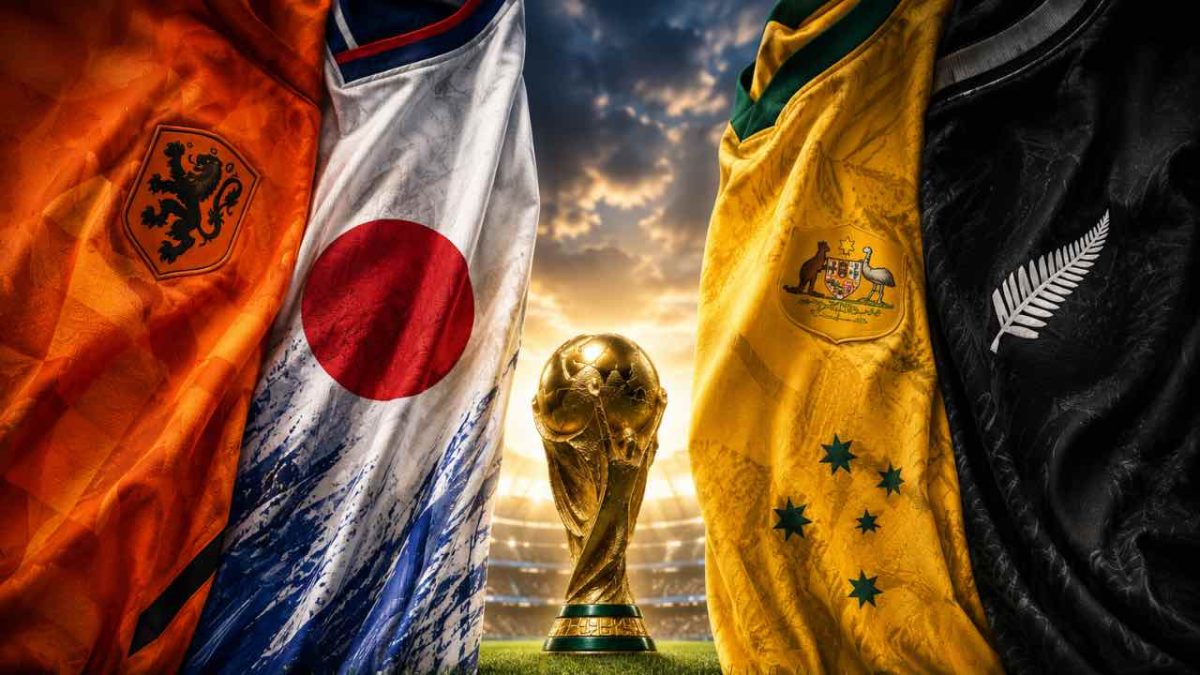
The shimmering yellow of Brazil. La Albiceleste’s blue and white stripes. The royal white of the English. The FIFA World Cup is not just a festival of football, it is a grand celebration of national identities too.
And ever since the event first aired in colour from Mexico 1962, a country’s kit has become integral to their global image, in football and beyond. The traditions have been upheld for the latest edition in North America too.
The history of colours in football jerseys dates way back to the 19th century. With 22 players simultaneously taking the field over 100 meters in lengths, it was imperative to distinguish teammates and rivals from afar.
Consequently, football became the first global sport to use dyed jerseys in international matches in 1872, a tradition that has unsurprisingly spread across sports.
But how did the specific jerseys for each side come about?
Naturally, the national flags became the inspiration behind the kits for each country, given they too were ultimately symbols to represent their motherland.
Yet, as always there were exceptions that bucked the trend to honour the deep-rooted histories of their country.
Perhaps the most famous example is the vivid orange donned by the Dutch. The colours were out in full force during the parade in Dallas ahead of their 2026 World Cup opener against Japan. The colour is a nod to the royal House of Orange-Nassau that founded the modern nation of Netherlands and continues to preside over it. Their history dates back to William the Silent, often called the Father of the Nation.
He led the Dutch revolution for freedom against the Spanish in the Eighty Years’ War beginning in 1568. The army’s coat of arms was dominated by orange, while their flag was an orange, white, and blue tricolour. It is widely considered to be the first Dutch flag, even though the modern rendition being used in the Americas has seen red replace orange.
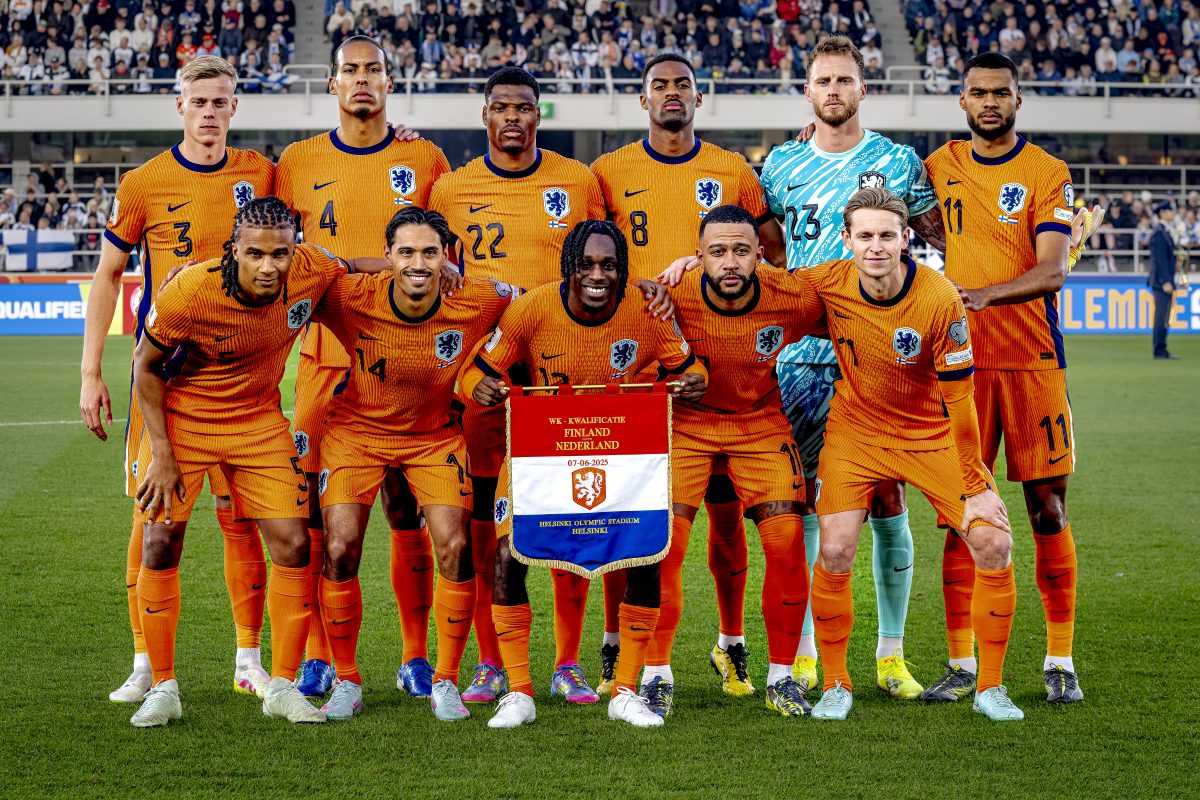
Orange eventually became so deeply associated with the Dutch that it gave birth to the phenomenon of Oranjegekte, or the Orange craze. In fact, the 2026 kit made by Nike is a tribute to some of their iconic jerseys, including when Johan Cruyff’s 1974 team made it all the way to the finals and were accompanied by 30 to 40,000 orange-clad fans throughout.
The concept of a country being represented by a non-flag colour is not as rare as it may seem.
In the 2026 FIFA World Cup alone, there are three more such nations.
The highest ranked amongst them is Japan, with their iconic white flag heralded by a red circle. And much like the country, the story is believed to be steeped deep in mythology.
Their 2026 home kit made by Adidas features a stunning hue of blue accented by white. A lot of popular accounts claim the blue was the colour of the Samurai, hence the official nickname of ‘Samurai Blue’. However, the truth is much more serendipitous.
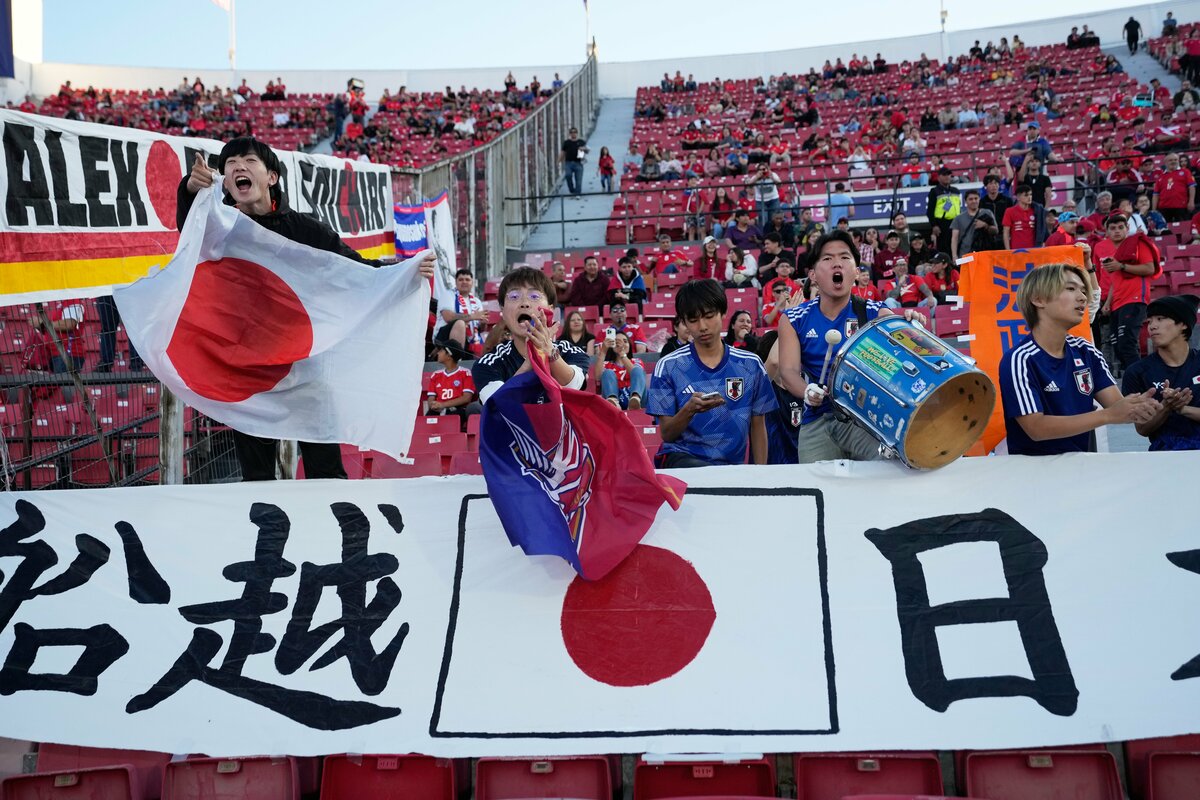
In 1930, the Tokyo Imperial team with their blue jerseys ultimately became the official representative team of Japan. The colour stuck ever since.
In fact, the Land of the Rising Sun did try to adapt the red for a brief stint between 1988 and 1992.
However, a failure to qualify for the FIFA World Cup and losing out to China in the Olympics qualification race was enough for a return to status quo.
Wearing blue again reaped near instant rewards, as they lifted their maiden Asian Cup in 1992. A World Cup debut followed in 1998, with their qualification for the 2026 event marking an eighth consecutive appearance at the highest level.

Many miles south in the Pacific nation, two more island nations in Australia and New Zealand share the trait.
Both their flags are starkly similar, featuring the Union Jack and stars representing the Southern Cross constellation. However, their jerseys are as different as chalk and cheese, and will feature in the same World Cup in 2026 for just the second time after the 2010 edition.
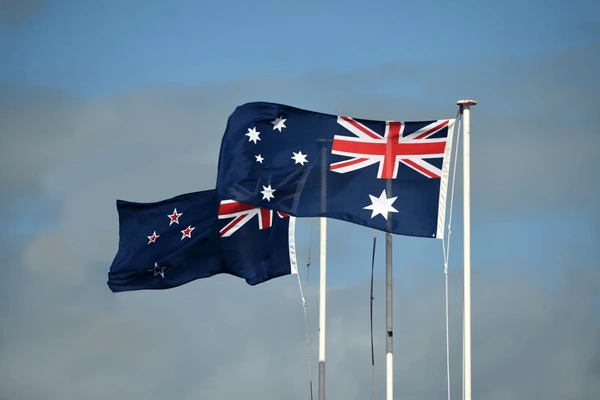
For the Socceroos, the green and gold extends far beyond the sports world much like the Dutch. The 2026 version by Nike features particularly vivid tones of the two colours, adding to the identity. In 1984, green and gold were even ratified as the country’s national colours, symbolizing Down Under staples the golden wattle flower and eucalyptus trees respectively.
However, the history of the colours dates much further back to the 1880s, when the Australian cricket team began wearing caps and blazers of these colours. And with sports such an integral part of Aussie culture, it ultimately became synonymous with national identity.

As for their trans-Tasman rivals New Zealand, the 2026 World Cup will be the first time they wear their traditional colors. However, the story of their black obsession dates back to a similar timelines as the Aussies.
In 1887, sports in Aotearoa became formalized by the founding of the NZ Amateur Athletic Association.
They consequently held competitions all-around the country with the reward being a typical trophy, and a more unique black cap.
Before long, the headwear became synonymous with sporting brilliance in New Zealand and inspired the rugby team to adopt black too.
The other sporting teams followed suit. It helped that black also represented the Maori, New Zealand’s traditional Polynesian population.

Funnily enough, the footballing team had to break from the tradition in the 1920s because of a clash with the kits of referees.
The Kiwis went to the other extreme and began donning white, which remains their away colour for the current World Cup edition.
By the 1980s, they even began to be known as the All Whites, mostly to contrast them from the much more popular ‘All Blacks’ rugby team.
However, with referees no longer wearing black, New Zealand have returned to featuring it as their home colours for the 2026 FIFA World Cup.
Now the next time you see these teams walk out in familiar yet non-flag colours, you’ll know why.
Perhaps a history lesson on Italy’s Azzurri blue would have perfectly fit the narrative too, but we’ll wait till the next time they qualify for a major event!