Following a hard fought 2-2 draw against Liverpool to open their season, Newcastle United officially secured their first victory of the Matthias Jaissle era against Tottenham. The Magpies traveled to North London and succesfully secured the 3 points against a heavily rebuilt Tottenham Hotspur squad, courtesy of 2nd half strikes from Anthony Elanga and Yoane Wissa.
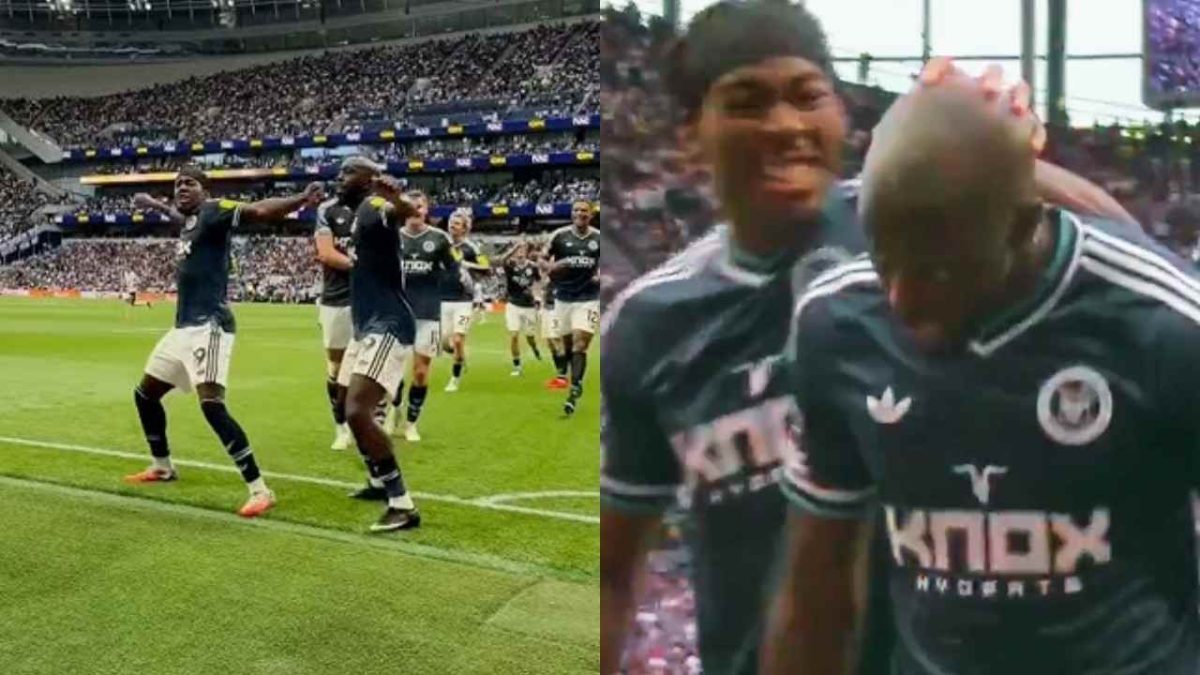
When Wissa hooked the ball beyond the goalkeeper in the 72nd minute to double Newcastle’s advantage, he immediately sprinted toward the corner flag. Joined by scorer of the first goal, Elanga, the 29 year old forward extended 1 arm and repeatedly chopped his other hand downwards in a rhythmic whipping motion, known as the Fimbu celebration, which holds massive significance in Congolese tradition.
To the casual viewer, it looked like just another trendy dance for the cameras. In reality, the Fimbu is a powerful cultural symbol with real history behind it.
The origin of the whip
The word Fimbu translates directly to whip or chicotte in Lingala, the most widely spoken language in the Democratic Republic of Congo. The movement itself was born in 2015, entirely inspired by Congolese musician Felix Wazekwa and his wildly popular track Leopards Fimbu na Fimbu.
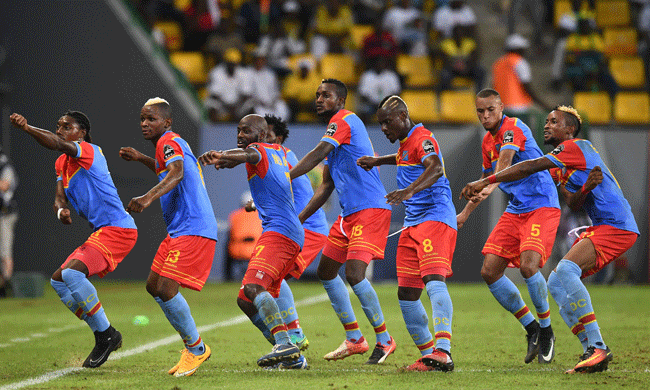
The celebration completely took over African football during the 2016 African Nations Championship in Rwanda. DR Congo went on to win that entire tournament, establishing the whipping motion as the defining symbol of the national team. By the time the 2017 Africa Cup of Nations arrived, prominent forwards like Cedric Bakambu and Firmin Mubele were performing the Fimbu after every single goal, turning a simple dance into a recognizable piece of national identity.
Reclaiming a brutal colonial history
This is where the narrative actually sharpens. The whip is not just a random prop to hype up the crowd. It carries a notoriously dark historical association with corporal punishment and violent oppression during the Belgian colonial period in Congo.
But football completely flipped the script. Rather than running away from a painful symbol, the Congolese people and their athletes actively reclaimed it. They transformed an instrument of colonial violence into a lively, energetic expression of sporting dominance and absolute joy. When players mimic the whip today, they are metaphorically punishing their opponents on the pitch. They took a terrifying historical weapon and weaponized it for their own entertainment.
A global stage
During the FIFA World Cup earlier in the year, Wissa had already introduced the celebration to millions. In their opening clash against Portugal in Houston, Wissa scored the historic first goal for his nation at the world stage, equalising the score at the end of the first half. The former Brentford forward was immediately joined by his teammates for the fimbu dance. The movement went completely viral, even prompting Thierry Henry and Zlatan Ibrahimovic to perform it on live television during broadcast duties.
🇨🇩 Yesterday, we celebrated FIMBU in London! 🥁🔥
— (Parody) Yoane Wissa (@wissa_yoan) August 30, 2026
After smashing Tottenham 2–0, here’s the original Congolese Sebene Fimbu by Félix Wazekwa, released on 5 September 2015. 🎶
In Lingala, “Fimbu” means “whip” – a playful football metaphor for giving the opposition a lesson in… pic.twitter.com/RGrPfBt1T5
🇨🇩 Zlatan Ibrahimović and Thierry Henry join in on the viral FIMBU celebration live on set. 😂🔥
— Base 5.0 (@base5zero) June 28, 2026
DR Congo’s iconic celebration has officially gone global. 🌍🕺🏾 pic.twitter.com/aBCqGCqkHD
Now wearing the famous black and white shirt for Newcastle, Wissa is carrying that exact same cultural weight into the Premier League. When he strikes that familiar pose after finding the back of the net, he is doing much more than securing 3 points for his club. He is broadcasting Congolese resilience and identity directly into the homes of millions, proving that the best celebrations are always built on something real.