England will go into the 2026 World Cup with one clear aim: to finally end the long wait for a major men’s international trophy.
Finishing runners-up in both the 2020 and 2024 Euros, the team has grown together, raised expectations, and left a lingering feeling of substantial glory to come.
England is packed with quality across the pitch.
They have established stars like Harry Kane and Marcus Rashford; players used to competing deep in the Champions League in Phil Foden, John Stones, and Bukayo Saka, paired with a younger group that has already proven itself at the highest level, i.e Lewis Hall, Marc Guehi and the likes.
That depth has made England one of the teams that not only England supporters, but also the neutrals will expect to challenge seriously for the trophy.
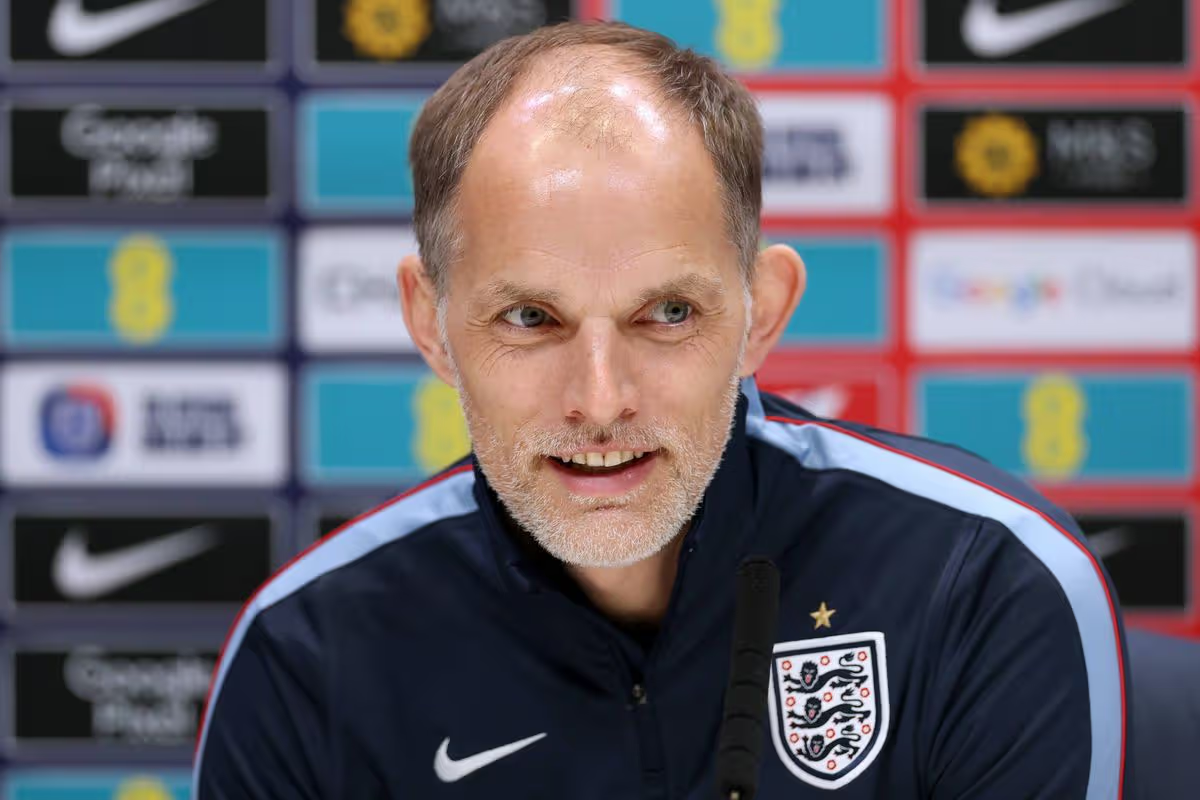
But that strength also creates difficult decisions, especially for the manager, Thomas Tuchel.
When a country has so many options, every position brings questions: which forwards make the cut, how many midfielders are needed, who offers the right balance, and which players are unlucky to miss out?
Reports surfaced before the announcement suggesting several high-profile names, like Cole Palmer, Harry Maguire, Phil Foden, Morgan Gibbs-White, Adam Wharton, Lewis Hall and others were reportedly set to miss out.
Supporters were stunned by the scale of the omissions, and many criticised the leaked squad as one of the weakest or most controversial England could have chosen.
But while the leaks made the squad itself look like it lacked the ‘stardom’ it could’ve had to many fans, the official announcement video struck a very different note.
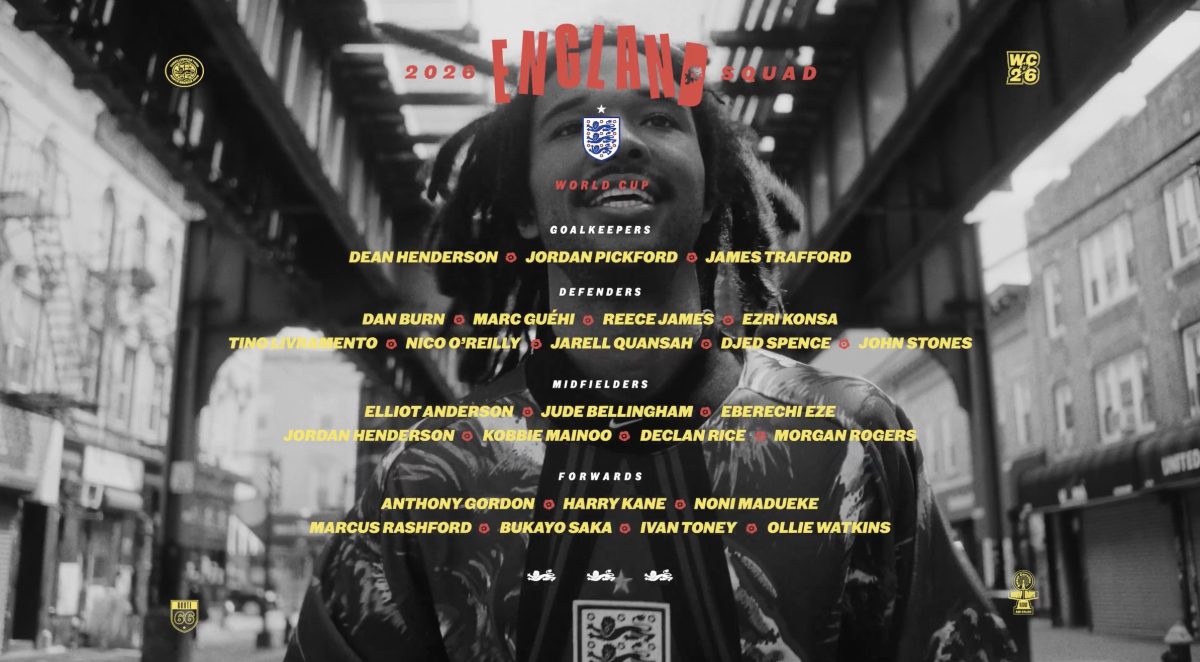
Rather than treating the announcement as a standard squad graphic, England turned the reveal into a short film. The video opened with an old interview clip of John Lennon, a member of the Beatles, in which he says, “I think we are jolly English, actually”, a line that set up the British pop-culture theme before the football names began to appear.
From there, the film moved into a New York-inspired world, with the players’ names placed into the city rather than simply written on screen.
England’s official site says the video was filmed in New York and directed by Keane Shaw and Pete Martin, with each player’s name brought to life across a cityscape including music venues, cinemas and street-style locations.
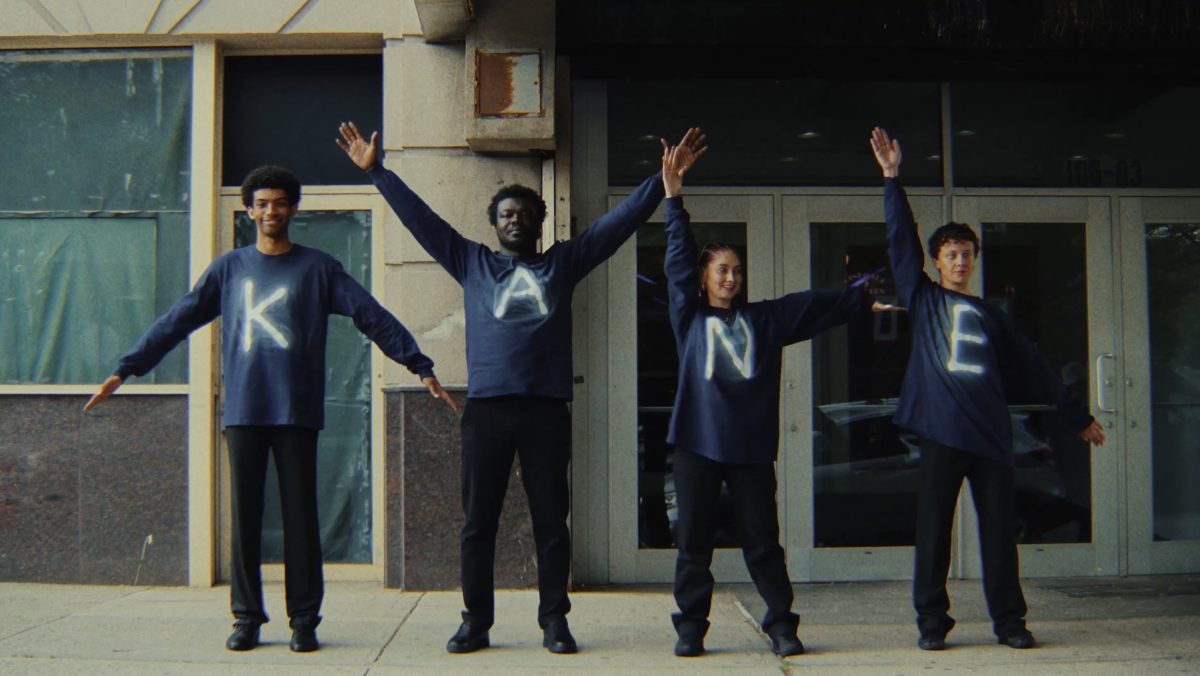
The video also used Beatles-style visual references throughout, from psychedelic animation to nods that fans picked up on, including an Abbey Road-style crossing for John Stones, Yellow Submarine-like animation, umbrella imagery linked to the “Come Together” music video, and a pose from Harry Kane that appeared to echo the famous ‘Help!‘ artwork (see featured image above).
It felt designed not only to confirm the squad, but to create a visual starting point for England’s campaign.
Come Together. pic.twitter.com/BAsCH4YCjx
— England (@England) May 22, 2026
Several names were worked into American-style settings, on items and locations such as taxi cab signs, cowboy boots and city storefronts, while Jordan Pickford’s name appeared on a convenience-store-style sign with the phrase “a safe pair of hands” and his England legacy number 1225.
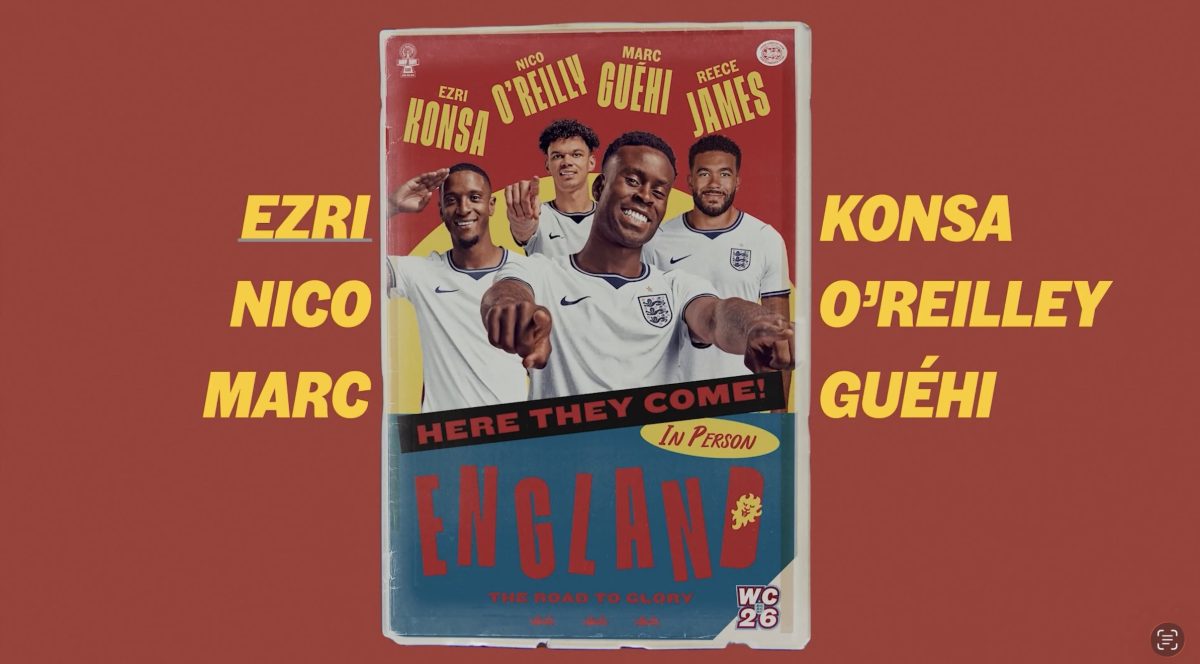
The video even included a small mistake, with Nico O’Reilly’s name later misspelt as “Nico O’Reilley”, something fans quickly noticed after the reveal went live.
The styling also leaned into England’s current Nike era.
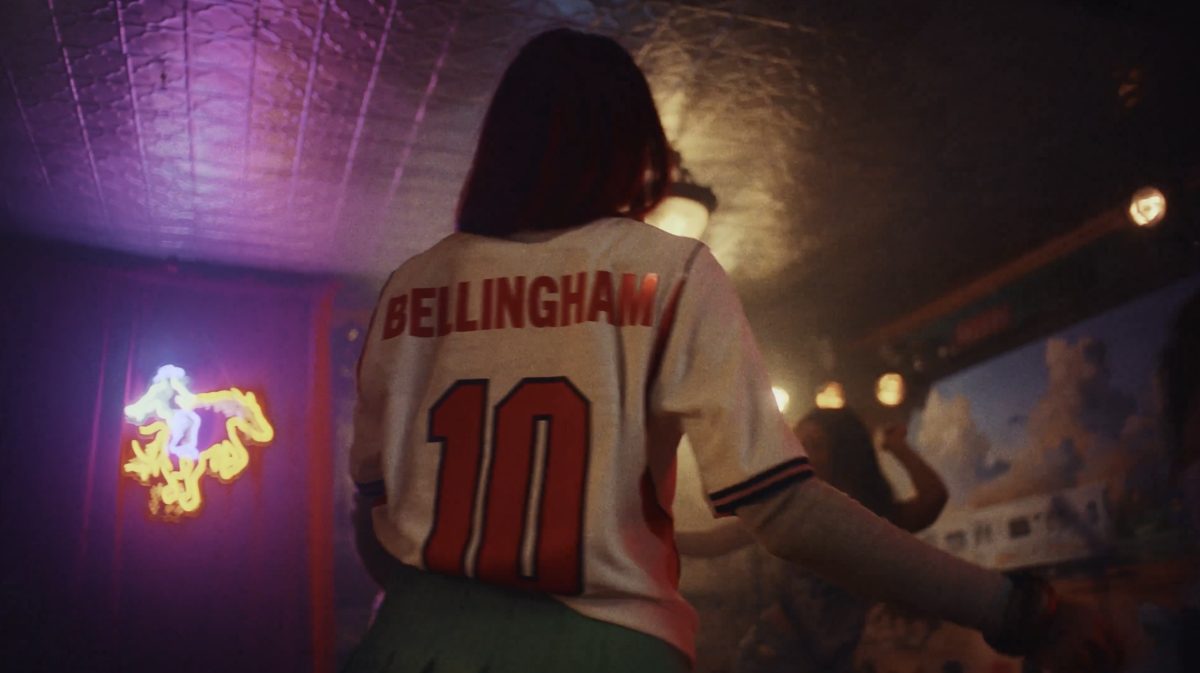
The video appeared to also put spotlight on Nike’s wacky lifestyle shirt based on retro England goalkeeper kit, worn by the model running through the city in the video.
Rather than presenting it as a separate kit launch, the reveal slipped it into the background of the film, making the announcement feel layered with small details for fans to spot.
The soundtrack tied all of that together. England used “Come Together” by The Beatles, a song released in 1969 as the opening track on Abbey Road, one of the most important albums in British music history.
The album reached No. 1 in the UK, spent 18 weeks at the top, and has remained one of the defining records of the Beatles’ catalogue.
The song’s popularity has lasted well beyond the 1960s.
In streaming-era fan tracking, “Come Together” has regularly appeared among the Beatles’ most-played songs, with one 2024 Spotify count placing it above 738 million streams, second only to “Here Comes the Sun” among Beatles tracks at the time (ABBEY ROAD, 1969).
Lyrically, “Come Together” is loose, surreal and full of strange character sketches rather than a straightforward story.
The video used the line “Come together, right now” repeatedly.
In the context of a World Cup squad, the phrase became a simple but inspiring idea: players from different clubs, backgrounds and roles being brought into one group for the same tournament.
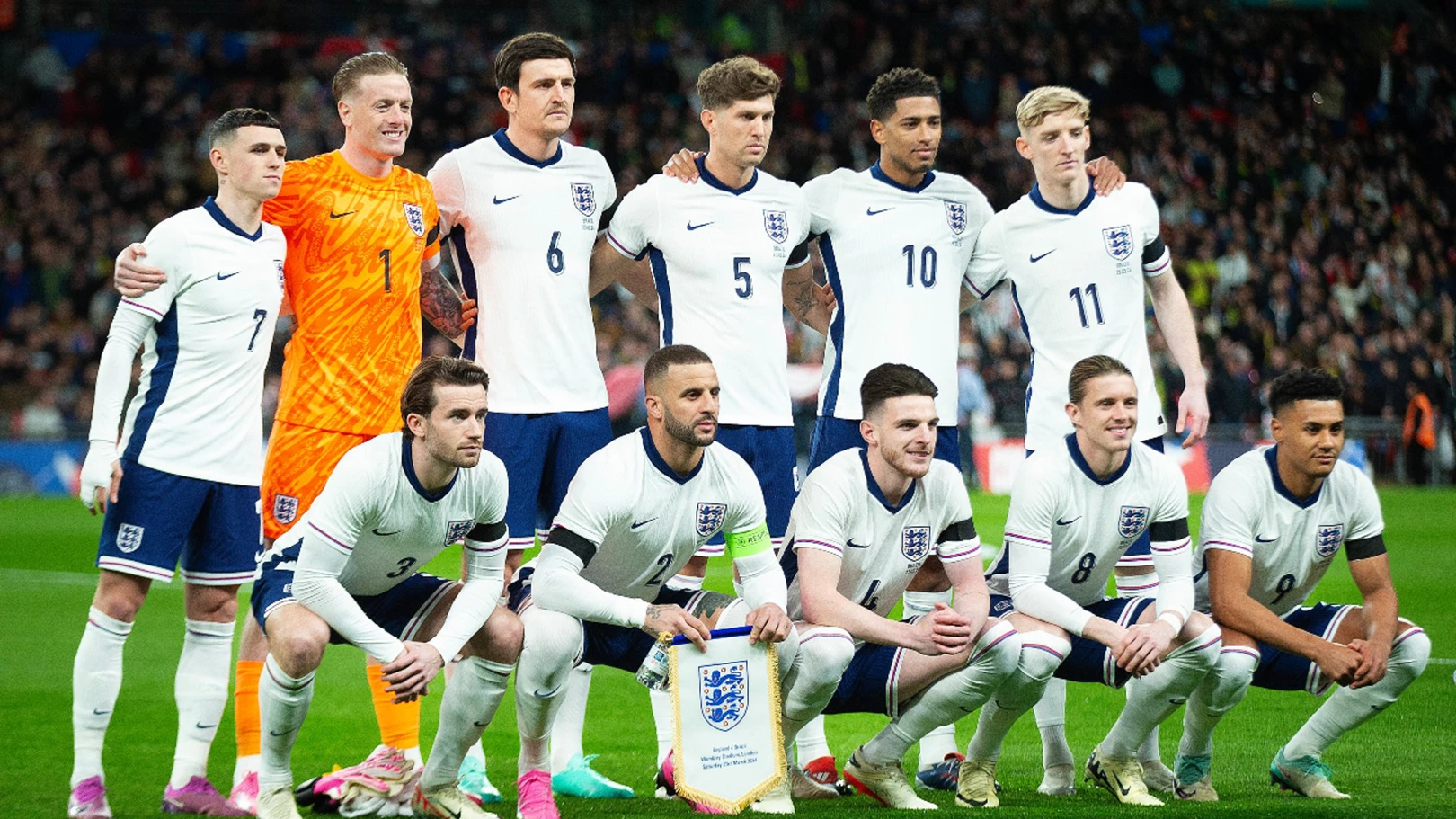
The announcement video gave England’s World Cup campaign a stylish opening, but the real question is whether Tuchel’s squad can now live up to the production and give fans a reason to sing that football is coming home.