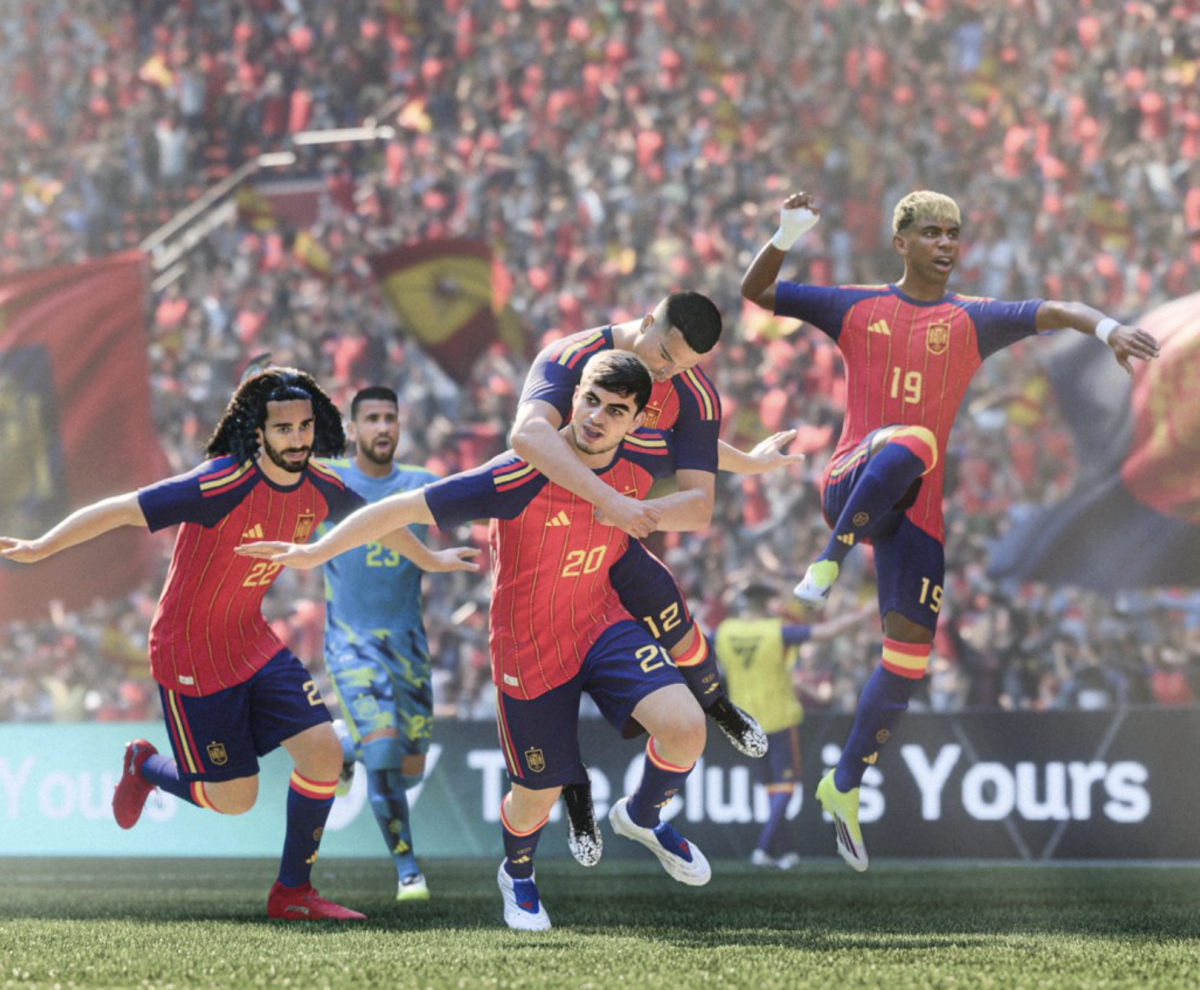
EA Sports are a brand synonymous with football. Their flagship franchise, FC (known formerly as FIFA), is one of the most popular sports video game franchises in the world, with every instalment regularly selling more than 10 million copies worldwide.
Using hundreds of underlying data metrics that help them accurately predict performance levels of the world’s best professional footballers, EA Sports have the ability to run virtual simulations that closely mirror the biggest football tournaments in the world.
Within EA’s simulations, each player has attributes such as pace, passing, shooting, defending, physicality, and goalkeeping, which are maintained by EA’s large scouting network and updated throughout the season to reflect real-world performances.
Using their state of the art game engine, each individual match of a particular tournament is simulated, using the aforementioned player ratings along with other influential underlying factors like team tactics, player positions and chemistry.
Naturally, they run such simulations every time the biggest and most prestigious competition in world football, the FIFA World Cup, comes around.
In the build-up to this summer’s tournament, EA Sports revealed who they were backing to lift the trophy – reigning European champions Spain.
We've predicted four in a row. Now we've run the sim again.
— EA SPORTS FC (@EASPORTSFC) June 6, 2026
The next champion? 🇪🇸 pic.twitter.com/aNRQYVB1v1
Though Spain were definitely one of the pre-tournament favourites, many fans and experts rated other nations ahead of La Roja.
Fast forward about a month and half, though, and it turns out EA Sports’ tip was bang on the money. Initially getting off to a slightly slow start by their own lofty standards, Spain picked up momentum with every passing game, and quickly began to show just why they were rated so highly.
Known for producing some of the finest midfielders in football history, Spain’s rock-solid defence was the star of the show this time around. Despite facing the likes of Uruguay, Belgium, France and finally Argentina en route to their second World Cup triumph, Spain conceded only one goal all tournament.
Though making such a prediction is a remarkable feat in itself, this is not the first time EA Sports have managed to pull this off. They have been on a roll in recent editions of the World Cup, having now predicted the last five winners will stunning accuracy.
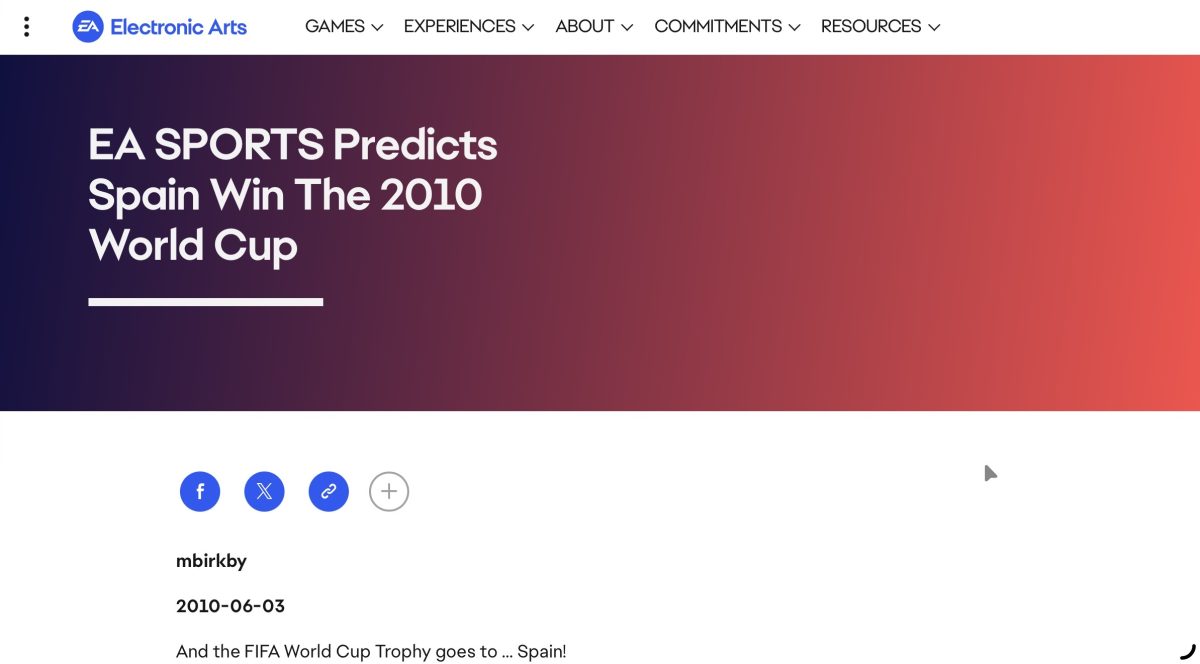
Perhaps fittingly, the pick that began their streak was also Spain, back in 2010. Just like this year, an FC Barcelona player won La Roja a tightly contested final with a goal in the second half of extra time, with Andres Iniesta scoring against the Netherlands in the 116th minute in South Africa.
In 2014, they sided with Germany. Die Mannschaft enjoyed a dominant run in Brazil, eventually winning their fourth title by beating Argentina in the final.
In 2018, they backed France to go all the way. With a young Kylian Mbappe leading the way, Les Bleus managed exactly that, beating Croatia 4-2 in Moscow to secure the World Cup for the second time in their history.
In 2022, it was Argentina that got EA Sports’ blessing.
🇪🇸✅ 2010
— EA SPORTS FC (@EASPORTSFC) November 8, 2022
🇩🇪✅ 2014
🇫🇷✅ 2018
🇦🇷❓ 2022
EA SPORTS has got it right since 2010 👀 See how the FIFA World Cup played out in the #FIFA23 simulation and have your say 🏆 https://t.co/rQ24tEwrTg pic.twitter.com/EuiyhQnPQI
Though they began the tournament on the wrong foot, shockingly losing 2-1 to Saudi Arabia, Lionel Messi ultimately succeeded in getting his hands on the one title that had eluded him all his career.
After the dramatic events that unfolded at MetLife Stadium on Sunday, EA Sports’ scarcely believable prediction model has passed it’s latest test. When the next edition of the World Cup comes around in 2030, fans will once again be on the lookout for who the simulation backs to take home football’s biggest prize.