Following a standout performance with the England National Football Team in 2026 FIFA World Cup, Djed Spence signed a €30 million permanent transfer from Tottenham Hotspur to Inter Milan.
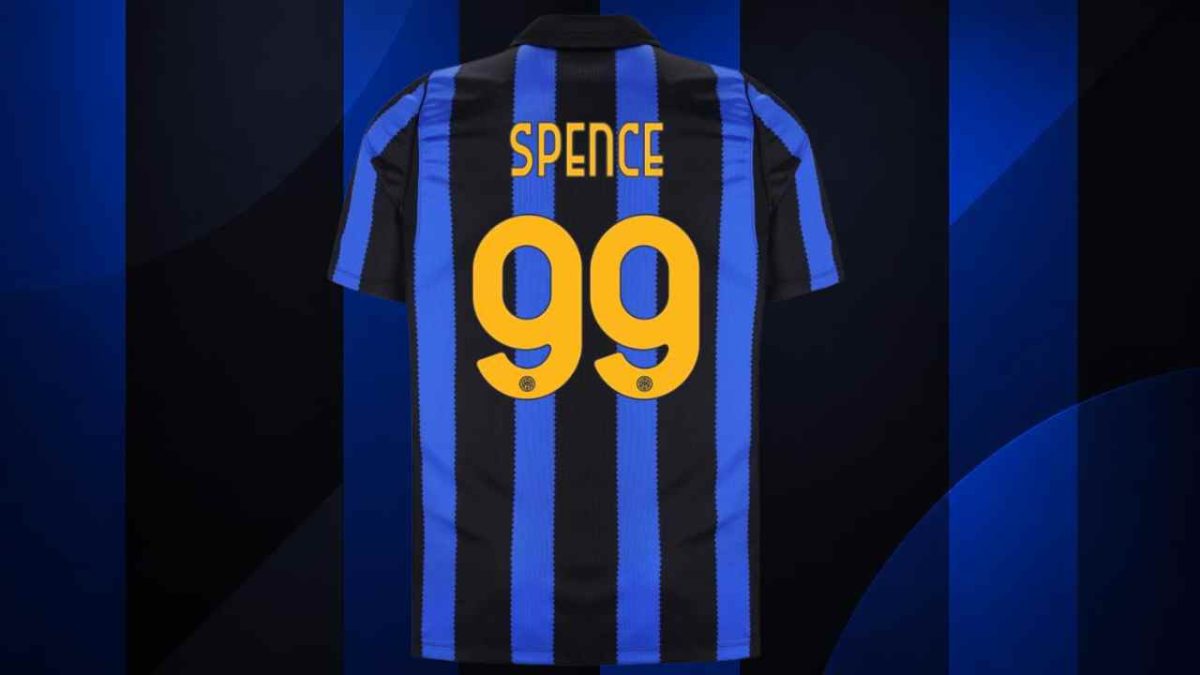
The move includes a five-year contract that runs through June 2031, with the 26-year-old officially wearing the number 99 shirt at Inter Milan.
When the transfer package was being put together, early reports from Italian outlets suggested that Spence would wear the number 24 shirt.
However, once the transaction was officially completed, the Inter Milan Official Store updated its squad registry, confirming his permanent selection as number 99.
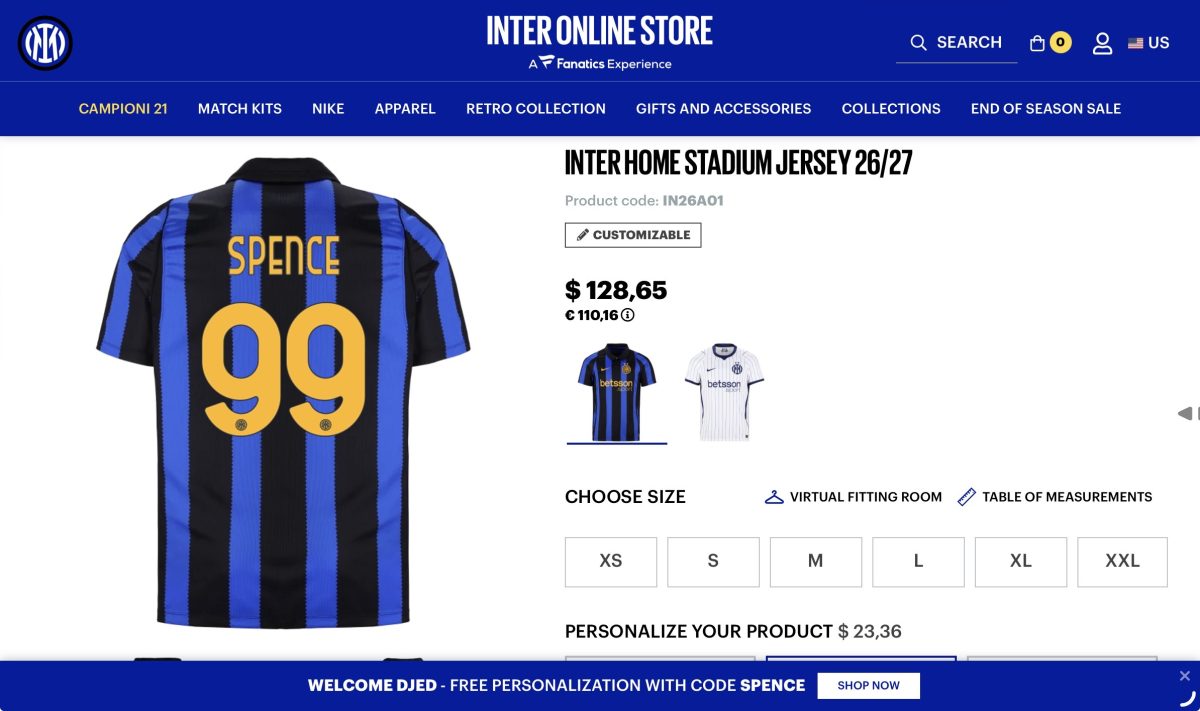
There was talk for Spence to choose numbers 24 and 2, but his final choice was jersey number 99.
At Inter Milan, the 99 shirt number has been previously worn by Mehdi Taremi (during 24/25), Andrea Pinamonti (20/21 – 21/22), Andrea Pinamonti (16/17 – 17/18), Zé Turbo (14/15 – 15/16), Antonio Cassano (12/13), Lampros Choutos (04/05 – 06/07), and Stefano Lombardi.
Spence arrived as a direct replacement for Denzel Dumfries, who left for Real Madrid, but his decision to sign for such a high number has reignited debate among traditional football fans, who see such high numbers as a marketing gimmick.
The “gimmick” label stems primarily from the fact that No. 99 is intended to stand out. Traditionally, shirt numbers in football have been used to indicate a player’s position and role on the team. A right-back wearing No. 2, for example, fits right into the system. A player selecting 99 immediately violates that visual convention.
This makes the number far more memorable. Instead of simply being another player wearing a standard squad number, the player is associated with a unique number that fans can immediately recognize. The number itself becomes a component of his identity.
Historically, a starting right-back would always wear the number 2, while center-backs wore 4 or 5, and the main striker wore the prestigious number 9.
This is where personal branding enters the picture. Modern footballers are increasingly being marketed as both individual brands and members of their clubs. An unusual shirt number adds another distinguishing feature that can help a player stand out from his teammates and competitors. “Spence 99” is far more visually appealing than a standard “Spence 2”, especially on social media, merchandise, and football-related content.

Furthermore, most major European leagues strongly restrict first-team squads to numbers 1–25, such as Spain’s strict La Liga guidelines, so global fans rarely saw outfield players wearing numbers in the 1990s.
Forward-positioned players have frequently used the number 99 as a mathematical loophole to keep a “9” on their back when a club’s traditional number 9 shirt has already been claimed by an established teammate.
Spence’s choice is entirely permissible because Italy’s Serie A operates as a tactical and numerical wild west, allowing players to register any available digit from 1 to 99. This open-door rule has resulted in a long history of outrageous decisions in Italian football.
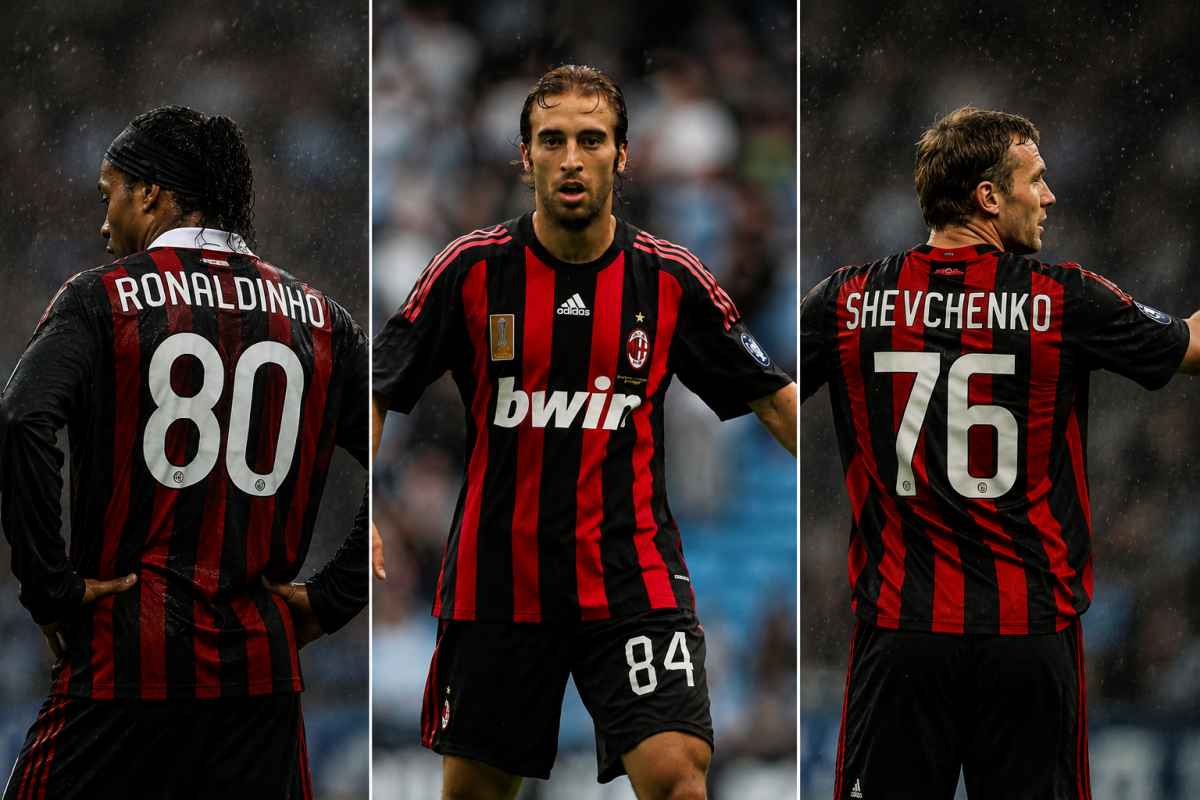
Most notably, AC Milan experienced a massive wave of birth-year choices in 2008, when newly signed superstars Ronaldinho took 80, Andriy Shevchenko took 76, and Mathieu Flamini took 84 because their preferred traditional shirts were already taken.
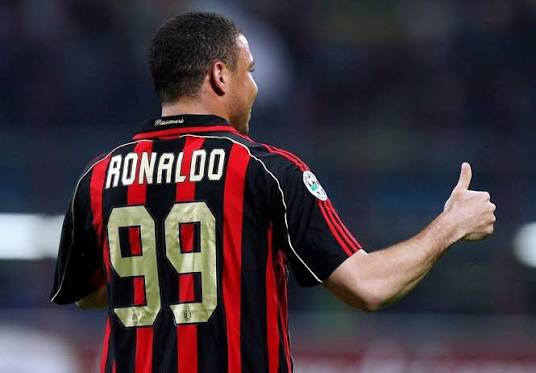
Some players have long taken advantage of the freedom; Ronaldo Nazario famously wore the number 99 at AC Milan in 2007 because Filippo Inzaghi wore the number 9.
The league has also seen absolute positional anarchy, with midfielder Jonathan de Guzman wearing the number one shirt at Chievo Verona in 2016, goalkeeper Emiliano Viviano wearing the number two at Sampdoria, and goalkeeper Gianluigi Donnarumma wearing 99 at AC Milan to honor his birth year.
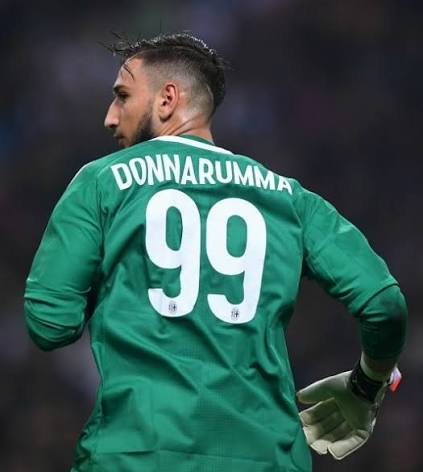
These are just prominent ones with different jersey numbers among many players.
Finally, Spence’s decision is a verified fact that directly integrates him into Italy’s culture of structural defiance.