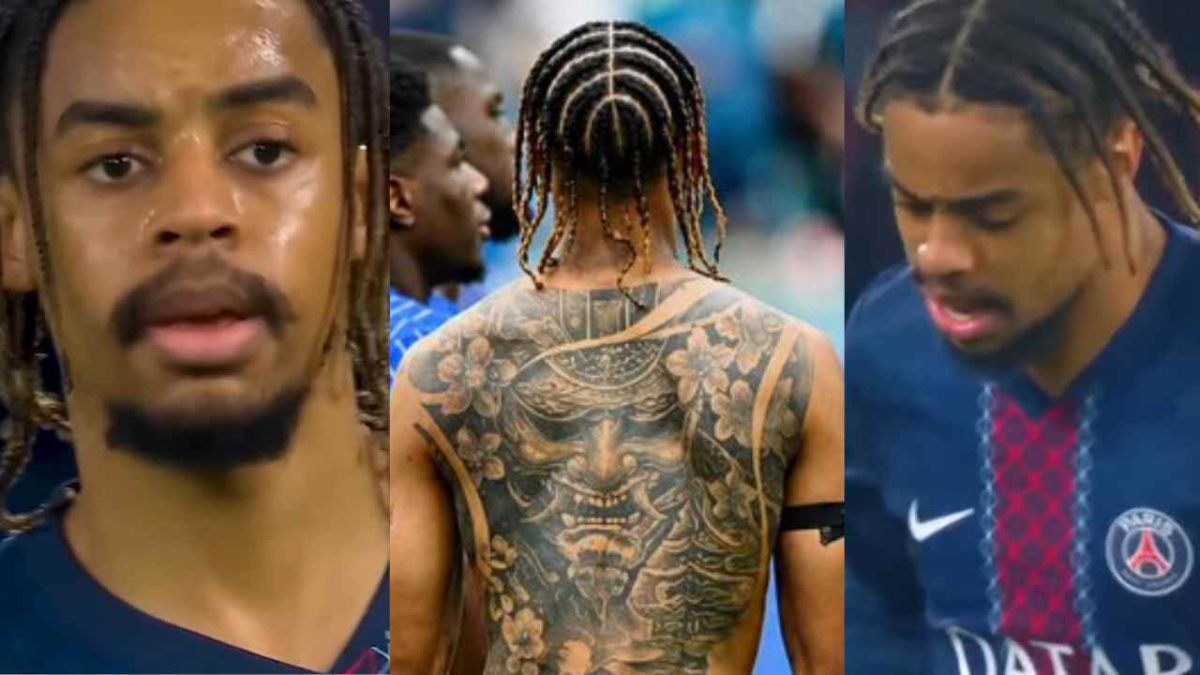
Bradley Barcola, the star forward of Paris Saint-Germain and France National Football Team, has created a unique tattoo collection that incorporates his Christian faith with Japanese anime and folklore.
Rather than traditional footballer tattoos, his designs incorporate religious imagery, popular Japanese characters, and traditional symbols, resulting in a collection that reflects both personal beliefs and influences from modern otaku culture.
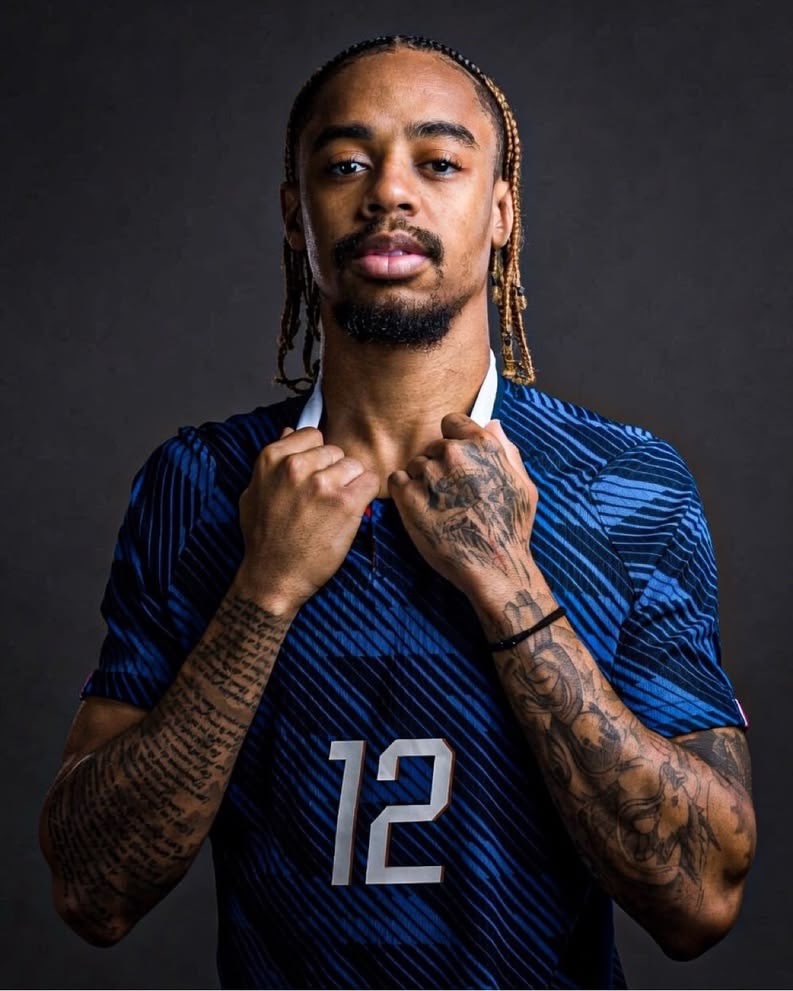
On his right arm, a dense block of elegant cursive text covers the inner forearm, arranged vertically in the style of a sacred scroll. The script serves as a visible reminder of faith, morality, and spiritual grounding, especially during difficult times or moments of success. The tattoo, which is located on such a prominent part of his arm, also serves as a public expression of the values that he still holds dear.
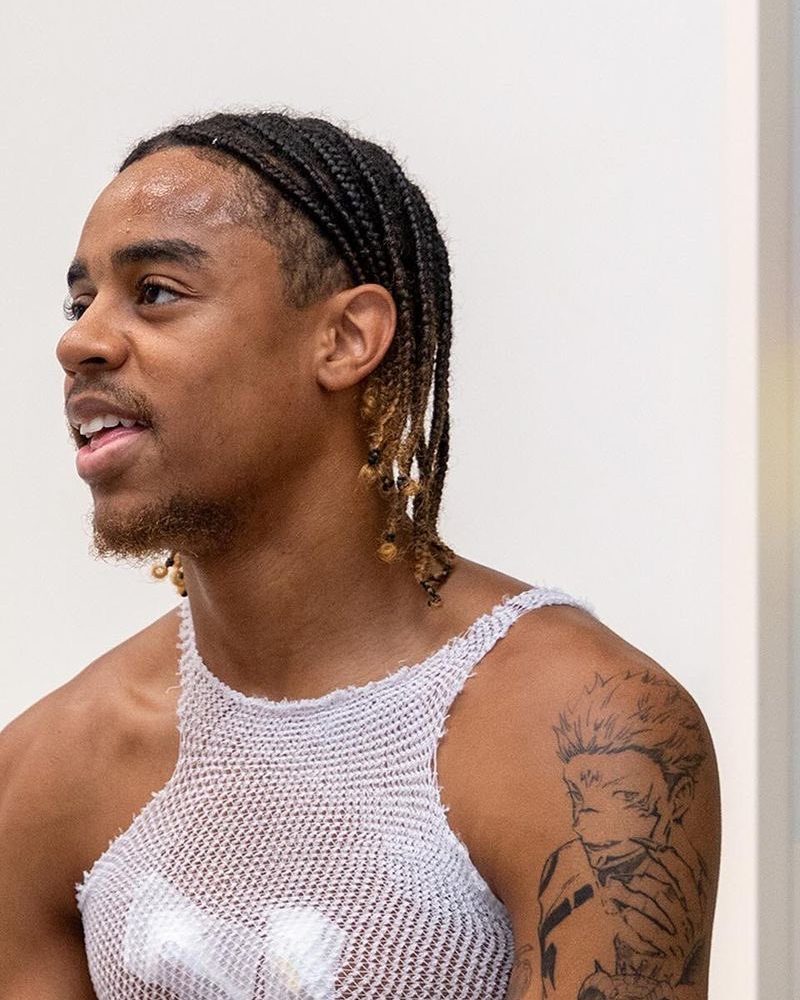
His left arm takes a very different path, evolving into a sleeve heavily influenced by Japanese animation. The “King of Curses,” Ryomen Sukuna from Jujutsu Kaisen, is depicted on the biceps. The character is associated with overwhelming power and dominance, so the imagery corresponds to concepts of competitive intensity, confidence, and the ability to adopt a more ruthless mindset when confronted with high-pressure situations.
Further down the left forearm, the sleeve transitions from Sukuna’s darker imagery to Studio Ghibli’s Spirited Away, which invokes childhood nostalgia. Barcola has detailed depictions of Chihiro and Haku in his dragon form.
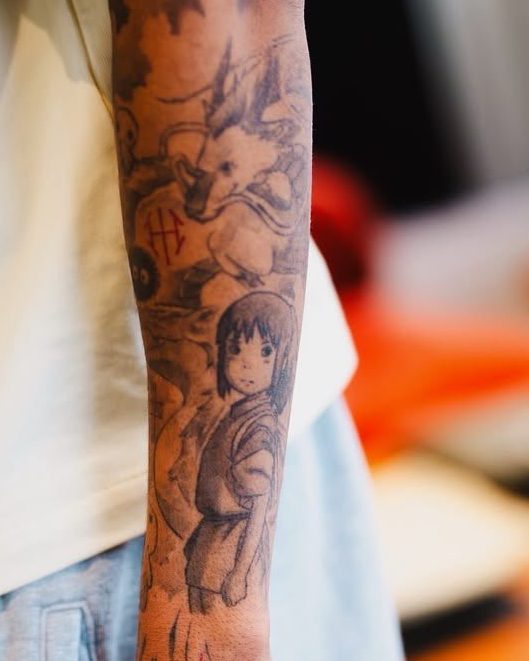
Chihiro represents resilience, adaptability, and the determination to survive in an unfamiliar world without losing her identity, while Haku (the dragon) incorporates themes of loyalty, guidance, and protection. Together, the characters add a softer yet equally important dimension to the sleeve.
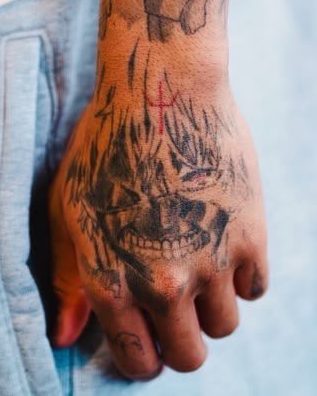
The imagery darkens again on the back of his left fist, with a heavily shaded, manic grinning mouth inspired by Ken Kaneki’s ghoul mask from Tokyo Ghoul. Such imagery may represent a hidden or “shadow” self, raw energy, or the release of an aggressive side under pressure. The tattoo thus functions as psychological armor, projecting confidence and intimidation.
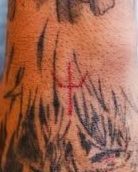
A small red cross above the design creates a stark contrast, linking the darker imagery to Barcola’s Christian faith and implying a balance of competitive aggression, gratitude, and humility.
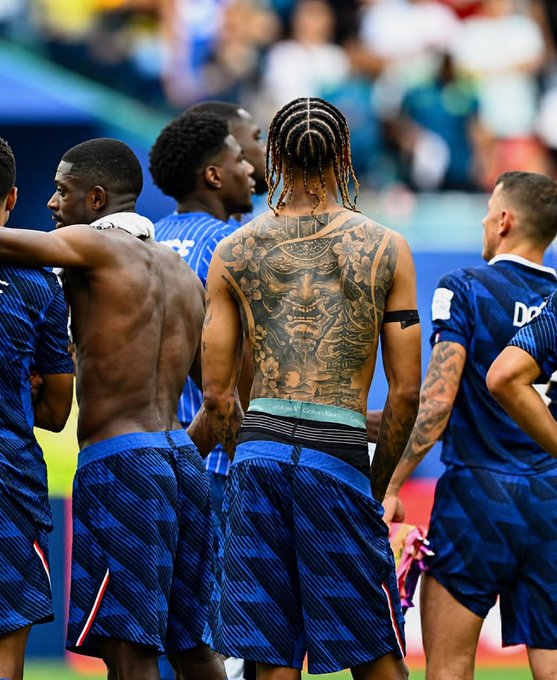
His largest tattoo spans his entire back: a black-and-grey fresco of a horned Japanese Oni mask surrounded by branching cherry blossoms. In Japanese tattoo symbolism, Oni masks can be used as protective figures to ward off evil, misfortune, and adversity.
The enormous scale of the back piece emphasizes endurance, while the surrounding sakura symbolize life’s impermanence. Their brief period of peak beauty before fading exemplifies the transient nature of youth and physical prime.
When combined, Barcola’s tattoos represent faith, anime, folklore, resilience, and competitive ambition, transforming his body into a collection of symbols that balance spirituality with the intensity of elite football.