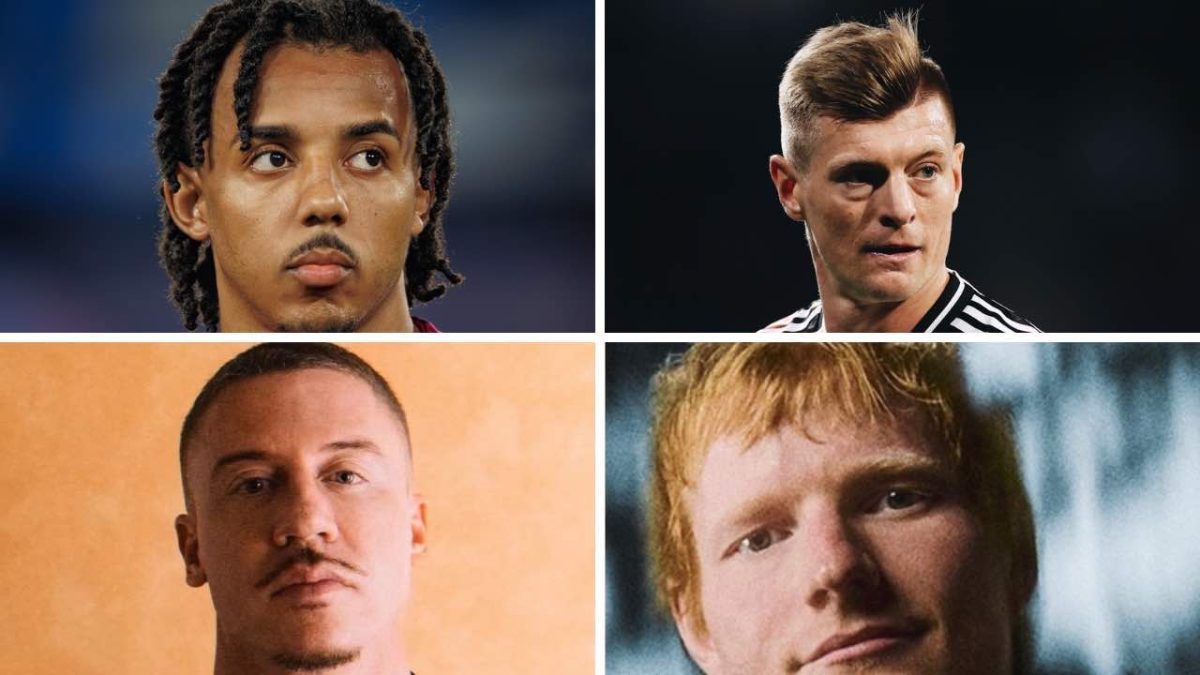
The viral AI-generated video of footballer Pierre-Emerick Aubameyang has sparked debate about how quickly artificial intelligence is transforming sports media and digital art.
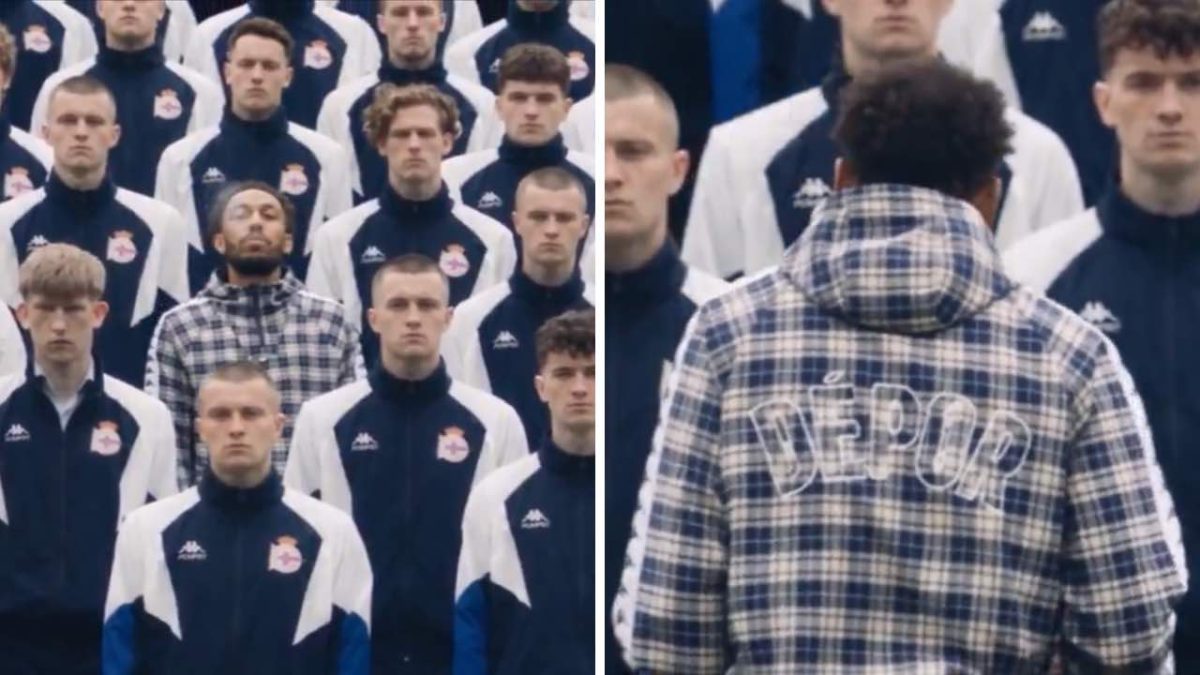
The video causing controversy features footballer Pierre-Emerick Aubameyang wearing a custom Pompeii X RC Deportivo de La Coruna kit.
Pompeii X RC Deportivo
— wekker studios (@wekkerstudios) September 14, 2026
Dirección creativa y producción con IA por @wekkerstudios
Spec ad, non afiliated to @PompeiiBrand and @RCDeportivo pic.twitter.com/MvLLlMvgDH
In the sequence, Aubameyang leads a large group of young men, as they march into a grand, institutional-style outdoor, they move in an extremely hypnotic, aggressively precise, and synchronized wave pattern. The video first became popular on platforms such as X (Twitter), TikTok, and Instagram as an AI “spec ad” created by a creative account called Wekker Studios.
This made fans divided, because the video was generated by AI.
Some football fans praised its visual quality and cinematic presentation, while others expressed concern about how easily a real athlete’s likeness could be manipulated and also how real the video could be.
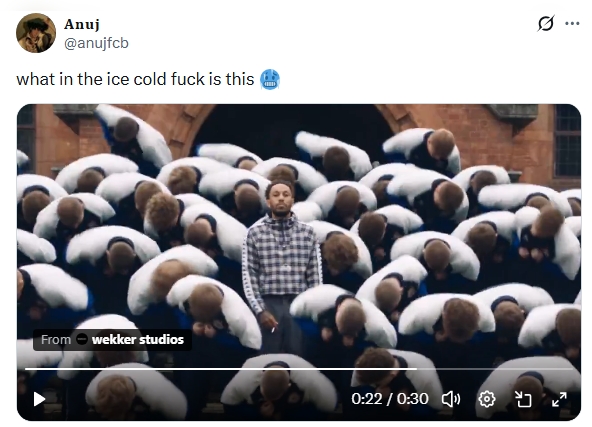
As one fan said,
We’re totally and utterly screwed.
Their concern was that as synthetic footage became more convincing, viewers would find it increasingly difficult to distinguish between authentic and deepfakes.
The conversation shifted when fans discovered that the video was not entirely original. Wekker Studios, a digital creator, used video-mapping tools to overlay Aubameyang’s face and a custom kit onto previously created human-made footage.
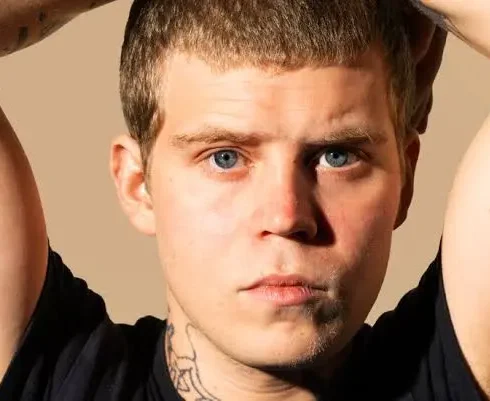
The original footage is from GENER8ION’s music video for “STORM”, which stars Swedish rapper Yung Lean.
The eight-minute film, released in April 2026, was directed by Romain Gavras and produced by Iconoclast Music, with no AI involvement in its initial production.
The video, set in a dystopian British boarding school, features Yung Lean (Jonatan Leandoer Hastad), the 29-year-old pioneer of internet “cloud rap” and the “Sad Boy” esthetic, as the student ringleader leading a large group of schoolboys through tightly synchronized movements.
That discovery shifted the conversation to creative ownership and artistic credit. Wekker Studios posted the clip as a “spec ad” for clothing brands Pompeii and RC Deportivo, describing it as “creative direction and production with AI.”
Fans contended that using AI in this manner can replicate work created through months of human effort, costly production, physical rehearsals, and choreography while giving the original creators little credit.
it's so frustrating watching the creative direction from yung lean's music video become a viral ai prompt. the speed and volume that accounts are able to essentially rip off work today is not good! pic.twitter.com/kjSnVn5az4
— Rachel Karten (@milkkarten) September 14, 2026
Damien Jalet, a renowned choreographer, created the choreography for the original video, adding to the debate about how much of the source work was reproduced.
The debate also raised concerns about where originality begins and ends. Jalet’s choreography and Gavras’ visuals draw on existing artistic and cultural influences, including the centuries-old UNESCO-recognized Saman Dance from Aceh, Indonesia.
These are originals, yung lean also copied. But his version is art and more creative than the AI slop everywhere.
— Yaro (@abbati) September 15, 2026
The original version is called the Saman Dance, from Indonesia. pic.twitter.com/LAo3bHHblt
Fans have also noted similarities between Gavras’ visual style and films like the Japanese youth drama Blue Spring.
I like lean but the music video literally rips a bunch of stuff off wholesale like Blue Spring so really what ownership did they have over the direction anyway
— PetrichorCEO 🪲🧀 (@PetrichorCEO) September 14, 2026
it’s only an original object to those unaware of the moodboard pic.twitter.com/fgKMmEVuLp
Some argue that borrowing, reinterpretation, and adaptation have always been part of creative work, with the AI version representing yet another stage in the process.
Cool ai but Yung Lean and the choreographers work need to be showcase as well https://t.co/FNxNo7sexo https://t.co/3G95IqN4kI pic.twitter.com/aVGl4Q1m91
— Theo. (@Sela_Say) September 15, 2026
The Aubameyang video thus falls somewhere between two arguments. On the one hand, there is concern that AI will be able to reproduce complex creative work at such a rapid pace that ownership and credit issues will become more difficult to resolve.
On the other hand, the notion that art has always evolved through layers of influence and reinterpretation. In this case, the AI adaptation also directed viewers back to the original “STORM” video, highlighting the choreography, filmmaking, and performances that enabled the source material.