The football World Cup is in full swing in the land of Hollywood and is conjuring up dramas and fairytales that even movies could envy.
While footballers are showcasing their craft on the field, they are not shy of making statements with their off the field fashion as well.
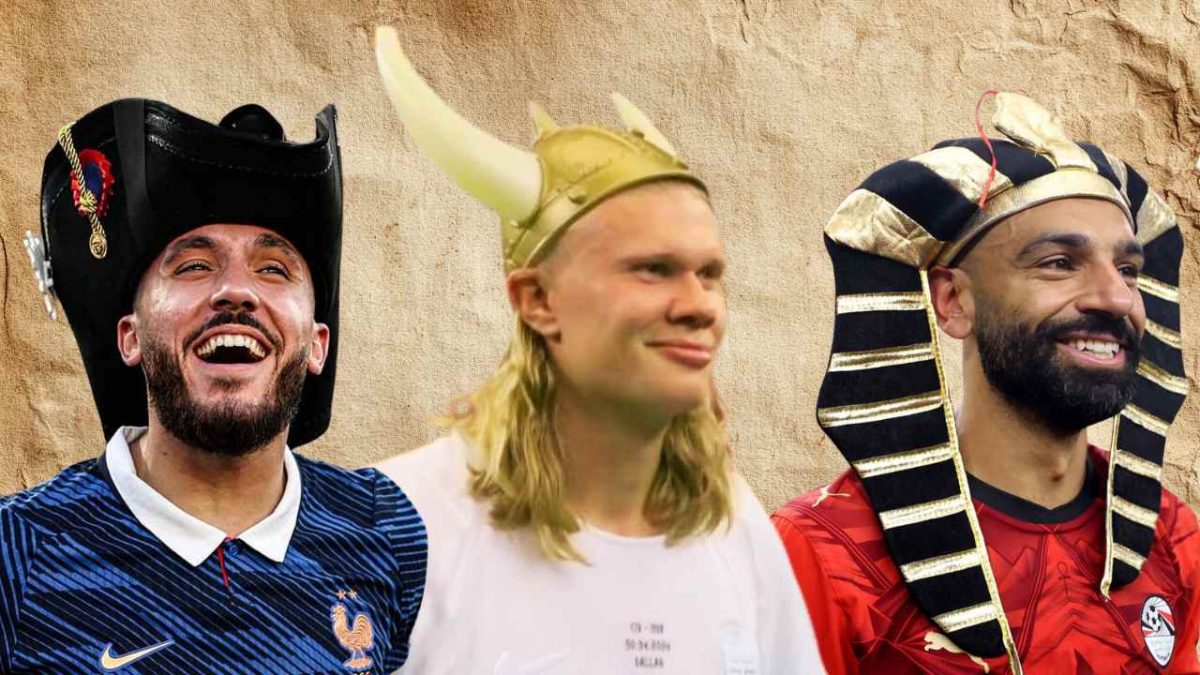
However, the likes of Mohamed Salah, Erling Haaland and more recently Rayan Cherki grabbed the headlines for their on field attire, to be precise their headgear worn during the celebration of their victories.
Erling Haaland Viking Hat Meaning Explained: Fact vs Myth
Erling Haaland scored in what was Norway’s first ever World Cup knock out game to help secure his team a 2-1 victory against Ivory Coast.
While Norway has had a dream run so far in the World Cup, their celebrations also matched their performances on the field with their viking row grabbing the attention of one and all.
Haaland, arguably their greatest ever player and the driving force behind this historic run, has always acknowledged his viking background and therefore it was not a surprise to once again see him embracing the Norwegian culture by wearing the viking hat handed over to him by fans.
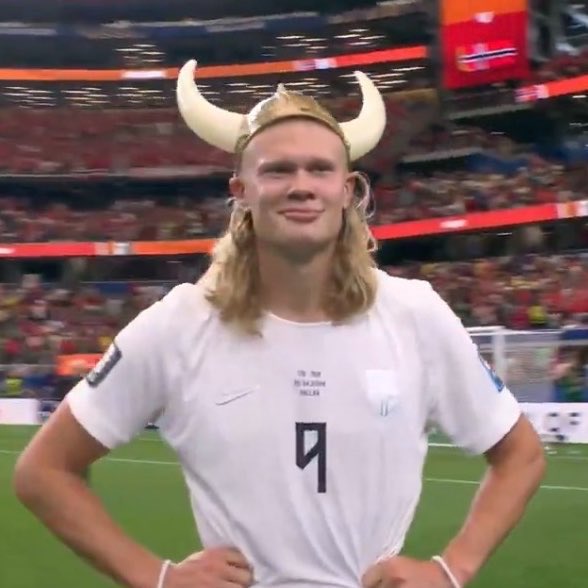
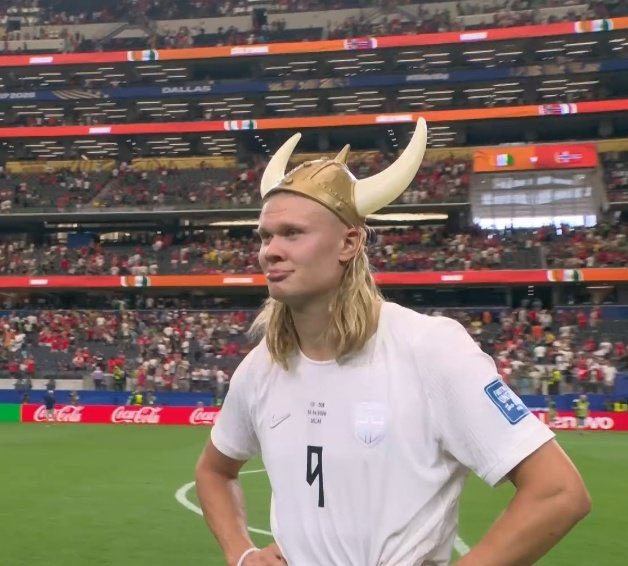
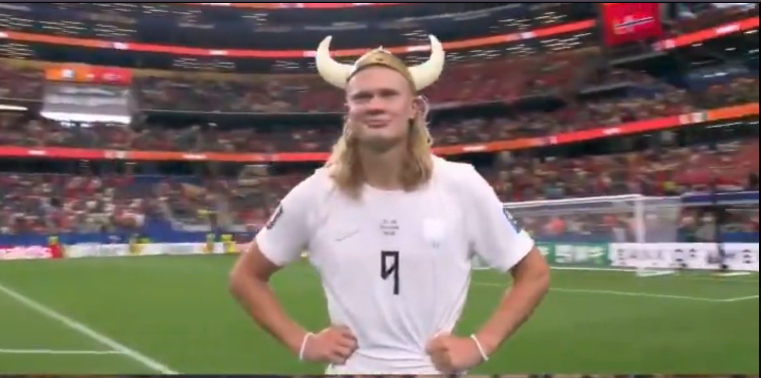
The hat worn by Haaland is popularly called represents ‘Viking mentality’ of working hard and staying humble, which their marksman symbolises and it also transforms the celebrations on field into a broader cultural message, linking the team’s success to Norway’s ancestral history.
However, there is no such historical evidence of this helmet in viking history, rather it is purely a costume fantasy. Vikings never actually wore horned helmets into battle; but the myth of the helmet with two horns either side of it was invented by 19th-century theater costume designers.
Mohamed Salah Headcloth Explained: What Is the Nemes and Why Did He Wear It?
In Salah’s case however, his head gear worn following his side’s first ever knock out round victory over Australia in the round of 32, in which he himself scored in the penalty shootout has historical evidence of it being present in Egyptian culture and heritage. The striped headcloth that the Egypt talisman wore is called Nemes and its evidence can be traced back to Tutankhamun’s gold death mask.
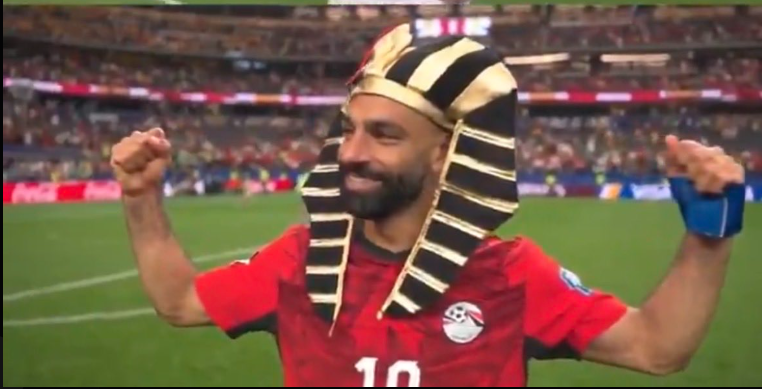
The Nemes in ancient Egypt worn by pharaohs represents the royal authority, it identifies the wearer as the ruler, emphasizing the pharaoh’s divine status and role as protector of Egypt and it is only befitting the man known as the ‘Egyptian King’ wears it. Salah is the undisputed leader of the group and Egypt’s greatest footballer’s skills are no less than a divine blessing for his team.
Rayan Cherki Hat vs Napoleon Hat: Key Differences Explained
As for Cherki, he was seen celebrating France’s round of 16 win over Paraguay by wearing the Lafayette hat, one that is edged into French history. The hat reflects the military and political styles of the American Revolutionary War and early French Revolution.
Because Marquis de Lafayette fought alongside George Washington and became a celebrated hero in America, his hat is also seen as a symbol of the historic bond between France and the United States, it represents Liberty, patriotism.
While there is not much of a difference between this and the Napoleon hat, it can be distinguished by how it is worn and the presence of feathers or gold trims in it. While Napoleon hat is worn side-to-side, Lafayette hat is usually fore-and-aft, meaning one point of the bicorne facing forward and one backward, exactly how Cherki decided to wear it. On top of that, his hat also had the gold trim on one side of it, which confirms it being a Lafayette hat.
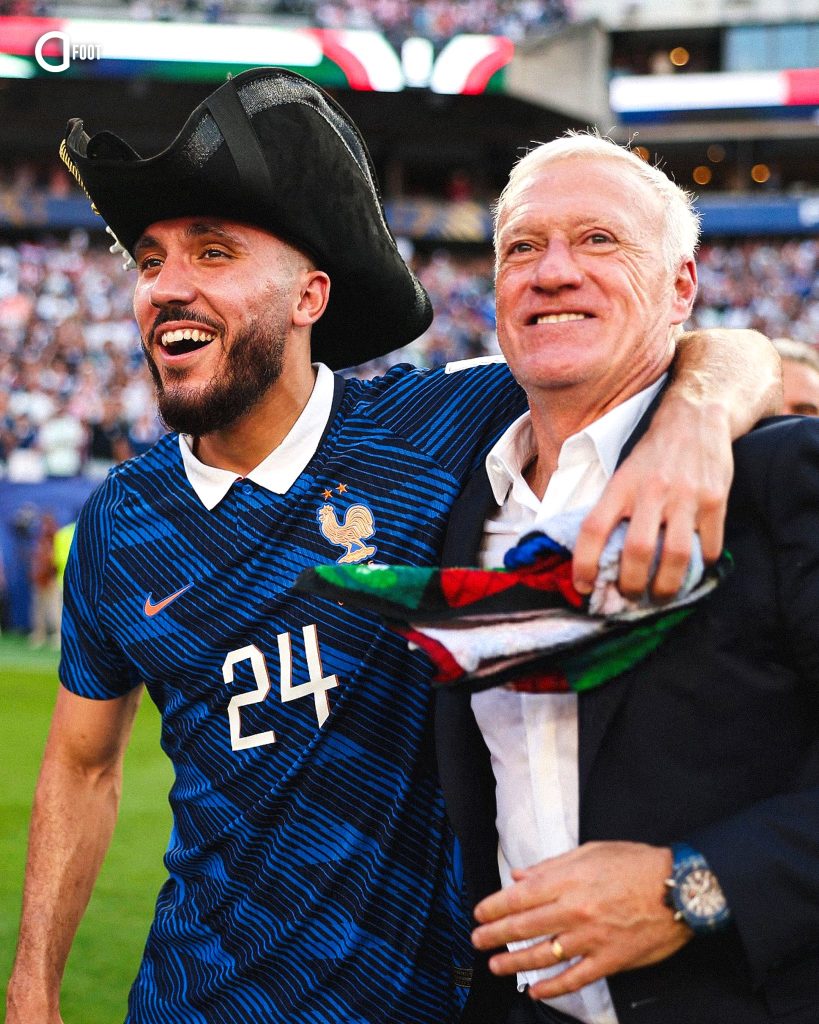
It is only fitting that Cherki chose to celebrate wearing this hat to honor French culture and heritage that too in the USA, and in the process quietly answer the critics who often raised eyebrows questioning the Frenchness of the players citing their immigration backgrounds.