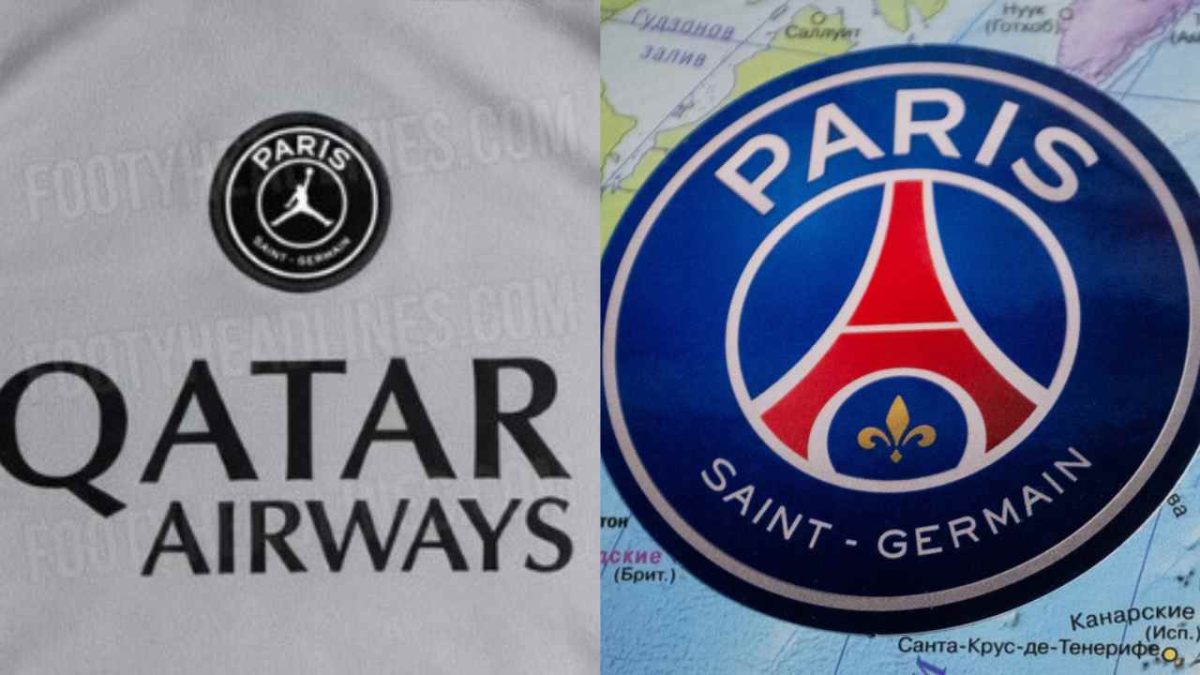
The leak of Paris Saint-Germain‘s new Jordan training kit for 2026-2027 has sparked a heated global debate, exposing a deep cultural divide between traditional football purists and those who enthusiastically support the club’s modern trajectory as an international lifestyle empire.
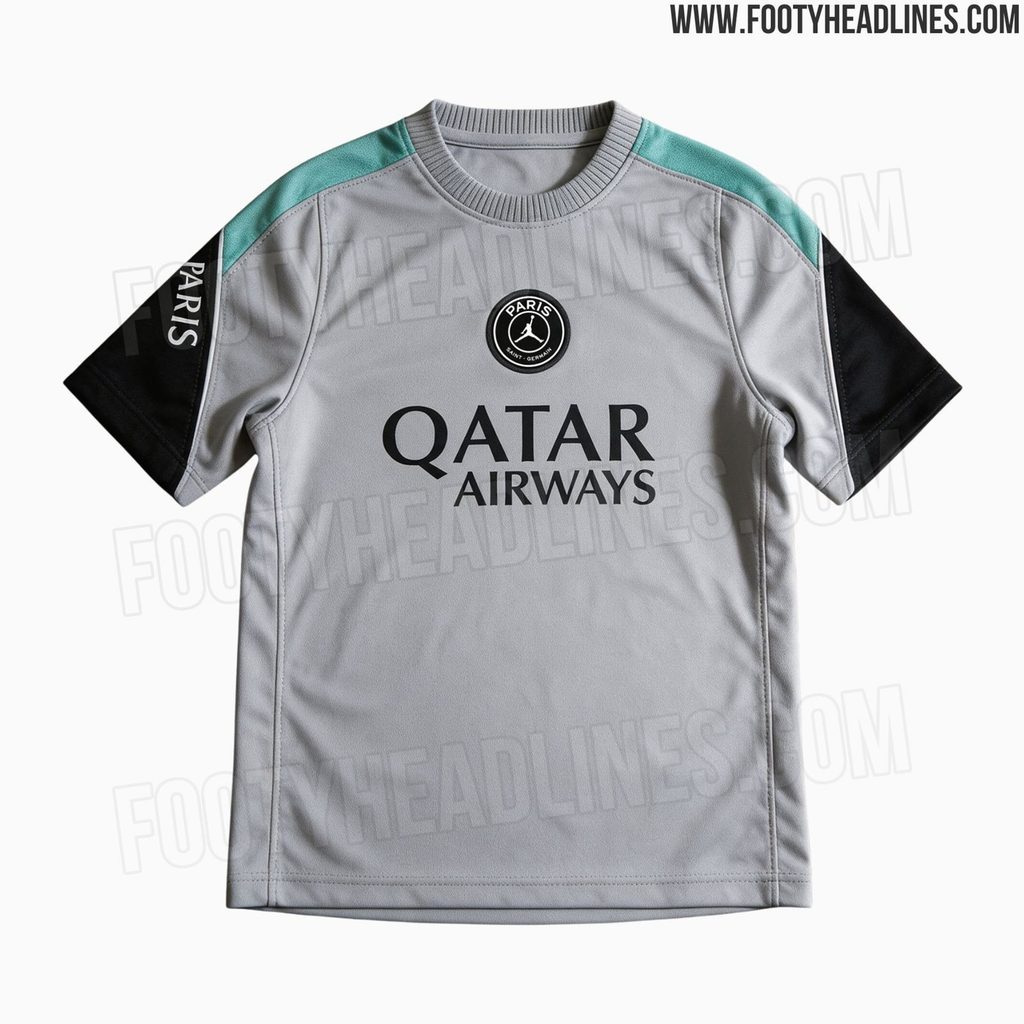
At the heart of this heated debate is a radical, unprecedented design change: the iconic Air Jordan Jumpman silhouette has completely replaced the historic Eiffel Tower within the circular club crest.
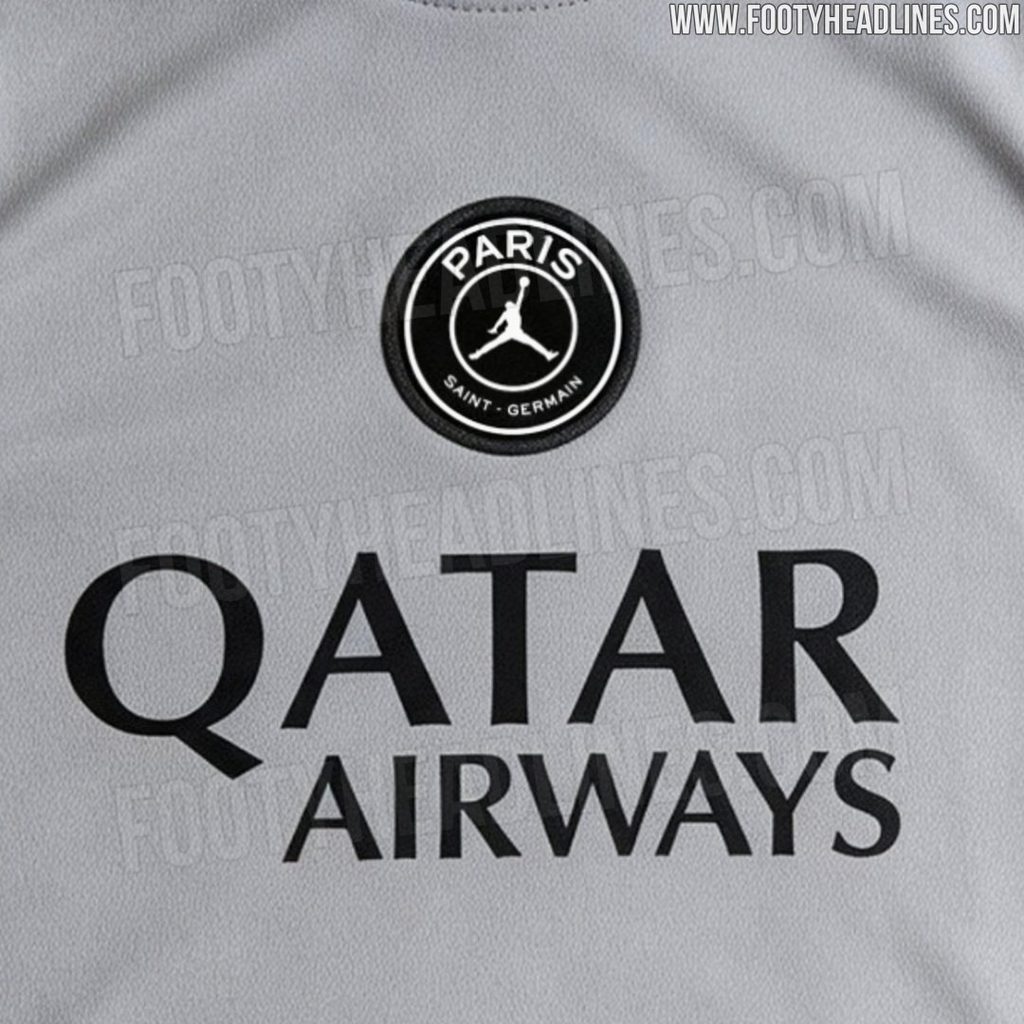
Visually, this hybrid corporate badge is centered on a muted light gray training top with bold black and dark teal green block patterns across the upper shoulders. Sharp, vertical “PARIS” typography is stylized down the sleeves just above the prominently displayed Qatar Airways main sponsor logo.
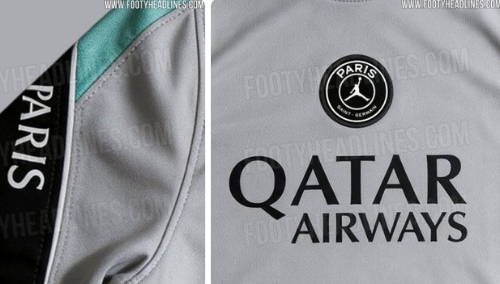
Following the leak, social media platforms became highly polarized. Football purists and ardent local supporters reacted with rage and indignation, condemning the crest change as a heinous commercial swindle and an outright esthetic aberration.
😡😡😡 You should never change the crest to include another brand pic.twitter.com/NAinPdTAHX
— Footy Headlines (@Footy_Headlines) September 16, 2026
For these deeply rooted purists, a football club’s crest is a sacred, untouchable emblem of local heritage, community lineage, and civic pride; they argue that allowing a third-party corporate silhouette to physically evict historic symbols like the Eiffel Tower and the fleur-de-lis crosses an unacceptable line from standard commercial sponsorship to the complete erosion of club identity.
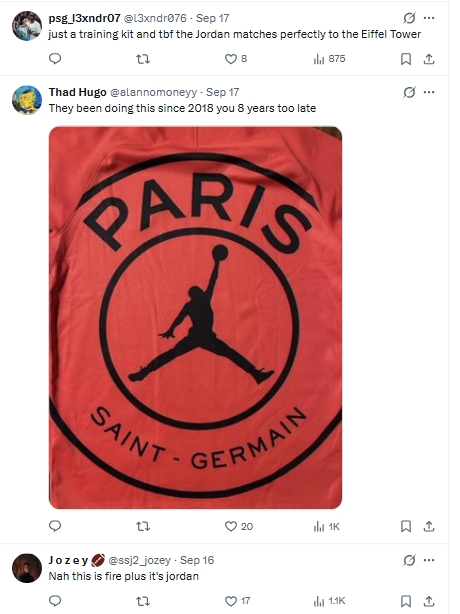
In contrast, a large, highly defensive wave of modern fans and streetwear enthusiasts rushed to defend the new apparel line, dismissing traditionalist outrage. Many pragmatic users noted that it is only a training kit, emphasizing that because official match-day jerseys are still subject to strict UEFA kit regulations, training and pre-match ranges are appropriate, flexible spaces for creative fashion experimentation.
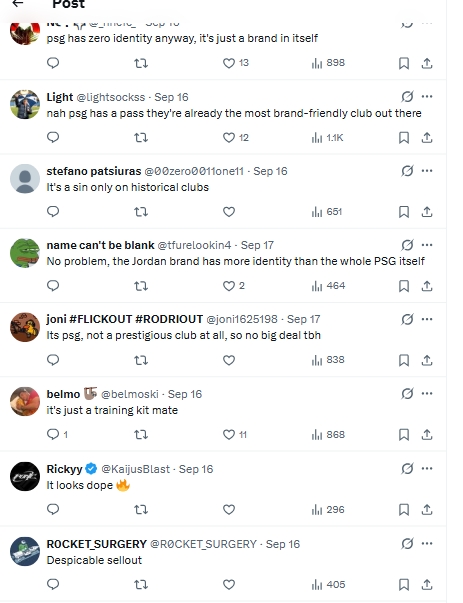
Furthermore, these defenders emphasized that this cross-sport collaboration is not new, reminding vocal critics that the two global brands have been successfully integrated since 2018.
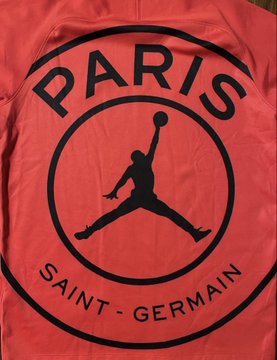
From an esthetic standpoint, many lifestyle consumers praised the bold design as dope and fire, pointing out that the broad, tapering stance of the Jordan Jumpman silhouette naturally mirrors the geometric A-frame architecture of the Eiffel Tower.
Meanwhile, a cynical segment of rival fans and neutral football commentators exploited the leak to launch direct, hostile attacks on PSG’s modern historical pedigree. These online critics mocked the idea that changing a historic crest is only a sin for truly prestigious, historical clubs, claiming that modern PSG has no real identity and only functions as an artificial corporate entity.
Some have argued that the globally recognized Jordan brand has far more genuine cultural relevance and international currency than the French football club itself. Finally, this contentious visual experiment reflects a well-planned business strategy orchestrated by Nike and PSG executives.
By boldly pushing the absolute limits of brand integration on lifestyle apparel, they directly capitalize on the lucrative global hypebeast market, successfully expanding their retail reach while carefully gaging how much traditionalist backlash the football industry can realistically withstand before experiencing a genuine financial boycott from match-going supporters who believe their history is slipping away completely today.