Some artists outgrow their music. Mauro Mateus dos Santos, known as Sabotage, is one of them. He came out of Canão, a working-class corner of São Paulo, and turned the reality of the periphery into rap that people still quote today. His debut album, Rap é Compromisso, arrived in 2000, and he was killed in 2003, so his body of work is small.
Yet the Maestro of Canão remains a reference point for Brazilian hip-hop, and a name that Corinthians fans carry with pride. A collection bearing his name therefore feels like more than a marketing exercise.
The club explains why the pairing works. Sport Club Corinthians Paulista was founded in 1910 by working men in São Paulo and took its name from an English amateur side that toured Brazil that year.
It has been a club of the people ever since, and its supporters, the Fiel, are known for devotion rather than polish. Its crest, with oars and anchor, recalls its rowing roots. Sabotage’s story of periphery, pride and loyalty sits naturally beside that identity.
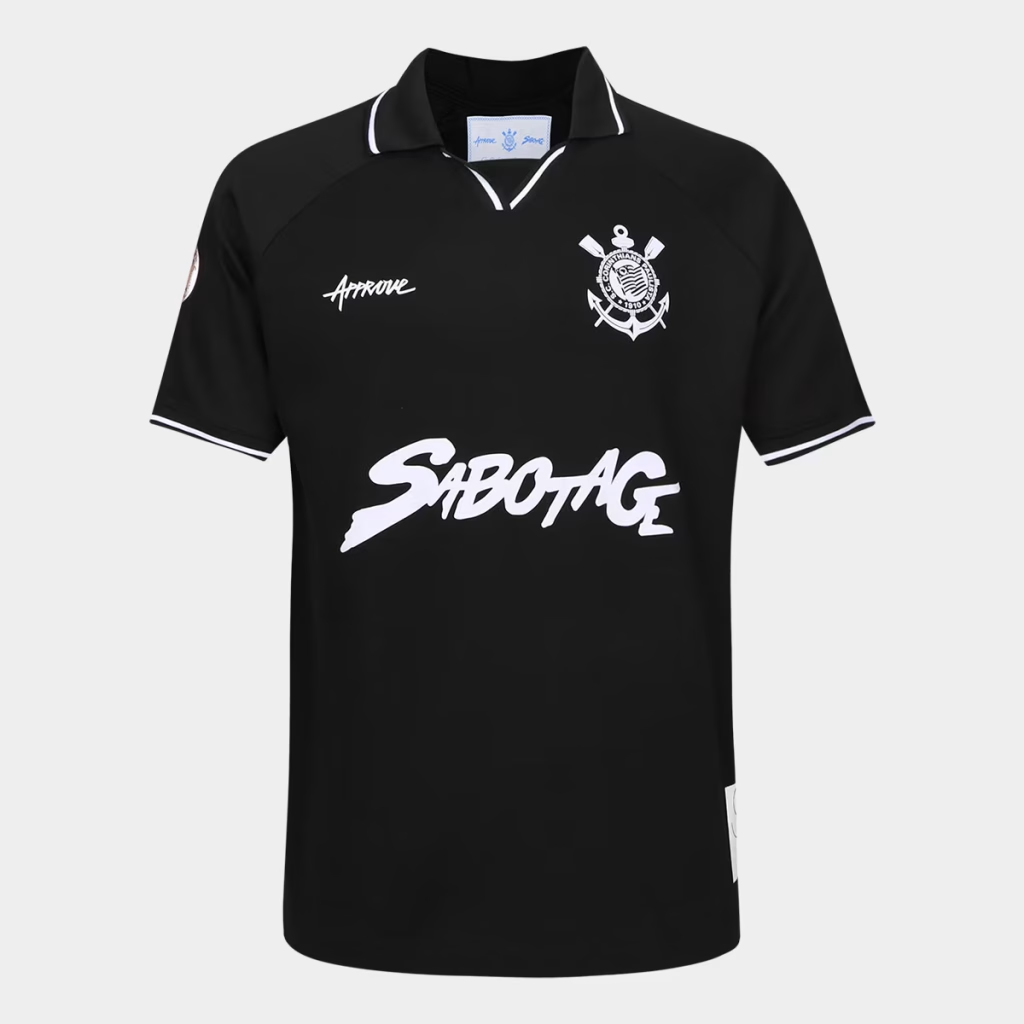
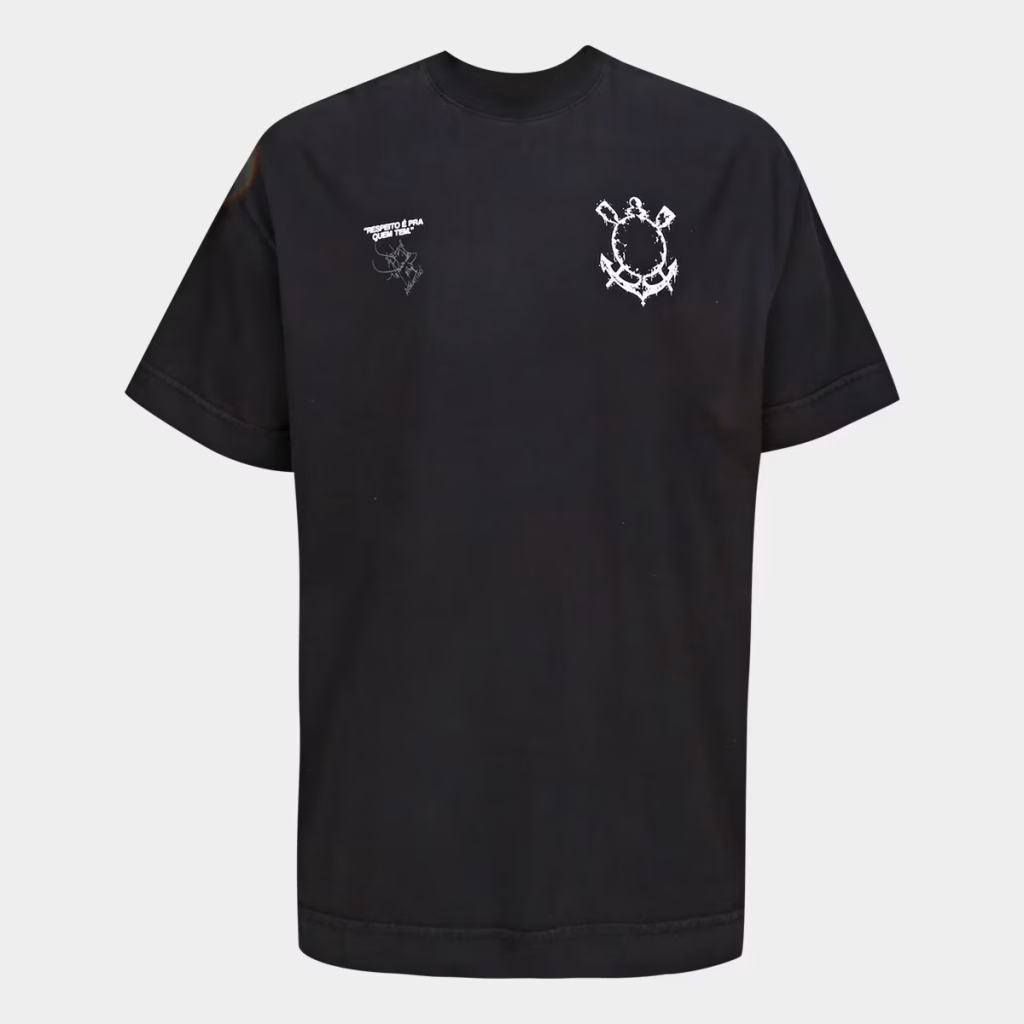
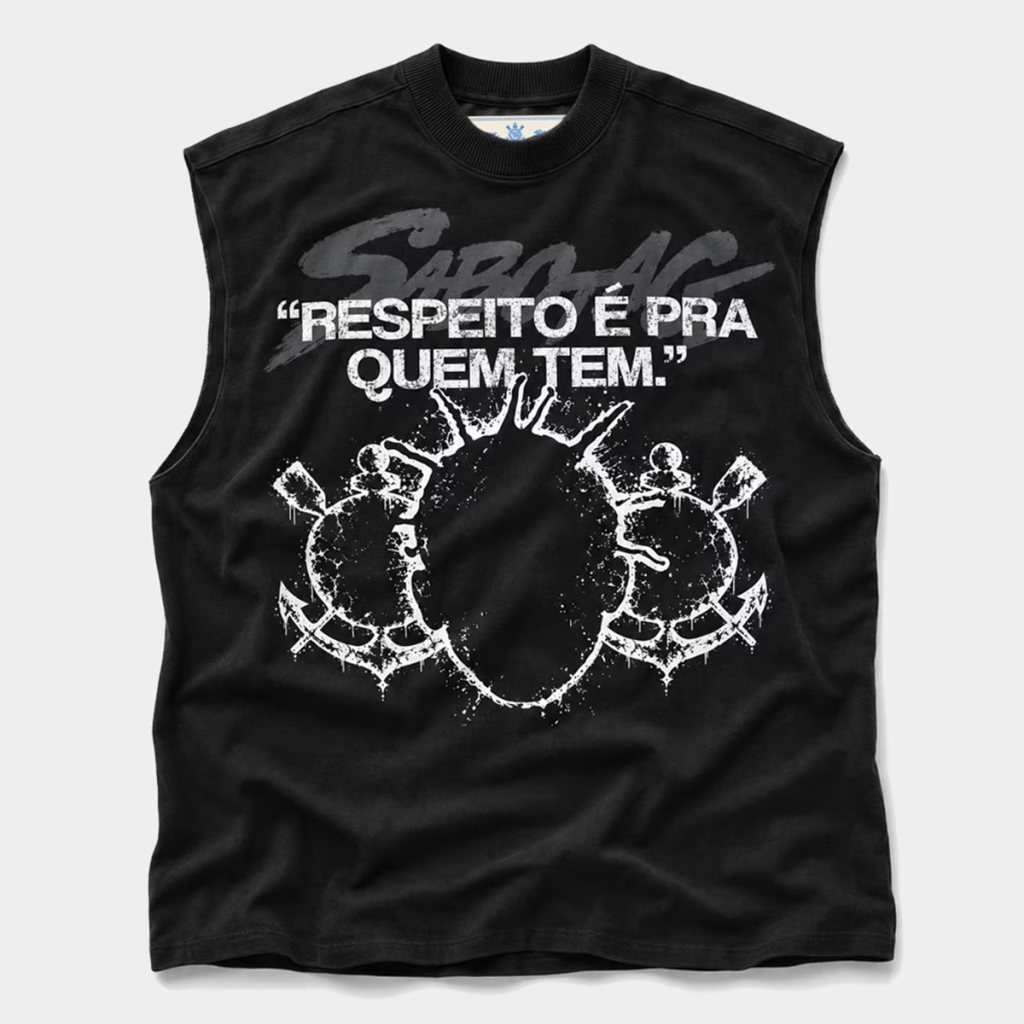
Approve × Corinthians × Sabotage exists to celebrate his journey and to make sure his legacy reaches people who never heard him live. Approve contributes streetwear craft, Corinthians a vast and loyal fan base, and Sabotage the story. Four pieces express it: two polo shirts, an oversized T-shirt and a tank top, joining music, football and street fashion.
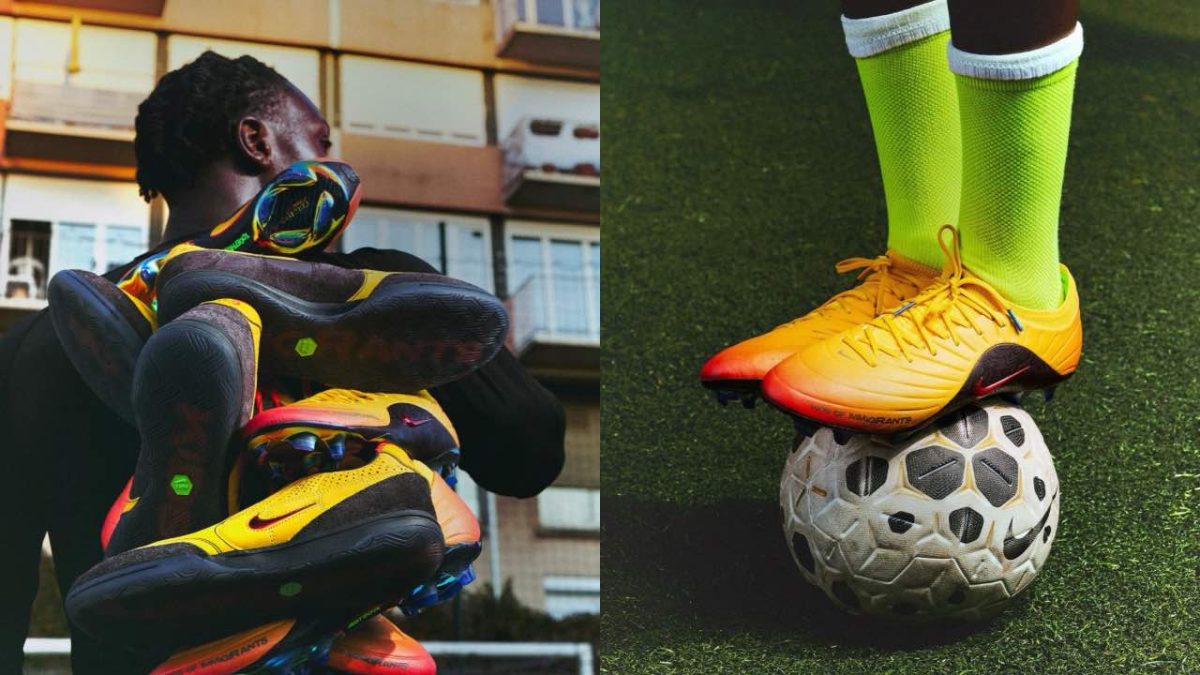
The campaign backs this up. Instead of a polished studio setting, the team went to Boqueirão, the São Paulo community where Sabotage’s social project operates. His daughter, Tamires, now runs it. With his family, Corinthians and partners, they organised a day for the children there. The children received new uniforms and football boots, took part in activities, and were given a comic book that introduces them to the man behind the name.
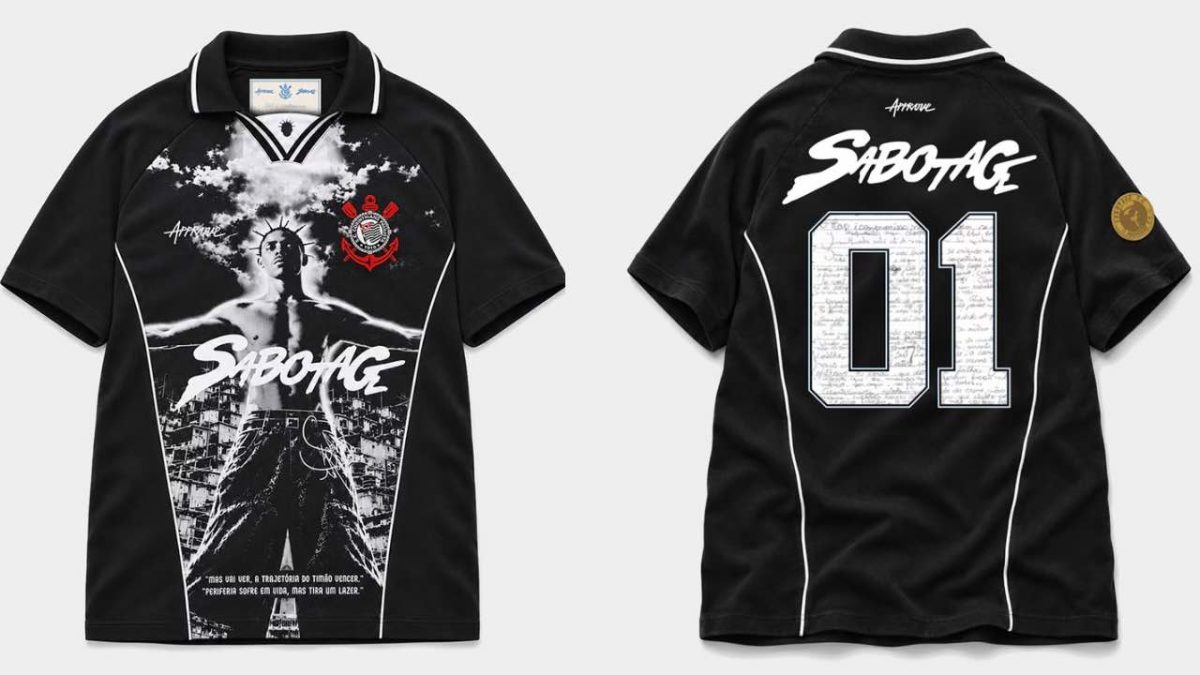
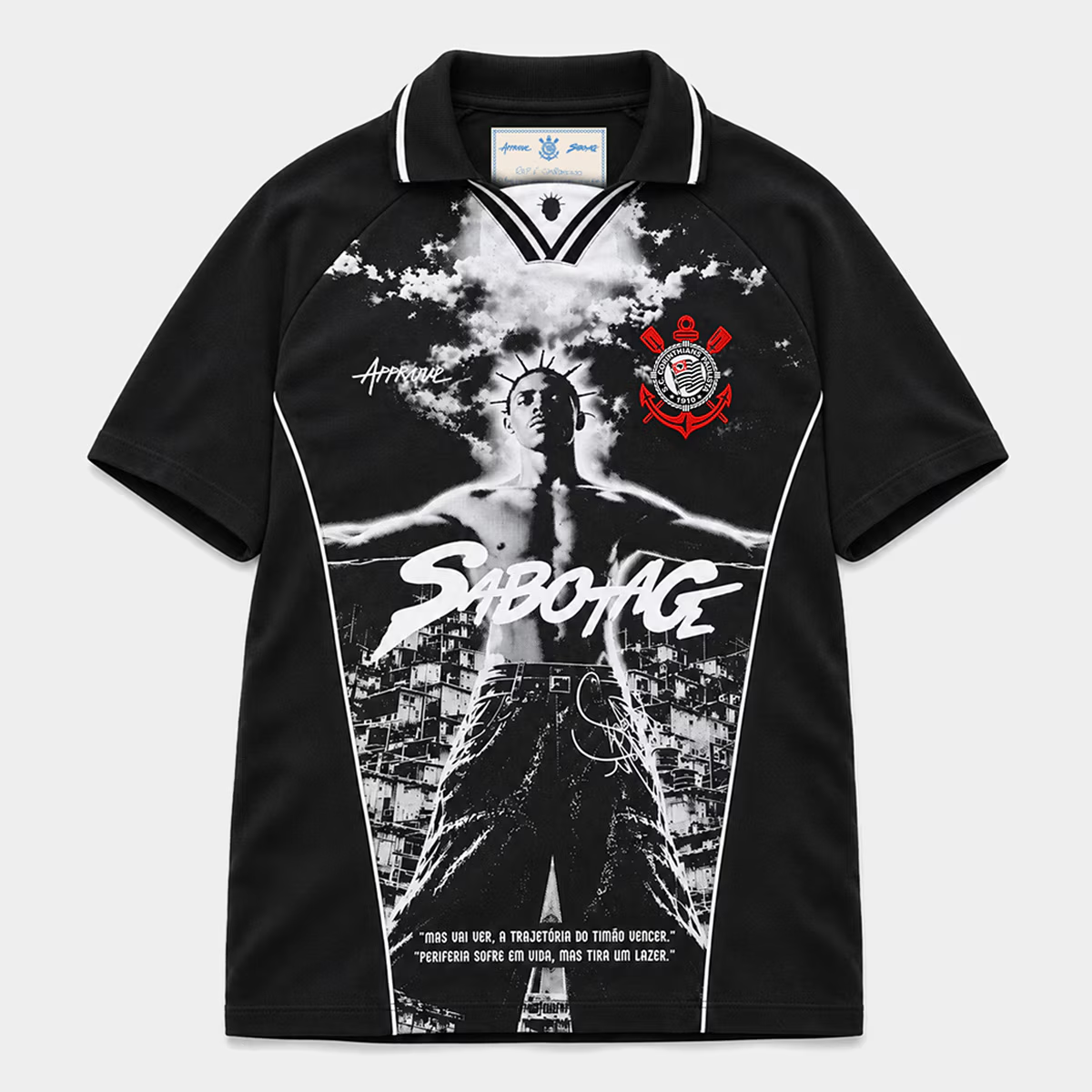
The garments carry the same intent. The regular polo is the most striking. Its black body is trimmed with white piping, and a monochrome portrait of Sabotage stands with arms outstretched beneath rising clouds. A favela skyline fills the lower half, so he appears to stand over the place that shaped him. His name runs across the chest in brushed lettering next to the Corinthians crest.
The retro polo tells its story from behind. “Sabotage” appears in blackletter above an outlined 73, with the Approve signature at the collar. Handwritten script fills the numerals, which makes the shirt resemble a notebook page. The number presumably nods to his birth year, 1973, and it borrows the squad-number tradition of football shirts.
The oversized T-shirt is the quietest piece. Washed black fabric carries a small white crest on the chest, with a tiny graphic on the other side. It is easy to wear every day and needs no explanation.
The tank top is the most direct. “Respeito é pra quem tem” (“respect is for those who have it”) sits over two splattered crests, with a faded Sabotage wordmark behind them. It looks closer to graffiti than to club merchandise.
For fans, the collection shows how far club culture now reaches beyond the stadium. A crest can sit on a streetwear shirt beside a rapper’s portrait without losing its meaning, because the club and the artist grew from the same streets.
The project also puts the badge to work for a community. The proceeds of a sale are not the point, since the children of Boqueirão received a kit, boots and a book that carries Sabotage’s name forward. That gives the clothing a purpose that matches what the club has long claimed to stand for.
The collection is available through Official Stores, ShopTimão, Fiel de Origem Louco and Approve’s own channels.