
The Brazilian national football team‘s modern identity stands in stark contrast to its historic cultural roots and a current generation of elite athletes who are heavily criticized for their lack of worldly maturity.
Historically, the Selecao was praised for its unique blend of Afro-Brazilian traditions, popular Catholicism, and street-smart style.
However, decades of profound demographic shifts have resulted in what fans call a rigid evangelical monoculture, effectively replacing eccentric, rebellious locker-room personalities with a highly sanitized, uniform appearance.
The consequences of this cultural narrowing were painfully obvious during a highly contentious international incident in September 2026.
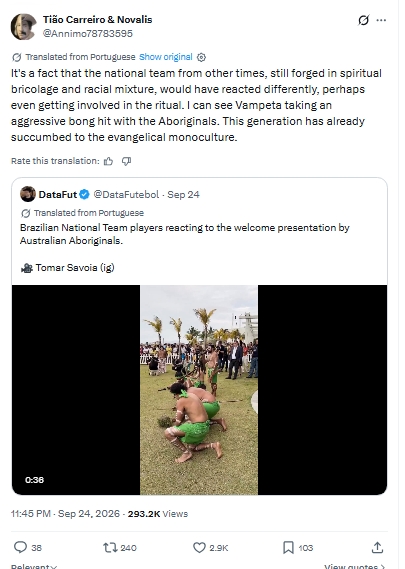
When the Brazilian team arrived in Townsville, Australia, for a friendly match, the Wulgurukaba Walkabouts performed a sacred Smoking Ceremony and a welcome dance to honor them.
Several young stars, including Endrick, Rayan and Estevao, were caught on camera snickering, stifling laughter, and covering their mouths during the ancient ritual of peace and spiritual protection.

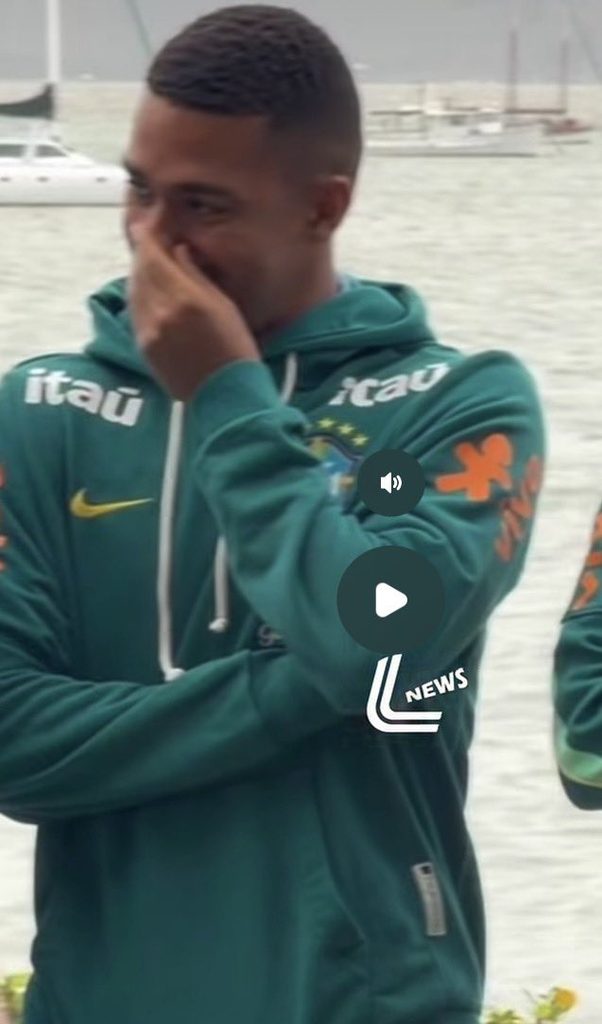
High-profile figures, such as Vinicius Junior and Gabriel, were criticized online for their apparent confusion, awkward shifting, and lack of professional demeanor.


The public’s reaction was swift and global. Online fans slammed these multi-millionaire athletes for acting like undisciplined schoolboys, revealing a profound ignorance of Indigenous Australian cultures, which are among the oldest continuous living traditions in human history.
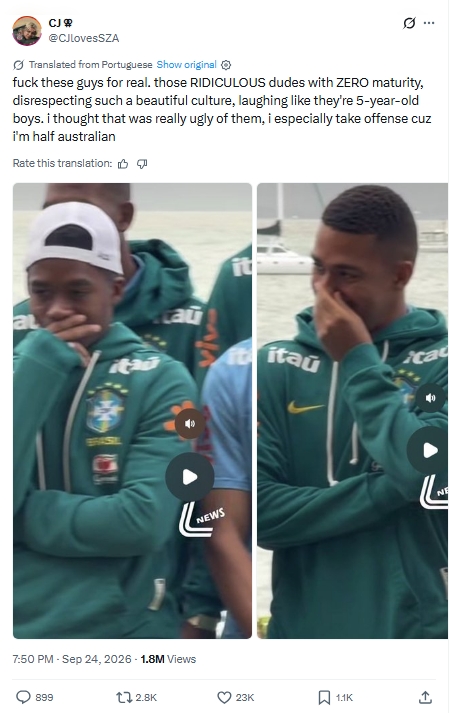
This highly offensive display sparked outrage among football fans, who quickly identified a clear double standard within the sport’s global community.
Just months ago, French winger Michael Olise received massive media backlash and over one hundred thousand hostile social media comments from die-hard Brazilian fans for admitting he had no idea who the current best Brazilian player was.
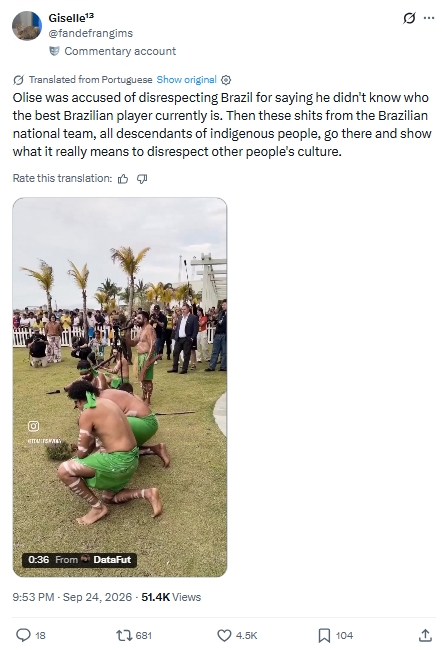
But fans says that their own players proved completely incapable of extending basic respect to an ancient foreign culture when the roles were reversed. The hypocrisy is compounded by the fact that many of these modern Brazilian players are direct descendants of Brazil’s heavily marginalized Indigenous populations, making their mockery feel like a direct betrayal of their ancestral roots.
To fully understand the gravity of their actions, consider the massive international outrage that would ensue if a foreign sports team traveled directly to Brazil and openly giggled during a traditional Candomble ritual, a Capoeira circle, or an Amazonian welcome ceremony.
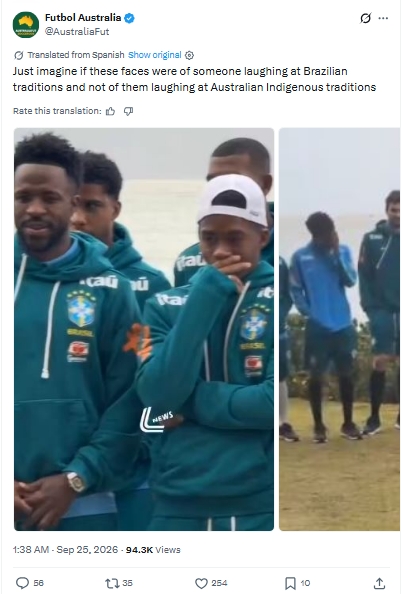
Such disrespectful actions would be correctly condemned as colonial arrogance and an intolerable attack on Brazilian national pride. Finally, this viral lapse in professionalism reveals an unsettling truth about selective empathy in contemporary sports culture.
While the current generation of Brazilian footballers aggressively demands global prestige and complete deference to their footballing status, their behavior in Australia demonstrated that they struggle to provide the same basic decency to others.
Respect must always be reciprocal; if a national team wants its rich heritage to be honored on the global stage, its representatives must have the worldly perspective to treat their hosts’ sacred traditions with absolute reverence and humility.