The last place anyone expected to find Ferran Torres this week was on CNN.
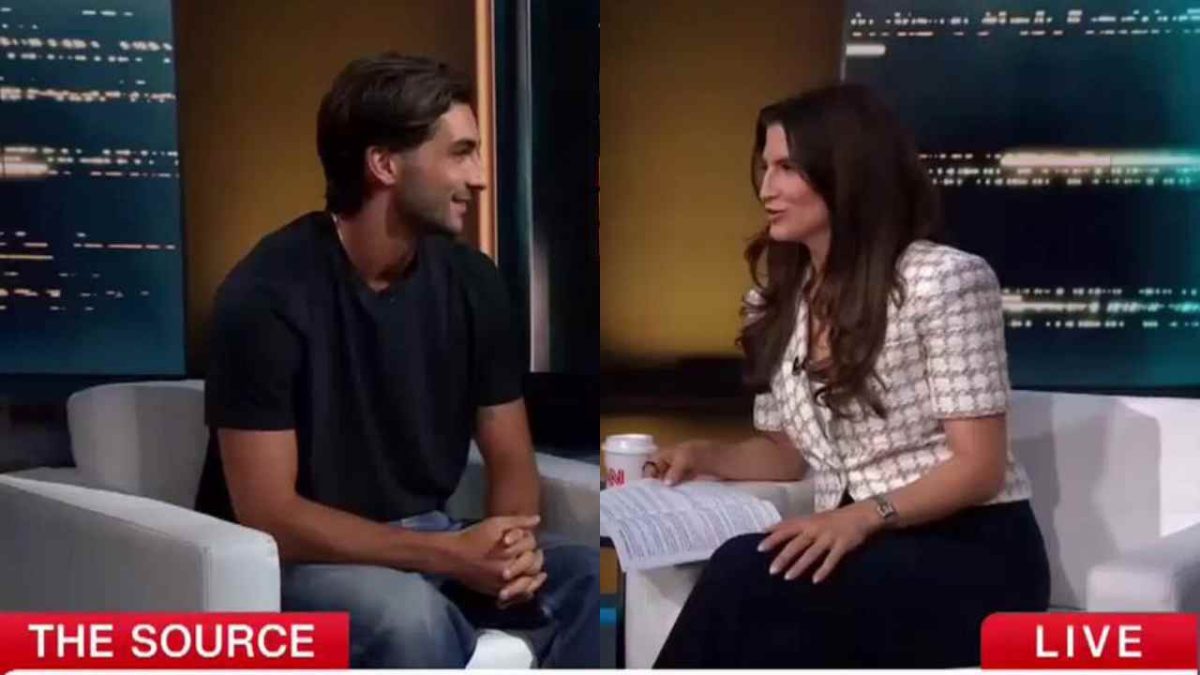
Less than a fortnight after writing his name into Spanish football history with a 106th-minute winner that delivered La Roja their second World Cup title, Torres found himself under the bright lights of CNN’s The Source — a primetime political programme hosted by Chief White House Correspondent Kaitlan Collins.
That was already an unusual sight. The Source is not a sports show where footballers casually drop in between transfer updates and match analysis. The programme is usually built around senators, governors, administration officials, political strategists, White House insiders and policy experts discussing the biggest stories in American politics. And that immediately raised the obvious question: why was Ferran Torres suddenly sitting across from one of America’s most recognisable political journalists on CNN?
The answer was as unexpected as the setting itself. The Spaniard who had just become a national hero was suddenly the headline guest on one of America’s most recognisable political programmes,
The contrast became even stranger because Collins is not a mere broadcaster experimenting with football coverage. She is one of CNN’s most prominent political journalists, known for her reporting on Donald Trump, the White House and the political battles that have shaped modern American politic.
One would expect a World Cup winner to be reliving his heroics and discussing the celebrations. So why was Ferran Torres instead explaining Donald Trump-inspired slogans, political interpretations and his Barcelona future on CNN, creating one of the strangest football-media crossovers of the summer.
The conversation centred on the red “Make Spain Great Again” cap Torres wore on July 20, 2026, as Spain celebrated their World Cup triumph with a victory parade through the streets of Madrid. The slogan, a Spanish adaptation of Donald Trump’s famous “Make America Great Again” (MAGA) campaign phrase, immediately attracted attention because of the political meaning attached to those words. A celebration accessory quickly becoming an international talking point.
Collins repeatedly questioned the Barcelona forward on whether there was any political message behind the cap, turning what began as a football discussion into a debate that felt far more suited to Washington than the Camp Nou.
Torres’ response was simple and depending on who you asked, either refreshingly honest or incredibly naïve.
“It was just to have fun with my friends and family. Honestly, I don’t know anything about politics. I only wanted to see Spain back on top again.”
The explanation did little to end the discussion.
The debate quickly created two completely different versions of Ferran Torres. For some supporters, he remained exactly what he had always been — a footballer celebrating the greatest achievement of his career. For others, the cap created an entirely new image overnight: a supposed right-wing, pro-Trump figure. In the space of days, the internet had built a political identity around Torres from a single moment.
The problem was that Torres himself rejected that interpretation completely. To him, the cap represented national pride, friendship and a celebration joke. But critics argued that the answer itself revealed a certain privilege, that a global footballer could distance himself from politics while wearing a slogan deeply connected to a wider political movement.
Some also pointed to the environment around him, from Barcelona’s long association with Catalan identity and political debates to teammates who have been outspoken on global issues, arguing that players at his level cannot always separate football from the world around them.
The other side of the argument was much simple. Some simply joked that Torres was not endorsing any political ideology at all. He was simply doing what footballers often do: turning a famous phrase into a World Cup meme.
The situation became even stranger when the Trump administration interpreted Torres’ gesture as a sign of support for the MAGA movement. The official White House account amplified the moment, posting: “Everyone wants to be part of this movement.” The reaction highlighted how far the slogan had travelled beyond its original political roots. Source- (https://www.goal.com/en-in/news/mockery-or-a-spontaneous-act-trump-comments-on-the-ferran-torres-cap-controversy/blta37fcbe89805d904)
What started as a red cap at a victory parade had crossed borders, escaped the football bubble and placed Ferran Torres at the centre of a debate he probably never expected to enter,
The conversation eventually returned to football, with Torres’ future becoming the next major talking point.
With Barcelona continuing to be linked with a possible summer sale, Collins asked the forward directly about reported interest from Paris Saint-Germain. Torres has been linked with a move away from Barça ahead of next season, with PSG coached by his former manager Luis Enrique. Arsenal and Tottenham Hotspur have also been mentioned as possible destinations should Barcelona decide to part ways with the forward. Torres, however, refused to provide any certainty.
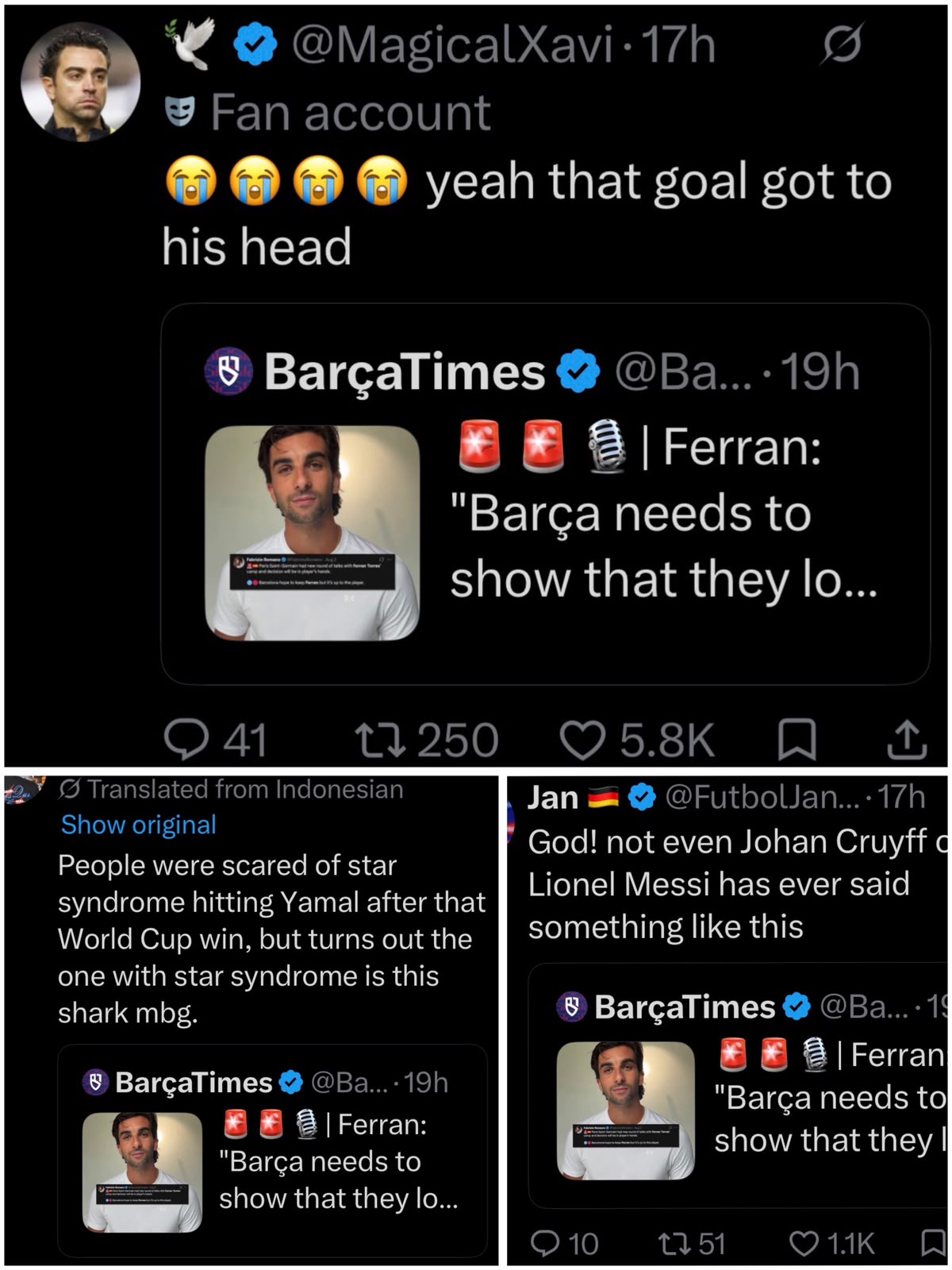
The comments came shortly after another interview during his Under Armour promotional tour with BBC, where Torres said Barcelona “need to show that they want me” before discussions over his future progress.
The reaction among Barcelona supporters was predictably divided. Some fans accused the 26 year old of sounding ungrateful and distant from the club immediately after becoming Spain’s World Cup hero. If anyone expected to get carried away by superstar status, many supporters felt it would have been Lamine Yamal and not Ferran, whose sudden rise from squad player to World Cup hero had rather caught everyone by surprise.
The serious discussion around politics and transfers soon gave way to something far lighter.
The unexpected chemistry between Torres and Collins quickly became another talking point. Viewers on CNN’s Instagram noticed the anchor appeared unusually amused throughout the exchange, joking that she smiled more than she normally does during the network’s intense political coverage.
Comments ranging from “Y’all would make a cute couple” to “Is this the FERRAN effect??” quickly gained attention, while others joked they had “never seen Kaitlan Collins smile that much.”For an interview that already made little sense on paper, the fact that this became the talking point was almost absurdly fitting.
Having reached the summit of footballing euphoria, Ferran Torres should have been enjoying the ultimate football fairytale. Instead, he somehow found himself stepping into a very unexpected villain arc, with a large section of the internet recasting the final minute saviour through a far more controversial lens, from accusations of right-wing sympathies to criticism over his public image and decisions away from the pitch.
But then again, this is becoming very familiar territory for Torres. After Ibiza headlines and Barcelona speculation, he has now added one of football’s strangest crossovers to the list. With Ferran, the spotlight never seems to move away for too long.