Arsenal’s Champions League final defeat to Paris Saint-Germain was a night that began with hope, turned into caution, and ended in familiar European heartbreak.
At the Puskas Arena in Budapest, Mikel Arteta’s side made the perfect start when Kai Havertz scored in the sixth minute, putting Arsenal 1-0 ahead and giving them a dream platform in the biggest match of their modern era.
But rather than build on that early goal, Arsenal appeared to shut the game down almost immediately.
From around the fifth or sixth minute onwards, the Gunners sat back, slowed the tempo, managed restarts and tried to protect what they had instead of pushing for a second.
PSG eventually levelled through Ousmane Dembele’s 65th-minute penalty, before the match finished 1-1 after extra time.
The French side then won 4-3 on penalties, with Eberechi Eze and Gabriel Magalhaes failing to convert for Arsenal in the shootout.
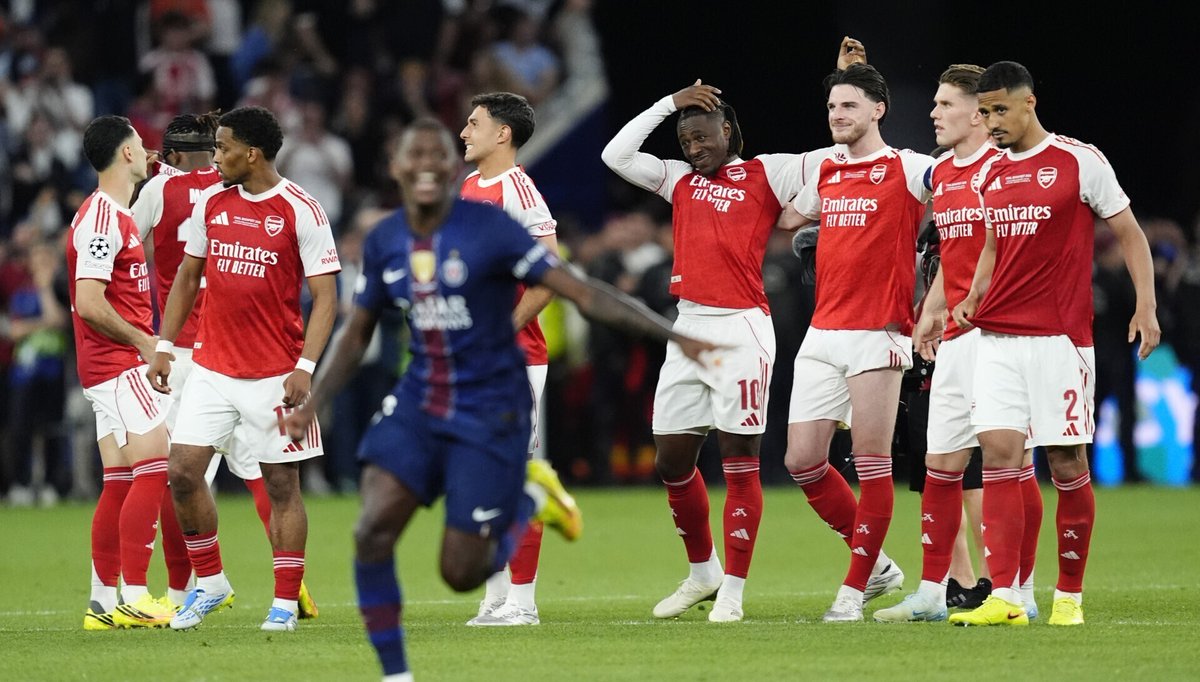
The numbers backed up the eye test: Planet Football reported that Arsenal created only 0.01 expected goals from the end of the first half until the end of extra time, while Defector put the figure at 0.1 xG from half-time to the end of extra time.
Either way, the picture was clear: Arsenal had scored early, sat deep, and barely threatened again.
That is what made TNT’s coverage so frustrating for many viewers. Arsenal had not produced a heroic attacking performance that ended in cruel defeat.
They scored early, retreated, created almost nothing after half-time, and were eventually punished by the side that showed ambition.
So when the broadcast treated the night largely as an Arsenal tragedy, rather than a PSG triumph, it felt out of step with the match itself.
The criticism was captured in a Telegraph article which accused TNT’s coverage of being “all Arsenal, all the time.”
Saturday’s broadcast was all Arsenal, all the time, thanks to fan presenter Laura Woods and a pundit roster loaded lopsidedly in favour of the north Londonders at the expense of PSG balance, writes Alan Tyers ⬇️ https://t.co/F3V1w508cA pic.twitter.com/CqryP4k2Qf
— Telegraph Football (@TeleFootball) June 1, 2026
The piece pointed to TNT Sports presenter Laura Woods, an Arsenal fan, referring to Mikel Arteta as “The Boss” after interviewing him, and argued that the studio lineup was tilted heavily towards the north London club.
Woods was joined by Steven Gerrard, Jack Wilshere and Martin Keown, while Reshmin Chowdhury was also involved in the wider broadcast.
The pre-match coverage only strengthened that feeling.
TNT included celebrity Arsenal supporters Alex Brooker, Rob Beckett and Romesh Ranganathan, which made the build-up feel less like a neutral Champions League final and more like an Arsenal occasion.
For supporters of other clubs, and for viewers simply watching as neutrals, PSG were often made to feel like the opposition in Arsenal’s story rather than one half of the final.
The commentary team also came under scrutiny.
Darren Fletcher and Ally McCoist were on the main call, with Gerrard contributing during the match coverage.
One line that drew criticism came after Arsenal’s opener, when Fletcher said: “One-nil to the Arsenal has a nice ring to it.”
On its own, it may have been a harmless reference to Arsenal history, but in the context of the wider broadcast, many felt it sounded more like club-channel enthusiasm than neutral commentary.
Several controversial moments also added to that feeling.
TNT were generous to Arsenal when discussing key incidents, including a possible Bukayo Saka handball, a potential second yellow card for Cristhian Mosquera, and the irony of Gabriel Magalhaes, usually one of Arsenal’s biggest set-piece threats, being caught out from a dead-ball situation himself.
The bias shone during Arsenal’s late penalty appeal, when Noni Madueke went down under pressure from Nuno Mendes, after being the one pulling Nuno’s arm onto himself.
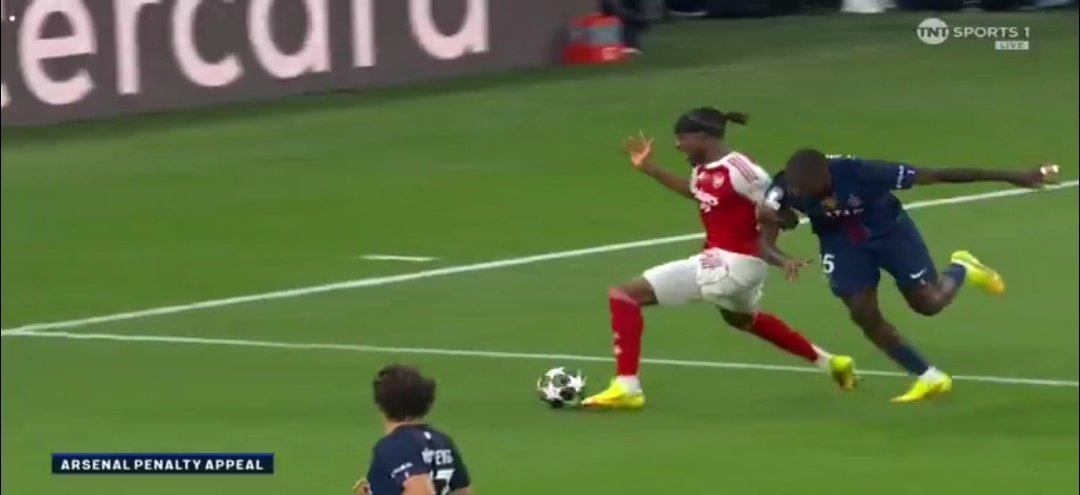
Ally McCoist said, “We’ve seen them given, have we not?” while Gerrard added, “Put it this way, we’ve seen loads of them given.”
For critics, those comments helped feed an Arsenal-hard-done-by narrative, even though PSG had been the better side by far.
Laura Woods’ response only made the backlash worse. Responding to criticism of TNT’s Arsenal-heavy coverage, she wrote: “Hahahaha. Cheers, Alan. Can’t really help it if my team makes the final and I’m contracted to work that show. But you knew that.”
Hahahaha. Cheers, Alan. Can’t really help it if my team makes the final and I’m contracted to work that show. But you knew that.
— Laura Woods (@laura_woodsy) June 1, 2026
She leaned straight into the point critics were making.
Woods was right that she could not help Arsenal reaching the final, and she was obviously contracted to present the show, but the issue was never whether she should be allowed to work.
The issue was whether TNT’s coverage sounded too emotionally invested in Arsenal once the show began.
Calling them “my team” while defending a broadcast already accused of being too Arsenal-centred only made the criticism easier for fans to repeat.
She then added: “Wait until they see how ‘biased’ the World Cup coverage on both ITV and BBC is. Hint. It’ll be mostly English…”
Wait until they see how ‘biased’ the World Cup coverage on both ITV and BBC is. Hint. It’ll be mostly English…
— Laura Woods (@laura_woodsy) June 1, 2026
The second tweet was even worse because it compared club football to international football.
England-focused coverage at a World Cup is expected on British television because England are a national team. Arsenal are not.
They are a club side with domestic rivals, rival fanbases and plenty of neutral viewers who had no interest in seeing them win.
It caused even more anger among Scottish fans.
Woods’ “mostly English” line landed badly amongst the Scots because Scotland are also in the World Cup, meaning UK-wide coverage will not be speaking to an England-only audience.
UK broadcaster btw.
— Leishy (@TheLeishy) June 1, 2026
Scotland are in the World Cup.
Horrible clown btw👍🏻 https://t.co/ox8a8M5Khc
Her responses on social media just reinforced the idea that TNT had treated Arsenal like a national cause rather than one club in a European final.
Viewers expect commentators and pundits to bring personality, emotion and insight, but they also expect balance.
Could do your job and be impartial though👍 https://t.co/rCgNqc47uo
— R (@rjb_1998) June 1, 2026
Presenters are allowed to have clubs, but when they are fronting a Champions League final, especially one involving the club they support, the responsibility to be even-handed becomes even greater.
On a night when PSG deserved credit for overcoming Arsenal’s early lead and passive approach, many felt TNT spent too much time mourning Arsenal, and not enough time celebrating the champions.