During Spain‘s historic celebration of winning the 2026 FIFA World Cup against Argentina, the sight of players waving various regional flags highlighted a deep cultural pride that values local heritage over rigid national uniformity.
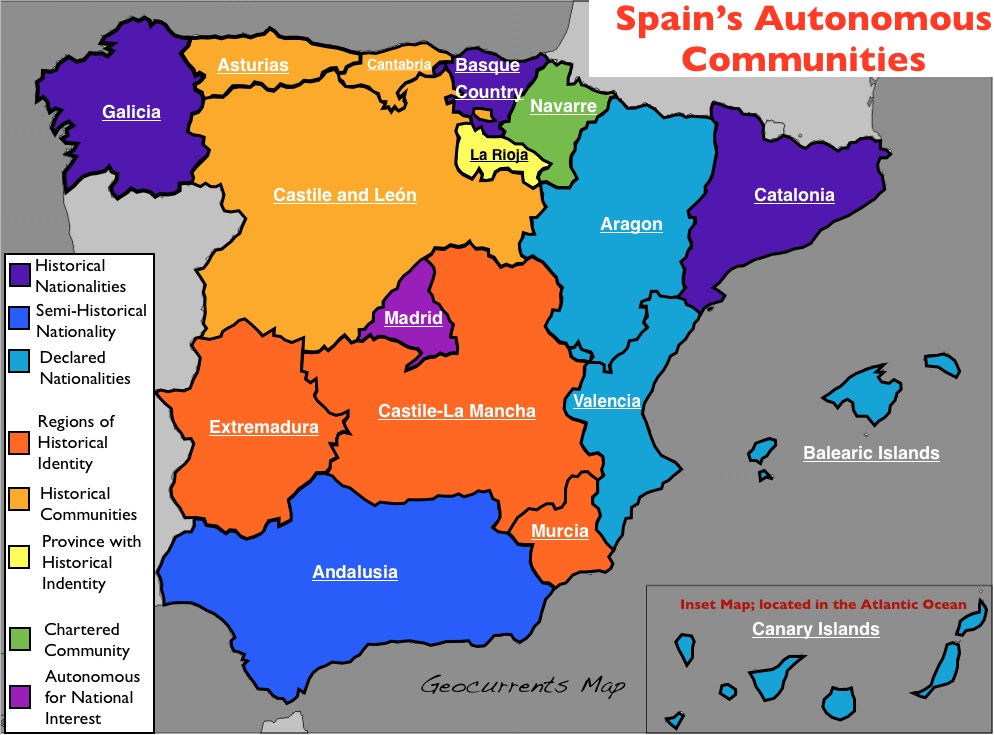
Spain is not a culturally homogeneous country, but rather a nation structurally divided into seventeen autonomous communities, each with its own strong local pride, deeply rooted culture, and distinct historical identity.
Tournament heroes such as Ferran Torres, who scored the extra-time winner and proudly celebrated wrapped in his native Valencian Community’s Senyera Coronada, exemplified this regional devotion on the pitch.

Similarly, veteran striker Borja Iglesias dressed in Galicia’s white and blue-striped flag, while midfielders Pedri and Yéremy Pino wore the Canary Islands’ white, blue, and yellow tricolour.
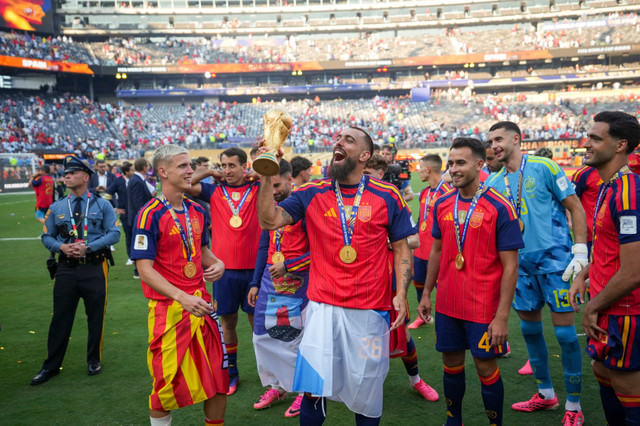
For these athletes, their connection to their home region is as important as their commitment to the national team. Exhibiting these symbols during a massive global victory is a traditional, time-honored way for players to publicly thank their respective hometowns, credit their grassroots clubs, and celebrate their personal heritage on the world’s largest sporting stage.
Furthermore, this multi-flag display acts as a visual bridge through Spain’s notoriously complex and nuanced political landscape, where strong regional movements have historically shaped the social fabric.
Dani Olmo represented Catalonia with the Terrassa municipal flag.
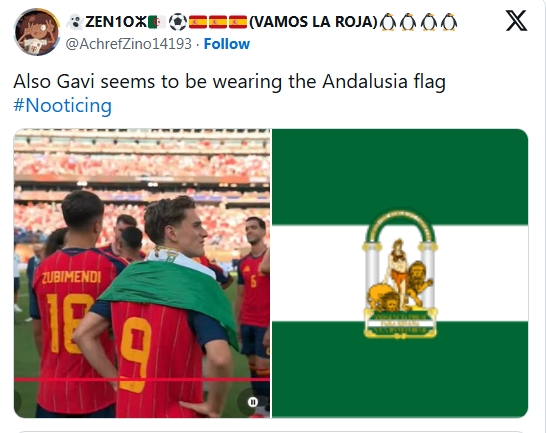
Meanwhile, Gavi proudly waved Andalusia’s green and white banner, demonstrating the south’s deep cultural pride.
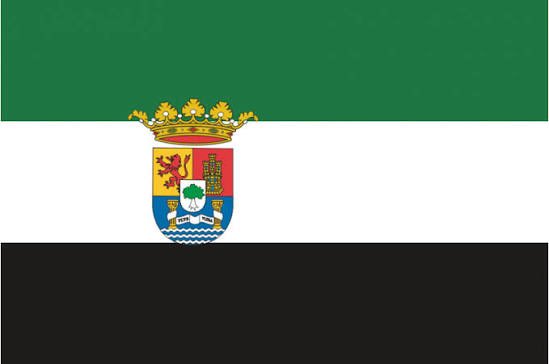
Pedro Porro carried the green, white, and black tricolor of Extremadura in a highly publicized moment, causing a massive global misunderstanding when international viewers mistook it for the Palestinian flag. This international confusion prompted sports commentators to quickly clarify that it was simply a tribute to his birthplace, not a political statement.
By intertwining these diverse regional banners with the world championship trophy, the players beautifully reframe regionalism as a source of collective strength rather than division. The gesture demonstrates that individuals can have strong allegiances to their specific cultural territories while also working together to achieve a common, monumental goal, giving the world a powerful image of unity through diversity.
Finally, the variety of flags on the field reflects how football is run in Spain, where the national team relies heavily on powerful, decentralized regional academy systems to develop world-class talent. The distinct styles of play from each player’s home territory blended seamlessly on the pitch, with Gavi representing the Andalusian school’s raw passion and street-football creativity, and Pedri and Pino demonstrating the Canary Islands pipeline’s highly technical, press-resistant composure. Olmo and Cubarsí successfully demonstrated the Catalan system’s tactical discipline, positioning, and passing philosophy.
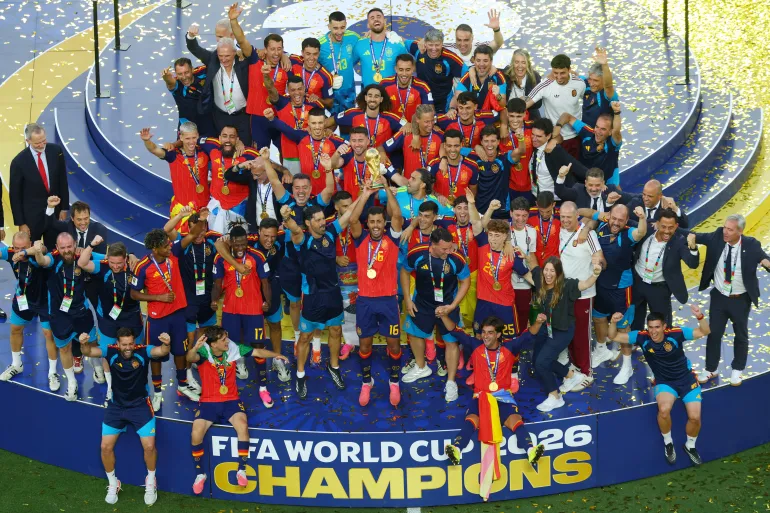
By lifting the trophy alongside these various flags, the players demonstrated that Spain won the tournament not by relying on a single football identity, but by successfully combining the distinct strengths, philosophies, and spirits of all its territories.