Cristiano Ronaldo has built his career around an almost obsessive commitment to football. His training, discipline and attention to his physical condition have become central to his public image. Across two spells at Manchester United, Ronaldo scored 145 goals in 346 appearances, including 27 in 54 games during his second spell.
That commitment has followed him throughout a career spanning more than two decades. In August 2026, Sofascore noted that Ronaldo had reached 976 official career goals from 1,330 appearances, continuing to produce deep into his 25th professional season.
Ronaldo’s relationship with training has also shaped the wider story around him. His longevity and physical condition have reinforced that image of constant attention to football.
But Antony’s experience at Manchester United revealed something different.
Antony Saw a Different Ronaldo
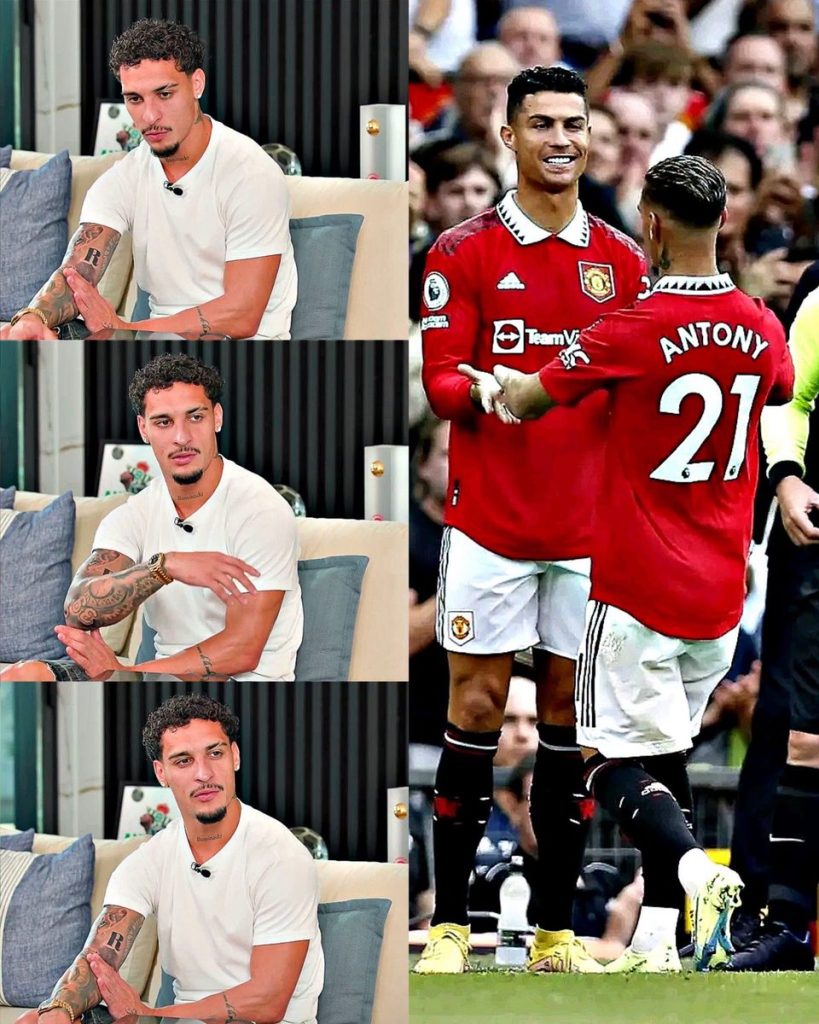
The Brazilian winger joined Manchester United from Ajax in 2022 and briefly shared a dressing room with Ronaldo. Speaking on the Sofascore Podcast, where he spoke with host Valentina Miletić about his career, his favela roots and his years at United. The full episode is also on YouTube. Antony said:
“He’s always joking. He’s very cheerful, very fun. And what I liked most is that when you sit at the table with him, he doesn’t talk about football. He says: ‘We live for football 24 hours a day, let’s talk about other things, about life.'”
— Antony, via the Sofascore Podcast
That was the detail that stayed with Antony: Ronaldo did not want football to dominate every conversation.
The Side Antony Did Not Expect
Antony also described Ronaldo as cheerful, approachable and someone who spoke to everyone around him. Rather than presenting him as constantly serious or consumed by the game, Antony remembered a teammate who could joke, relax and discuss ordinary life.
That contrast makes the story interesting. Ronaldo’s professional routine is famously intense, but Antony’s account suggests that intensity does not define every part of his personality. There was a distinction between how seriously Ronaldo approached his profession and how he behaved when football was not the subject.
Antony said the experience changed the way he viewed Ronaldo. He said:
“I admired him before, and after sharing the dressing room with him, I admire him even more.”
The important point is that Antony was describing a personal experience, not claiming Ronaldo never talks about football. He was highlighting what happened when they sat together away from the pitch.
For a player whose career is so closely associated with discipline, training and an extraordinary volume of goals, that small detail offers a different picture. Ronaldo may spend much of his life focused on football, but Antony’s account suggests he also knows when to switch off from it.
That is the unexpected part of the story: the footballer known for living the game 24 hours a day was, at times, the teammate telling others to talk about life instead.