The 2026 UEFA Champions League final at the Puskás Aréna in Budapest concluded in devastating fashion for Arsenal.
Seeking their first-ever European crown, Mikel Arteta’s side faced Paris Saint-Germain. The stakes could not have been higher for the north London club, appearing in their first final in 20 years.
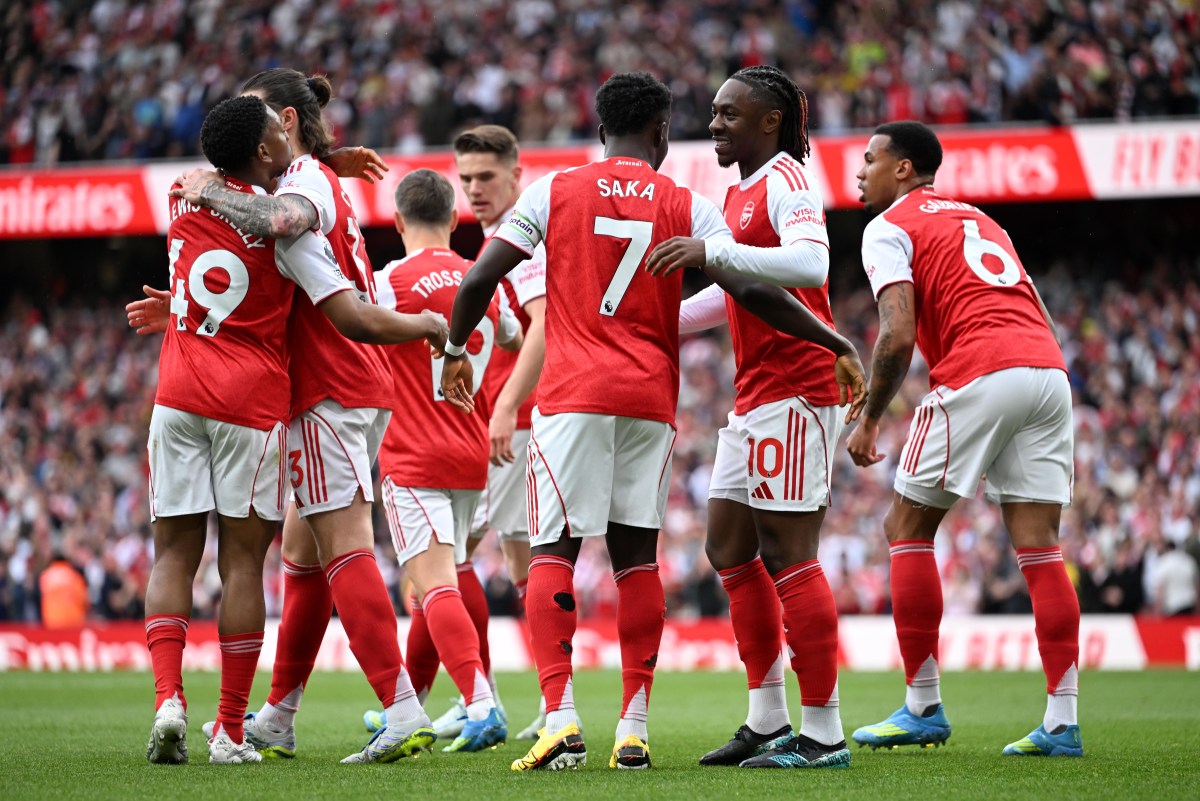
An early strike from Kai Havertz gave the Gunners a dream start, sparking hopes of continental glory. Arsenal quickly retreated into a disciplined, resilient low defensive block to handle the ensuing Parisian onslaught.
However, a second-half penalty converted by Ousmane Dembélé levelled the score, swinging momentum back to the French giants.
The match dragged through a gruelling 120 minutes of high-intensity football as extra time failed to separate the domestic champions. In the subsequent penalty shootout, agonizing misses sealed Arsenal’s fate.
A final skied attempt by defender Gabriel Magalhães handed PSG a 4-3 shootout victory, retaining their European throne.
In the immediate aftermath of the defeat, the spotlight turned to Arsenal’s key figures, notably midfielder Declan Rice. Rice had entered the final with supreme confidence, labelling himself a “big-game player” after a standout European campaign.

He covered vast distances on the night, orchestrating the midfield and even converting his own pressure-filled spot-kick during the shootout.
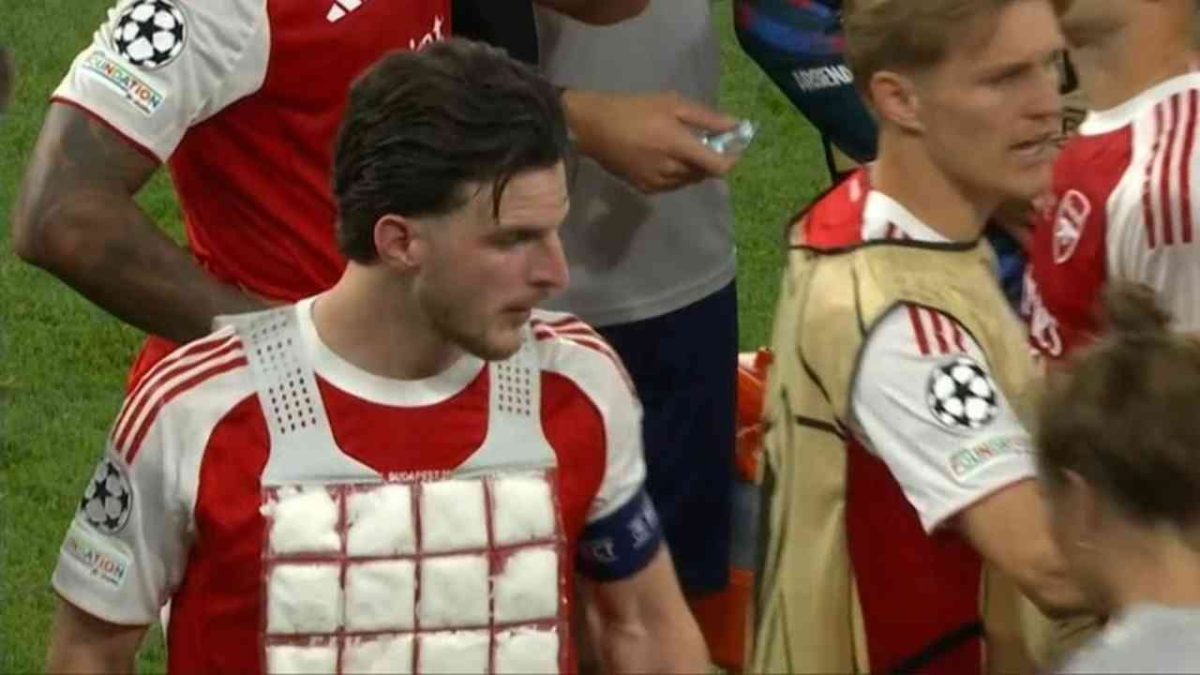
As the final whistle blew, television cameras captured a dejected Rice standing on the pitch consoling his teammates. While his facial expression mixed emotional exhaustion with heartbreak, viewers immediately noticed a unique garment strapped over his red-and-white kit.
The technical, panelled apparatus looked strikingly different from a traditional warm-up top or standard compression gear.
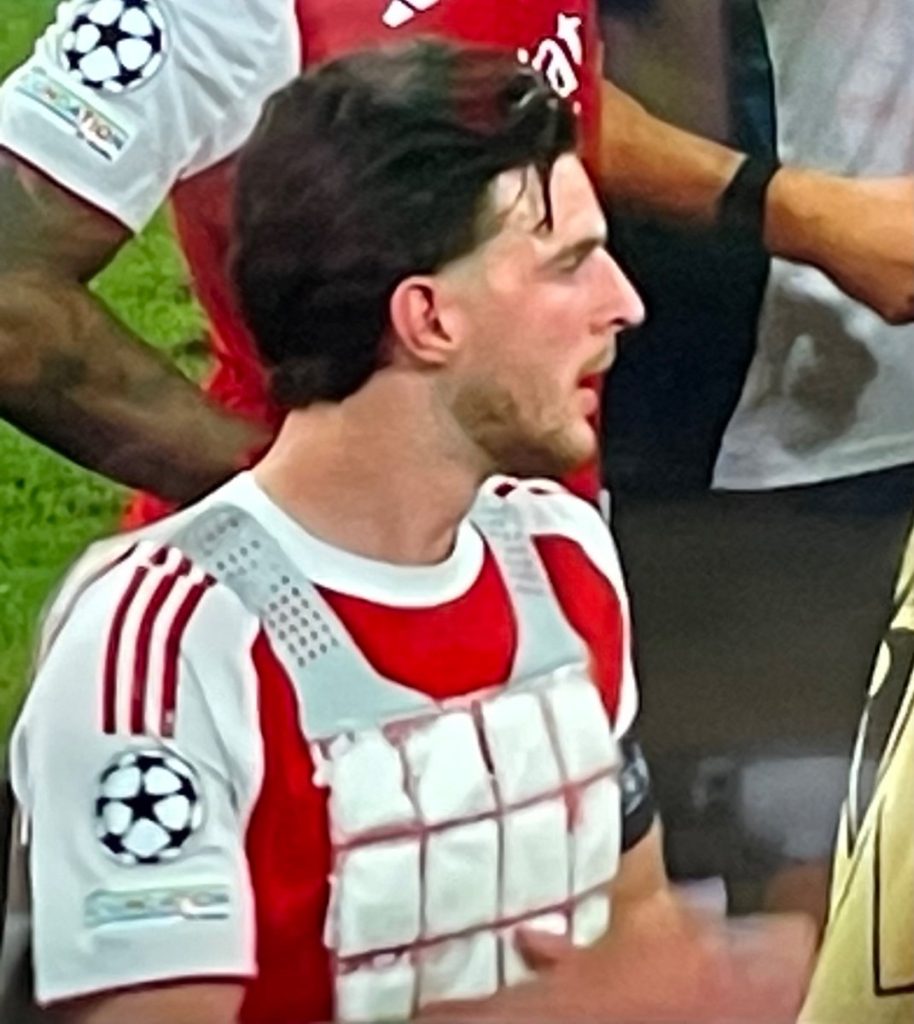
The segmented, grid-like white garment covering his torso was an ice vest, commonly referred to as a cooling vest. It is a highly specialized piece of athletic apparel designed for rapid physiological recovery rather than performance tracking.
While many fans are familiar with the GPS tracking vests players wear under their shirts during matches, this post-match vest serves an entirely different medical function. The prominent square pouches arrayed across the chest and back are lined with cooling gel matrix packs or ice inserts.
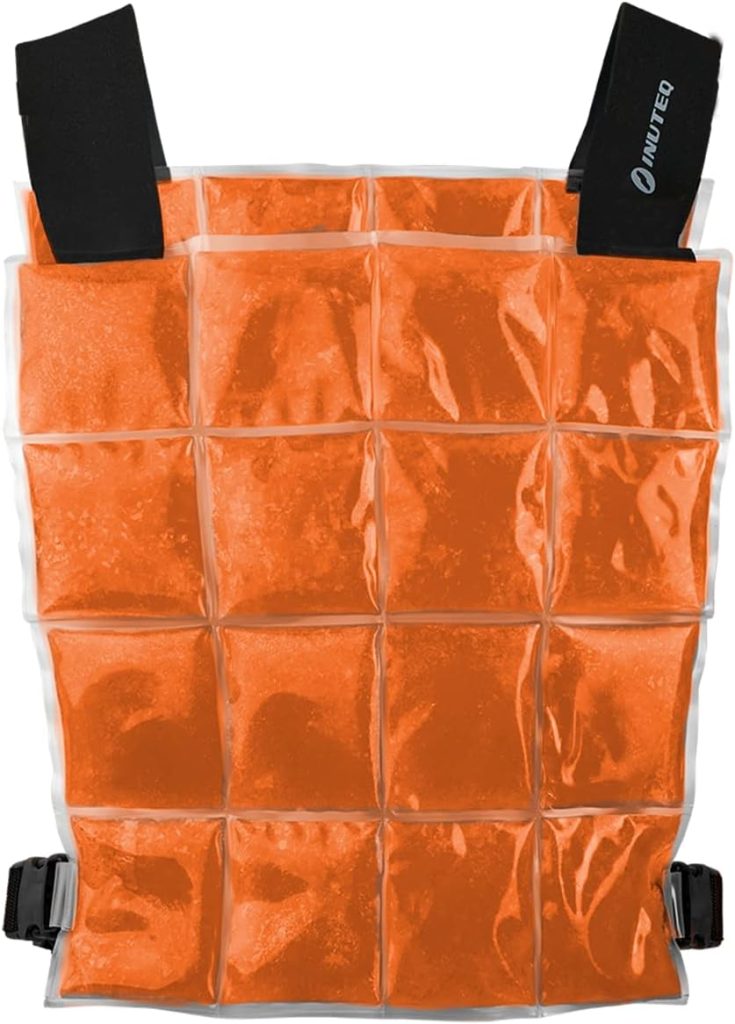
Sport science teams deploy these cooling vests immediately after matches to kickstart a player’s recovery protocol before they even hit the dressing room ice baths. Playing a full 120 minutes of elite European football elevates a player’s core body temperature to extreme levels.
The cold therapy from the vest works rapidly to constrict peripheral blood vessels. This targeted drop in tissue temperature directly downregulates the body’s acute inflammatory response to extreme exertion.
For a player like Rice, who endured immense physical load over the course of two hours, the vest mitigates muscle micro-tears and reduces swelling. It stands as a stark visual intersection of modern sports science and the raw, physical toll of elite competitive defeat.