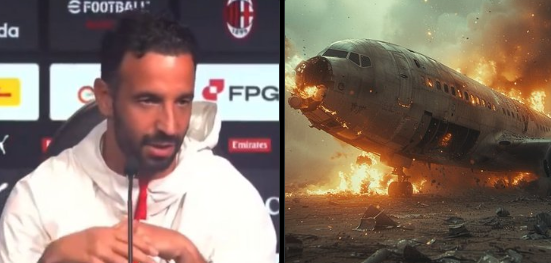
Ruben Amorim, AC Milan‘s head coach, sparked a massive wave of social media backlash and disbelief after using a highly awkward plane crash analogy during a press conference on the twenty-fifth anniversary of the September 11 terrorist attacks.
While speaking to the media about his team’s tactical development and preparation for a crucial Serie A match against Lazio, the Portuguese manager attempted to explain the conceptual significance of iterative learning and incremental squad growth.
The date is September 11 and Ruben Amorim is comparing his AC Milan training sessions to airplane crashes… ✈️✈️ pic.twitter.com/X4Kdl7a6ba
— Football Tweet ⚽ (@Footballtweet) September 11, 2026
In doing so, he explicitly stated that his squad needed to improve during each and every training session, drawing a direct parallel to how the aviation industry analyzes disasters to collect data and prevent future accidents.
It’s like when there’s a plane crash, but you understand that if something goes wrong, we get a lot of information, we learn, and we put it into the training.
Amorim recognized the shocking tone-deafness of his comparison mid-sentence, nervously laughing and attempting to clarify his remarks by emphasizing that he was simply absorbing information from structural failures.
However, the video clip quickly spread across social media platforms, sparking a diverse mix of second-hand embarrassment, dark humor, and analytical debate among football fans around the world on September 11.
The online reactions on Twitter, now known as X, revealed an enormous public cringing at the sheer misfortune of his timing.
9/11 joke in a live press conference this guy kills me pic.twitter.com/58Eg8fNCOP
— c0mp (@c0mpmilano) September 11, 2026
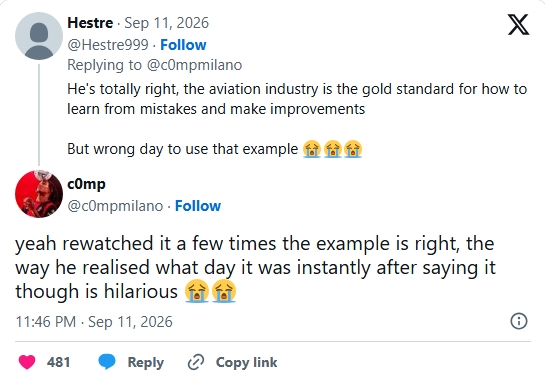
Many users focused on the manager’s immediate physical reaction, pointing out the precise millisecond when his expression changed from tactical explanation to pure panic as the significance of the calendar date dawned on him.
Football fans made sharp, aviation-themed puns, mocking the situation by pointing out that his tactical analogy needed immediate grounding before it could take off in the press room.
That’s how he will crash that club like he did to Man Utd
— BlingzNew🙌🏾⚡️ (@BliingzNew) September 11, 2026
Furthermore, supporters of rival clubs, particularly vocal supporters of his former club Manchester United, eagerly joined the digital commentary to crack jokes at his expense, jokingly comparing his previous English Premier League managerial stints to the metaphorical disasters he described in front of reporters.
This brother won't last December at Milan pic.twitter.com/rPyMrjgYBc
— Brizzy Manny (@brizzy_manny) September 11, 2026
In contrast, a significant portion of the online discourse defended Amorim by contextualizing the cultural divide inherent in modern global sports journalism.
These commentators emphasized that, as a Portuguese national managing an Italian club, the American cultural significance of the September 11th anniversary was unlikely to be top of mind during his intense football analysis.
he didnt actually intend it as a joke its similar to this, just terrible timing https://t.co/5MkmXBZcdi
— c0mp (@c0mpmilano) September 11, 2026
They claimed that the manager was following a standard engineering and accident-analysis philosophy, in which black box data is thoroughly investigated to update safety protocols.
Rather than making an insensitive joke about a historical tragedy, Amorim was simply attempting to convey a clinical metaphor about continuous improvement.
This defensive camp urged critics to acknowledge that the rest of the world does not see every daily conversation through a solely American cultural lens.
Amorim if he ever steps foot in America pic.twitter.com/MVTBTrdjwO
— eje (@UtdEje) September 11, 2026
Finally, the entire incident is remembered as an unforgettable public relations disaster caused by extremely poor timing rather than malicious intent. Despite the intense digital firestorm, the focus quickly shifted back to how his AC Milan squad would perform on the pitch against Lazio, proving whether his intense, mistake-driven training philosophy would produce positive competitive results under high pressure.